C
Chaitu Goud· 5 years ago
Exploring innovations, digital trends, and scientific discoveries through reliable, practical, and easy-to-understand content.

Give an example of pervious rocks and impervious rocks?

0
9.2K

Join this conversation

Sort By
Replying to the question above
Answered on06/20/26

An example of a pervious rock is sandstone, while granite is a common example of an impervious rock. These two types of rocks differ mainly in their ability to allow water to pass through them.

Pervious rocks contain tiny pores, cracks, or spaces that enable water to seep through their structure. Because of this property, rocks such as sandstone and limestone can absorb, store, and transmit groundwater. These rocks play an important role in the formation of aquifers, which are underground layers that store water and supply wells, springs, and other sources of freshwater. Areas with pervious rocks often allow rainwater to infiltrate the ground more easily, helping to recharge groundwater reserves.

Impervious rocks, on the other hand, are dense and compact, with very few pores or openings. As a result, water cannot easily penetrate or move through them. Granite, basalt, and slate are common examples of impervious rocks. Since these rocks resist the movement of water, they often contribute to greater surface runoff during rainfall. This means that water is more likely to flow over the land surface rather than soak into the ground.

The distinction between pervious and impervious rocks is important in geography, geology, and environmental studies because it affects groundwater availability, drainage patterns, and the movement of water beneath the Earth's surface. Understanding these properties helps scientists and engineers manage water resources and study landforms more effectively.

In simple terms, sandstone is a pervious rock because it allows water to pass through its pores, whereas granite is an impervious rock because it does not allow water to pass through easily. This difference in permeability is the key characteristic that distinguishes pervious rocks from impervious rocks.

Must Read : Unit Testing vs Regression Testing
A
Passionate about learning, researching, and understanding things in depth.
View Profile

Aanya Sharma is a science and technology writer with over 5 years of experience and 300+ published articles across leading digital platforms. She holds a Bachelor's degree in Science (Physics) from Delhi University, which grounds her writing in scientific literacy and gives her the ability to evaluate technical claims with accuracy. Her work has appeared on platforms including The Wire Science, Analytics India Magazine, and Digit.in, where she has covered artificial intelligence, space exploration, consumer technology, environmental science, and emerging tech policy. With a focus on accuracy and clarity, her writing makes complex scientific and technological developments accessible to readers without a technical background. Aanya has participated in science communication panels at events including the India Science Festival and has been recognised as a contributor to responsible tech journalism in India. She is an active member of the National Association of Science Writers (NASW) and maintains a public portfolio of her published work. Across all her work, her writing is grounded in verified sources and a commitment to editorial standards — delivering content that readers can rely on in a space where misinformation spreads easily.

0
Replying to the question above
Answered on03/18/26

In geography, rocks are often classified based on how easily water can pass through them. This property is important for understanding groundwater and water storage.

Pervious rocks:

These are rocks that allow water to pass through them because they have pores or spaces.

Examples include Sandstone and gravel.

Impervious rocks:

These rocks do not allow water to pass through them because they are very compact and have no spaces.

Examples include Granite and basalt.

Pervious rocks help in storing groundwater, while impervious rocks block the movement of water.

So, sandstone is a common example of pervious rock, and granite is a common example of impervious rock.

A
Translating science and technology into stories that inform, challenge, and matter.
View Profile

Aanya Sharma is a science and technology writer with over 5 years of experience and 300+ published articles across leading digital platforms. She holds a Bachelor's degree in Science (Physics) from Delhi University, which grounds her writing in scientific literacy and gives her the ability to evaluate technical claims with accuracy. Her work has appeared on platforms including The Wire Science, Analytics India Magazine, and Digit.in, where she has covered artificial intelligence, space exploration, consumer technology, environmental science, and emerging tech policy. With a focus on accuracy and clarity, her writing makes complex scientific and technological developments accessible to readers without a technical background. Aanya has participated in science communication panels at events including the India Science Festival and has been recognised as a contributor to responsible tech journalism in India. She is an active member of the National Association of Science Writers (NASW) and maintains a public portfolio of her published work. Across all her work, her writing is grounded in verified sources and a commitment to editorial standards — delivering content that readers can rely on in a space where misinformation spreads easily.

0
Replying to the question above
Updated on03/18/26

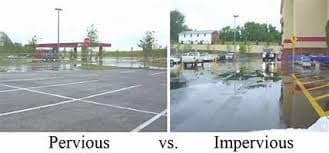
Penetrable surfaces (otherwise called permeable or pervious surfaces) permit water to permeate into the dirt to sift through toxins and re-energize the water table. Impermeable/impenetrable surfaces are strong surfaces that don't permit water to enter, constraining it to run off.


Letsdiskuss

What is the effect of impermeable surfaces on the climate?

Metropolitan and rural destinations ordinarily contain enormous regions of impermeable surface, causing a large group of issues:

Contamination of surface water. When stormwater runs off impermeable surfaces, it gets poisons as it streams into storm channels. The polluted water then, at that point, streams straightforwardly into waterways, lakes, wetlands and seas, producing issues for biodiversity just as general wellbeing.

Flooding of surface water and disintegration of stream banks. During times of weighty precipitation, a lot of impermeable surfaces create a lot of overflow. This unexpected inundation of spillover into waterways can cause streak flooding and disintegration of stream banks.

Water table isn't sufficiently re-energized. Since impermeable surfaces send water into storm depletes instead of permitting it to permeate down to our springs, groundwater might be utilized quicker than it is re-energized.

Arrangement of deteriorate water puddles. On impermeable surfaces where overflow has no seepage course, stormwater can puddle for extensive stretches of time. Deteriorate puddles can become reproducing places for unfortunate bugs like mosquitoes.

Heat island impact. Because of the hotness retaining nature of black-top and other clearing materials, locales with high proportions of impermeable surfaces increment encompassing air temperatures and require more energy for cooling.

Article image

Porous Paving Systems

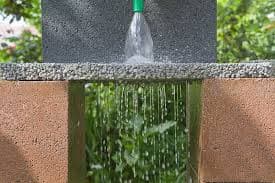
Porous pavers are extraordinarily manufactured clearing units intended to supplant black-top and other impermeable clearing materials. Interconnected pore spaces inside the material channel water into the fundamental soil or into a unique stockpiling layer which powers slow permeation during times of weighty precipitation. Porous pavers are regularly laid on a bed of sand or rock to improve seepage properties.

Instances of porous clearing frameworks

  • Framework of substantial pavers and void space loaded up with turf, sand or rock
  • Total of huge stone particles and cement with intertwined pore spaces
  • Turf framework upheld by a network made out of post-buyer reused plastic

Article image

V
Modern Relationship Analyst
View Profile
5
Replying to the question above
Updated on01/02/26

Pervious rocks are the rocks that allowed water to flow freely while the impervious rocks are the rocks that does not allow the water to flow. Pervious rocks have many pores and impervious contains cracks and defects. Solid Granite, most ssedimentary rocks and pumice rock are examples of pervious rocks whereas impervious rocks include shales and unfractured igneous and metamorphic rocks. Pervious rocks are also known as porous rocks due to many pores on it.

R
Technical Writer
View Profile

I am a quick learner and hardworking person. I am so sincere towards my studies. I am most interested in science and technology. I am always curious about knowing something new.

0