
The Apex Biology answer to how are viruses different from bacteria apex: bacteria are living single-celled organisms that reproduce independently through binary fission. Viruses are non-living infectious particles that can only replicate by infecting a host cell and hijacking its machinery.
This distinction isn't just a biology exam answer. It determines how your body fights an infection, which treatment actually works, and why taking antibiotics for the flu does nothing — and actively causes harm.
Size: How different are they?
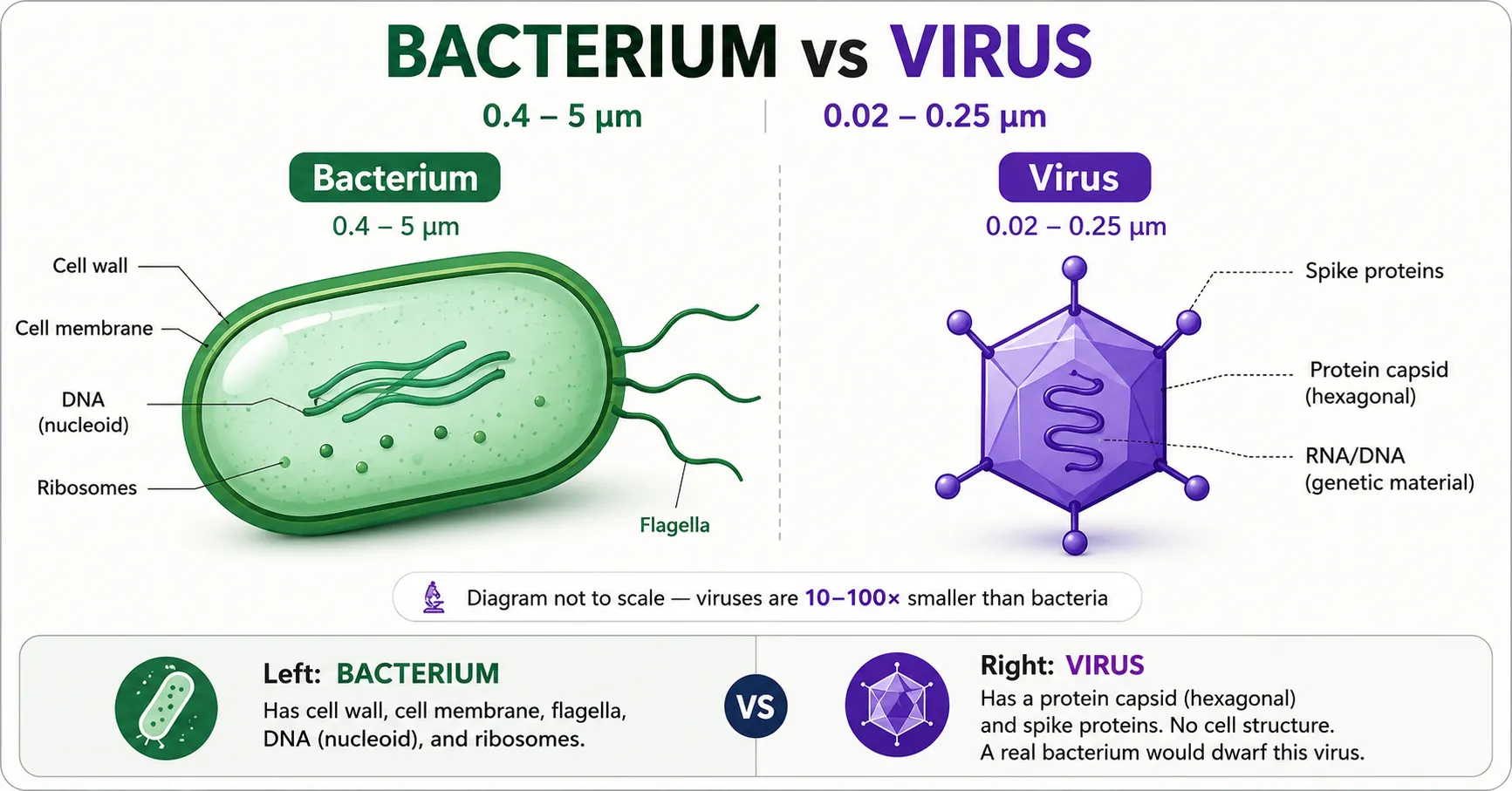
Viruses are not slightly smaller than bacteria. They are between 10 and 100 times smaller — small enough that most require an electron microscope to see clearly.
Quick comparison: Difference Between Virus and Bacteria
| Feature | Bacteria | Virus |
|---|---|---|
| Living organism? | Yes | No (debated) |
| Cell structure | Single cell (prokaryote) | No cell at all |
| Genetic material | DNA and RNA | DNA or RNA (not both) |
| Outer layer | Cell wall + membrane | Protein capsid (+ envelope in some) |
| Reproduces alone? | Yes — binary fission | No — needs host cell |
| Size | 0.4 – 5 micrometers | 0.02 – 0.25 micrometers |
| Where they live | Soil, water, gut, skin, anywhere | Only inside living host cells |
| Mostly harmful? | No — <1% cause disease | Most cause disease |
| Treatment | Antibiotics | Antivirals, vaccines |
| Examples | Strep throat, TB, UTI | Flu, COVID-19, HIV, Measles |
Structure: what's actually inside each one?
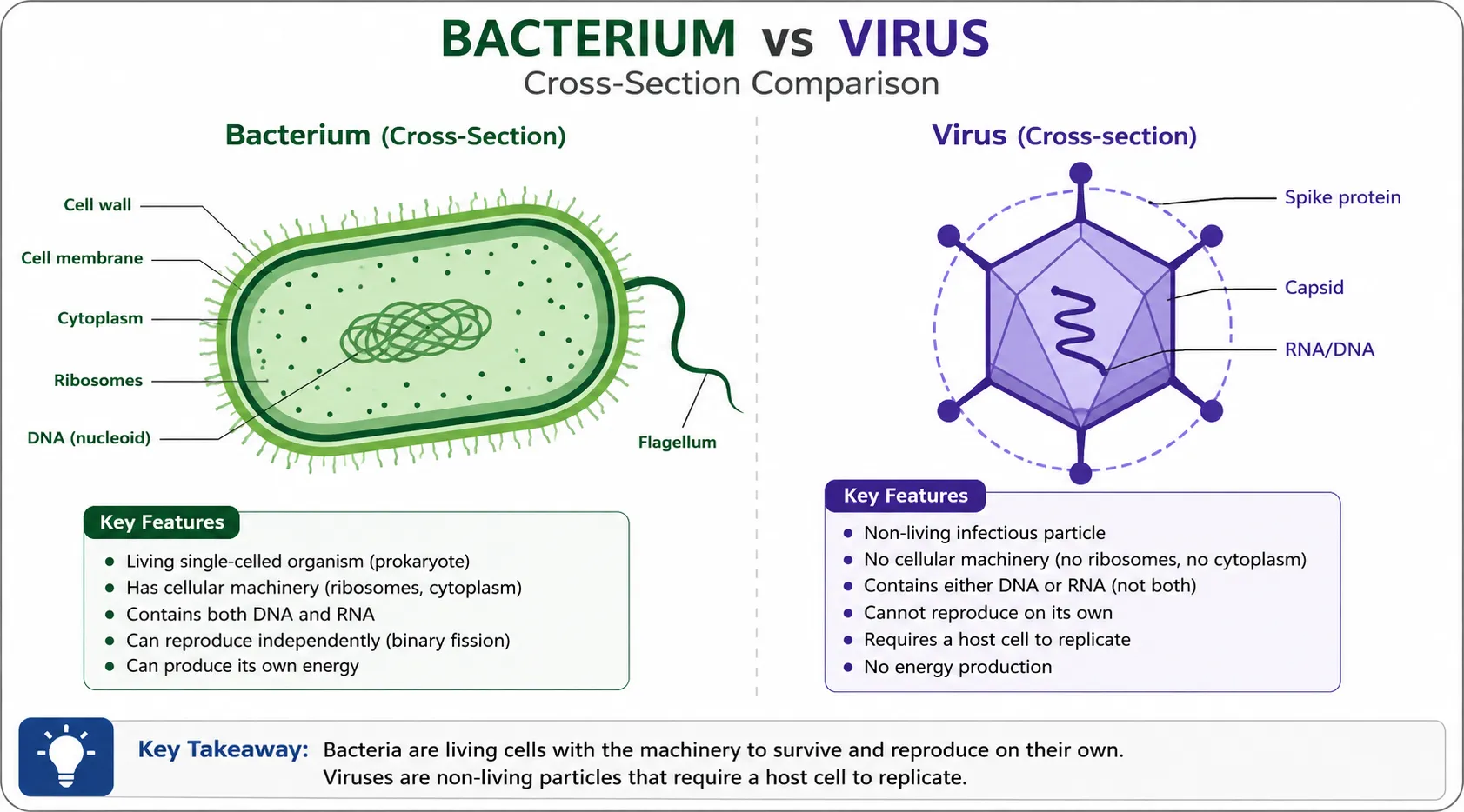
Bacteria have everything a living cell needs: a cell membrane, cell wall, DNA floating in the cytoplasm, ribosomes to make proteins, and the ability to generate their own energy. Viruses have almost none of this.
What are bacteria?
Bacteria are prokaryotes — single cells without a nucleus. They carry DNA floating loose in their cytoplasm, ribosomes for making proteins, and a cell membrane that manages what enters and exits. Most importantly, they can generate their own energy and reproduce without any outside help.
Bacteria reproduce through binary fission: one cell splits into two identical cells. Under favorable conditions, some bacteria can double every 20 minutes.
Less than 1% of bacterial species cause disease in humans, according to the. The other 99%+ are harmless or beneficial. The trillions of bacteria in your gut right now are helping you digest food, synthesize vitamins, and regulate your immune system.
What are viruses?
A virus is not a cell. It has no cytoplasm, no ribosomes, no ability to generate energy. It is, at its core, a strand of genetic material (DNA or RNA) wrapped in a protein shell called a capsid. Some viruses also have a lipid envelope surrounding the capsid.
Outside a living cell, a virus is inert. It cannot grow, divide, or do anything. Only by entering a host cell can it replicate — and it does so by commandeering the host's own machinery.
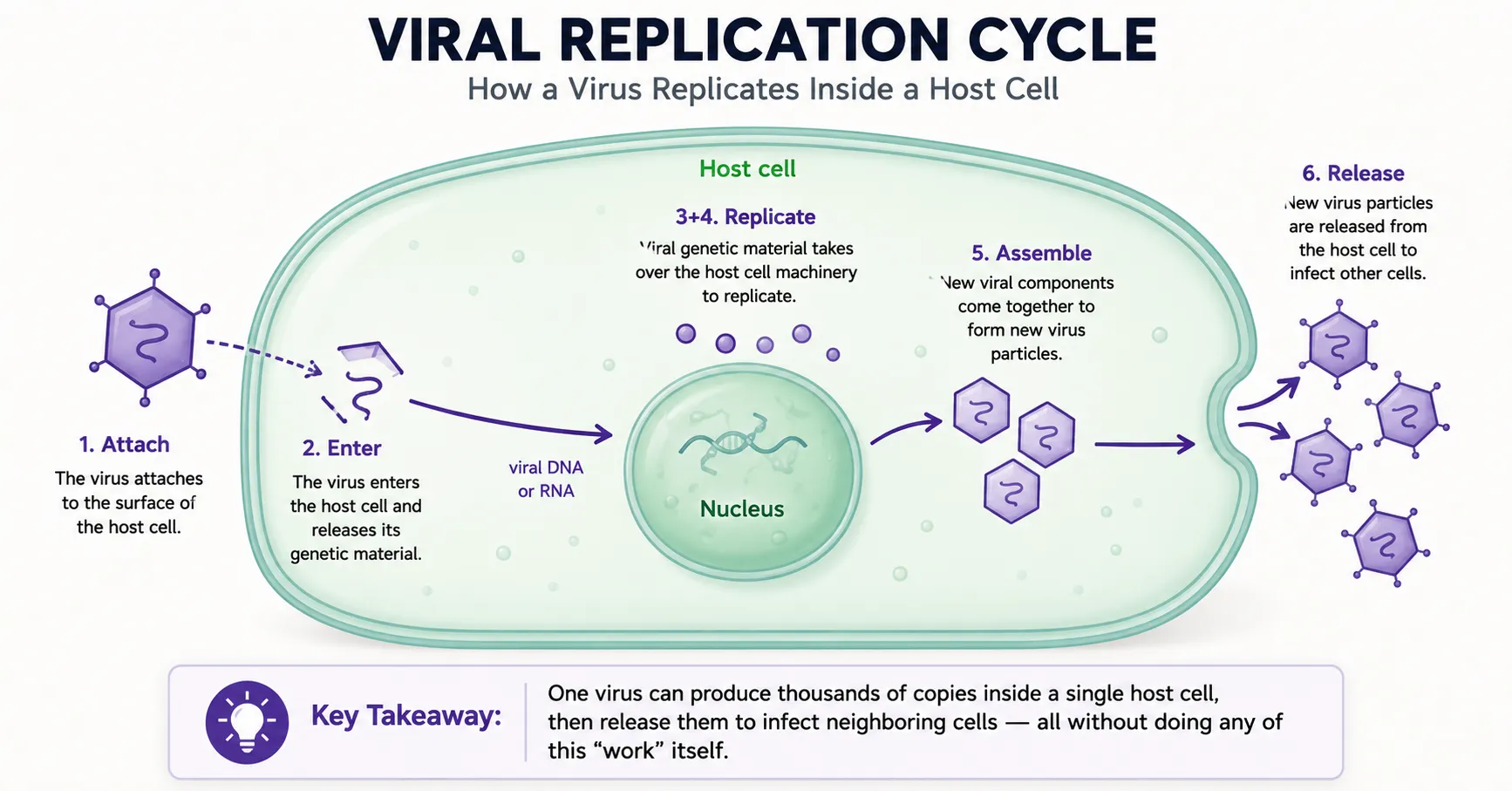
How do viruses replicate? (The 6-step hijack)
- Attachment — the virus binds to a receptor on the surface of a host cell using its spike proteins
- Entry — the virus injects its genetic material into the cell (or is engulfed whole)
- Takeover — viral genetic material hijacks the cell's nucleus and ribosomes
- Replication — the host cell is forced to copy the viral genome thousands of times
- Assembly — new viral particles are assembled inside the cell
- Release — new viruses burst out (lysis) or bud off, ready to infect new cells
Treatment: why the distinction matters most
Understanding the difference between a bacterial infection and a viral infection is where biology becomes a real public health issue — because the wrong treatment not only fails, it causes harm.
Antibiotics work by targeting bacterial structures: cell walls, ribosomes, DNA replication enzymes. These targets don't exist in viruses. An antibiotic given for a viral infection has nothing to attack — it accomplishes nothing against the virus.
Antiviral drugs work differently: they interfere with specific steps in viral replication (entry, replication, assembly, or release). They are virus-specific and do not work against bacteria.
Bacteria infection vs virus — which treatment works?
| Infection type | Examples | Correct treatment | Antibiotics work? |
|---|---|---|---|
| Bacterial | Strep throat, TB, UTI, pneumonia (bacterial) | Antibiotics | Yes |
| Viral | Flu, COVID-19, HIV, measles, common cold | Antivirals, vaccines, supportive care | No |
Are viruses living or nonliving?
This is a genuine scientific debate, not just a textbook technicality. Viruses carry genetic material and evolve over time — two hallmarks of life. But they cannot produce energy, grow, or reproduce without a host. Most biologists consider them non-living on this basis. For Apex Biology purposes: viruses are generally considered non-living.
Bottom line
Bacteria are living single-celled organisms that reproduce independently. They can live anywhere — inside or outside a host. Most are harmless or beneficial. Bacterial infections respond to antibiotics.
Viruses are non-living particles that can only replicate inside a host cell. They hijack the cell's machinery to reproduce. Most cause disease. Viral infections require antivirals, vaccines, or supportive care — never antibiotics.
For Apex Biology: remember that the defining difference is independent reproduction. Bacteria can. Viruses cannot.
Sources
1. Centers for Disease Control and Prevention. Antibiotic Use and Resistance . CDC.gov.
2. National Institutes of Health. The Gut Microbiome and Health . NIH.gov.
3. World Health Organization. Antimicrobial Resistance Fact Sheet . WHO.int.