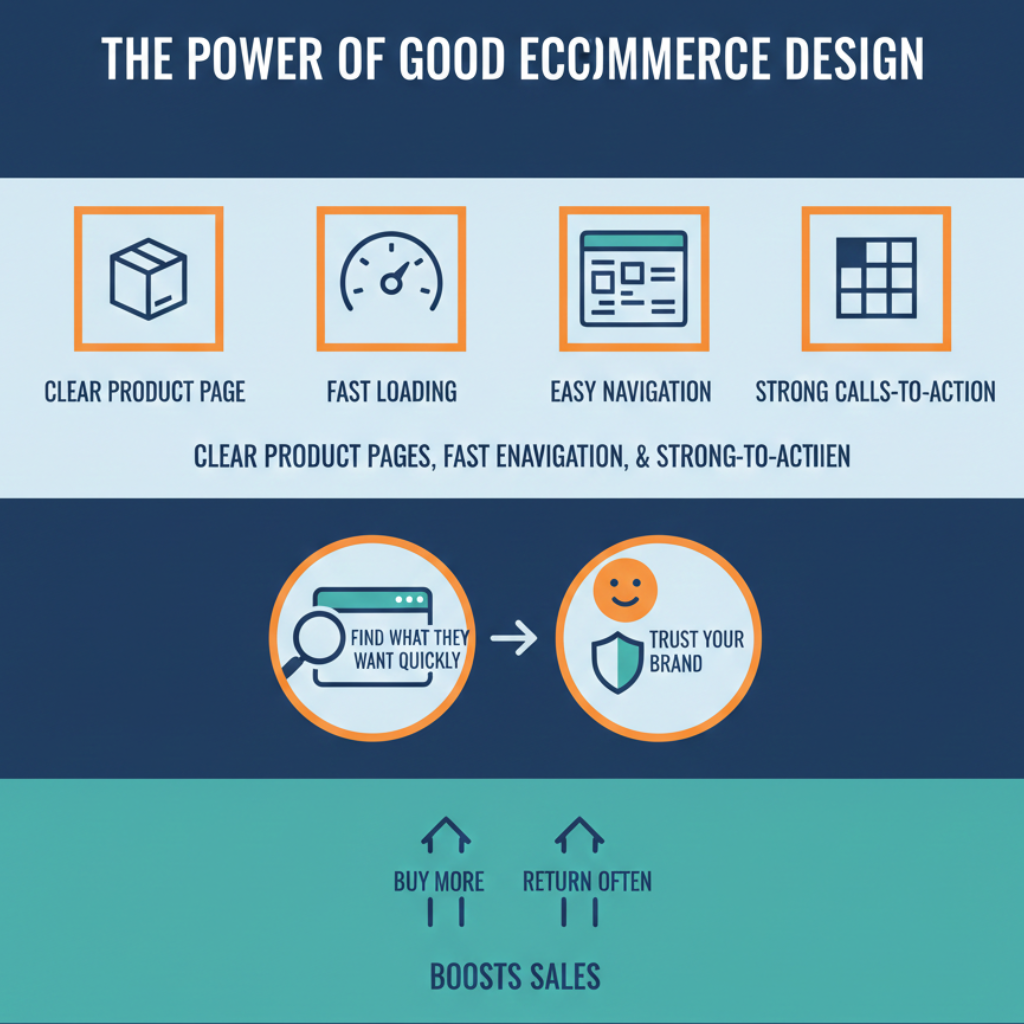
A smartly designed website may help in the conversion and growth of the business by making it easy for customers to find the products, grasp the value, trust the brand, and purchase the products without extra friction. A good e-commerce design is more than just making your store appear good. All elements, from navigation and product photos to shipping info and checkout, should organically lead customers to a purchase choice.
In my experience with e-commerce product content and SEO-driven listings, I’ve seen that even if you have a strong product, it can suffer if its page doesn’t answer simple customer inquiries. What am I purchasing? What’s the use? When does it arrive? Can I return it? These solutions are easy to find with a conversion-focused Shopify design instead of making customers search for them.

Conversion-Optimized Design Features
Shopping in your Shopify store should be simple and intuitive.
Important features of design are:
Easy and clear navigation
Responsive design for mobile
High-quality product photos and videos
Product descriptive titles
Product descriptions that sell benefits
Pricing and availability shown
Add to Cart and Buy buttons
Reviews and social proof from real customers
Clear Shipping and Return Information
Easy to find contact information
Quick page loading
Secure & Easy Checkout
For a new brand, trust is vital. Keeping policies like shipping and refunds front and center can help develop customer trust, according to Shopify. Shopify’s checkout allows users to read shop regulations during checkout.
Customer Journey
A good website design is the whole customer journey, not just the homepage.
Someone finds your product on Instagram or Google. They land on your product page, grasp the product within seconds, see clear photographs, read valuable information, check reviews, understand delivery and returns, and quickly move to checkout.
Now picture the reverse. The product page takes forever to load, the photographs are blurry, there’s no sizing info, shipping fees are a nightmare, and the checkout process is a pain.
Even if both establishments are selling the same goods, the first experience leaves buyers with fewer reasons to leave.
Design to reduce questions and friction at each stage, from discovery to consideration, purchase, and post-purchase.
How to Grow Your Business
A Shopify website design can help you expand beyond just instant conversions.
A logical category structure helps your clients discover more products and helps search engines understand your store. Google recommends linking your menus to categories, categories to sub-categories, and then to product pages to ensure that important e-commerce content can be discovered via site navigation.
You can also leverage smart cross-selling, product recommendations, bundles, and related-product sections to enhance product discovery and potentially increase average order value.
Localization matters for foreign businesses, too. Shopify notes that it supports local currencies in different areas and that presenting familiar currencies to customers can improve their shopping experience and potentially drive up conversion rates.
Conversion Rate Optimization
Conversion rate optimization is not a one-off task.
Personally, I wouldn't revamp a Shopify store just for anything that "looks better." I would look at where clients are really falling through the cracks and improve those areas.
For example, if you have a lot of visitors looking at products, but they aren’t added to carts, review your product pages, pricing, offers, and trust signals. If customers add things to their cart but don’t complete checkout, look into shipping costs, payment options, delivery expectations, and checkout friction.
Shopify Analytics allows businesses to make optimization decisions based on data about store activity, visitors, transactions, web performance and landing page performance.
Also, product information needs to be arranged in a straightforward way for SEO and AI-driven discovery. Google states that Product structured data can help Google interpret information such as pricing, availability, reviews, shipping, and returns and might make products suitable for enhanced search experiences.
Common Errors
One of the biggest blunders is creating for aesthetics, not for clients.
A visually impressive homepage does little good if customers can’t find products or understand their worth.
Other common faults are:
Poor navigation
Too many pop-ups
Low-quality product photos
Copied manufacturer descriptions
Hidden shipping prices
Confusing return policies
Poor mobile experiences
Too many superfluous apps that make the business complicated
From an E-E-A-T perspective, businesses must also demonstrate real experience and trust. Accurate product information, transparent corporate information, actual reviews, transparent policies, and authentic content based on real product knowledge, and not flooding the store with generic AI-generated descriptions.
Frequently Asked Questions
1. Does Shopify website design help boost sales?
Good design can boost the chances of converting by decreasing friction, making it easier to locate, assess, and acquire things. But design by itself can’t make sales.
2. What is the most critical page on Shopify for conversions?
Product pages and checkout are critical, but the whole trip counts. Navigation, collection pages, search, product pages, the cart, and checkout should all work together.
3. Importance of Mobile Design for Shopify Stores
Yes. You need to make sure your store offers a good shopping experience on all screen sizes, especially when your customers are coming from mobile-first channels like social.
Must Read: Shopify Website Development Guide for Ecommerce Success