
There is no scientifically proven natural cure for diabetes. However, some people, especially those with prediabetes or type 2 diabetes, can significantly improve their blood sugar levels and, in some cases, achieve remission through sustained lifestyle changes. This doesn't mean the disease has been permanently cured. It means blood sugar levels remain in the healthy range without diabetes medication for a period of time, usually under medical supervision.
One thing I've noticed is that many people immediately stop eating sweets after being diagnosed, believing that sugar is the only problem. In reality, your body converts many carbohydrates into glucose, which means foods like white rice, bread, refined flour, sugary drinks, and even large portions of otherwise healthy carbohydrates can all affect blood sugar. Focusing only on desserts while ignoring overall carbohydrate intake is one of the biggest misunderstandings about diabetes.
Can Diabetes Be Reversed?
The answer depends on the type of diabetes.
Type 1 Diabetes
No.
Type 1 diabetes is an autoimmune condition in which the pancreas produces little or no insulin. Currently, there is no natural cure or reversal.
Type 2 Diabetes
Sometimes, yes, but the correct medical term is remission, not cure.
Research has shown that some people with type 2 diabetes can achieve normal blood sugar levels through:
- Sustainable weight loss (when appropriate)
- Improved eating habits
- Regular physical activity
- Better sleep
- Stress management
Even after remission, healthy habits must continue because blood sugar can rise again.
Prediabetes
Prediabetes is often the stage where lifestyle changes have the greatest impact.
Many people can return their blood sugar to the normal range if they make consistent changes early.
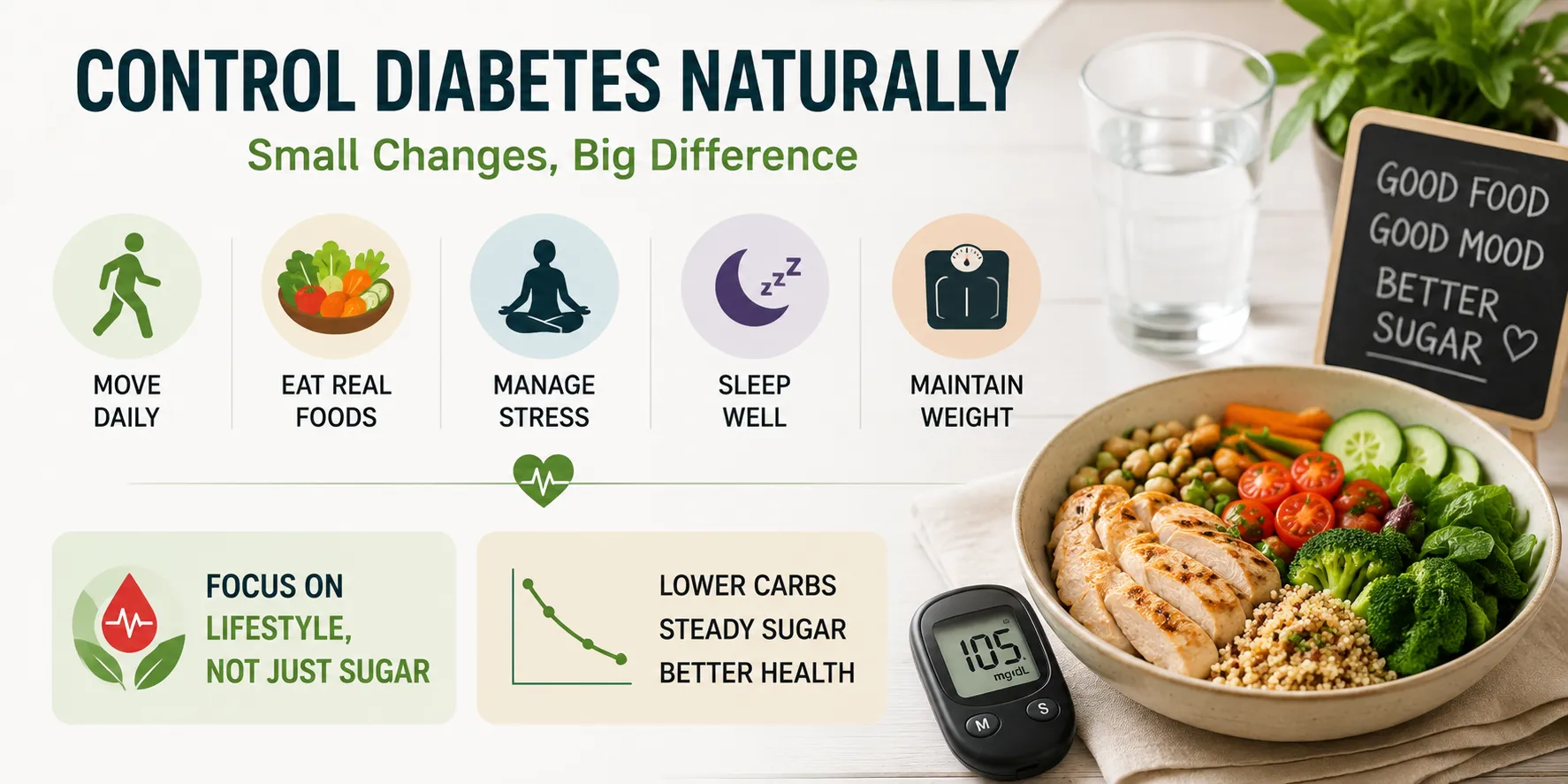
Evidence-Based Lifestyle Changes
If someone asked me where to focus first, I honestly wouldn't say "stop eating sweets."
I'd say:
Improve your daily routine first.
That's because diabetes is influenced by movement, sleep, stress, body weight, and overall carbohydrate intake, not just desserts.
1. Reduce Refined Carbohydrates
This is probably the most overlooked step.
Many people don't realize that foods such as:
- White rice
- White bread
- Refined flour (maida)
- Sugary drinks
- Sweetened breakfast cereals
- Bakery products
are rapidly broken down into glucose.
That doesn't mean carbohydrates are "bad."
It simply means choosing the right type and quantity matters.
Replacing refined carbohydrates with higher-fiber options often helps reduce blood sugar spikes.
2. Prioritize Physical Activity
Exercise helps your muscles use glucose more efficiently, improving insulin sensitivity.
Aim for:
- At least 150 minutes of moderate exercise per week
- Strength training 2–3 times weekly
- Walking after meals
- Reducing long periods of sitting
One habit I've consistently found underrated is a 10–15 minute walk after meals. It may seem simple, but research suggests post-meal walking can help reduce blood glucose spikes.
3. Manage Stress
This is the advice that doesn't get enough attention.
When you're under chronic stress, your body releases hormones like cortisol, which can increase blood sugar levels.
Many people eat well but still struggle because:
- Poor sleep
- Constant stress
- Anxiety
- Lack of recovery
continue affecting glucose regulation.
Stress management isn't a replacement for medical treatment, but it's an important part of diabetes care.
Helpful practices include:
- Meditation
- Deep breathing
- Yoga
- Spending time outdoors
- Regular relaxation
4. Get Enough Sleep
Poor sleep is associated with:
- Reduced insulin sensitivity
- Increased appetite
- Higher blood sugar
- Weight gain
Most adults benefit from 7–9 hours of quality sleep each night.
5. Maintain a Healthy Weight
For many people with type 2 diabetes, losing even 5–10% of body weight can significantly improve blood sugar control.
The goal isn't crash dieting.
It's building habits that are sustainable for years.
Diet Recommendations
Rather than focusing only on what to avoid, I think it's more useful to build meals around foods that support steady blood sugar.
A balanced diabetes-friendly diet often includes:
✅ Non-starchy vegetables
✅ Whole grains in appropriate portions
✅ Lentils and beans
✅ Lean protein
✅ Healthy fats
✅ Nuts and seeds
✅ High-fiber foods
Try to limit:
- Sugary beverages
- Refined grains
- Ultra-processed snacks
- Excessive sweets
- Large portions of refined carbohydrates
One practical approach many dietitians recommend is filling half your plate with non-starchy vegetables, one-quarter with lean protein, and one-quarter with whole grains or other healthy carbohydrates.
Monitoring Is Just as Important as Lifestyle
Lifestyle changes only work if you know whether they're actually improving your health.
Regular monitoring may include:
-
Blood glucose testing (as advised)
- HbA1c every few months
- Blood pressure
- Cholesterol levels
- Kidney function
- Eye examinations
- Foot checks
Tracking your progress helps you and your healthcare provider adjust your treatment plan when needed.
Common Myths
"If I stop eating sugar, my diabetes will disappear."
No.
Blood sugar is influenced by total carbohydrate intake, physical activity, stress, sleep, and overall health—not just desserts.
"Natural remedies can cure diabetes."
There is no herbal supplement, juice, spice, or home remedy that has been proven to cure diabetes.
Some natural foods may support healthy blood sugar as part of an overall lifestyle, but they do not replace evidence-based treatment.
"Once blood sugar improves, I can go back to old habits."
Not necessarily.
For many people, remission depends on maintaining the healthy lifestyle that helped achieve it.
When Should You Seek Medical Care?
Seek medical advice if you:
-
Have persistent high blood sugar readings
-
Experience excessive thirst or frequent urination
-
Notice unexplained weight loss
-
Develop blurred vision
-
Have numbness or tingling in your feet
-
Experience severe fatigue
-
Are unsure whether your current treatment plan is working
Never stop prescribed diabetes medication without discussing it with your healthcare provider.
Diabetes Management at a Glance
| Focus Area | Key Recommendation |
|---|---|
| Can It Be Cured Naturally? | No proven natural cure |
| Can Type 2 Go Into Remission? | Sometimes, with sustained lifestyle changes |
| Biggest Lifestyle Priorities | Healthy eating, physical activity, stress management, sleep |
| Most Overlooked Factor | Total carbohydrate intake—not just sugar |
| Monitoring | Blood glucose, HbA1c, regular medical check-ups |
Living with diabetes doesn't mean you have no control over your health. While there is currently no natural cure, evidence shows that consistent lifestyle changes can dramatically improve blood sugar control and, for some people with type 2 diabetes, even lead to remission. The biggest shift is understanding that diabetes management is about much more than avoiding sweets. Managing overall carbohydrate intake, staying physically active, reducing stress, sleeping well, and monitoring your progress all work together to support better long-term health. The most successful approach isn't a quick fix, it's building habits you can realistically maintain for life.
Frequently Asked Questions (FAQs)
1. Can diabetes be cured naturally without medication?
No. There is no scientifically proven natural cure for diabetes. However, some people with type 2 diabetes may achieve remission through long-term lifestyle changes under medical supervision.
2. Is eating sugar the main cause of high blood sugar?
Not entirely. All digestible carbohydrates eventually break down into glucose, so total carbohydrate intake is often more important than simply avoiding sweets.
3. Can exercise lower blood sugar naturally?
Yes. Regular physical activity helps improve insulin sensitivity and allows muscles to use glucose more effectively.
4. Does stress affect diabetes?
Yes. Chronic stress can increase hormones such as cortisol, which may raise blood sugar levels in many people.
5. Should I stop taking diabetes medication if my blood sugar improves?
No. Never stop or change prescribed medication without consulting your healthcare provider, even if your blood sugar readings improve.
Must Read:What can be a sugar substitute for diabetes patients?
 Answered by