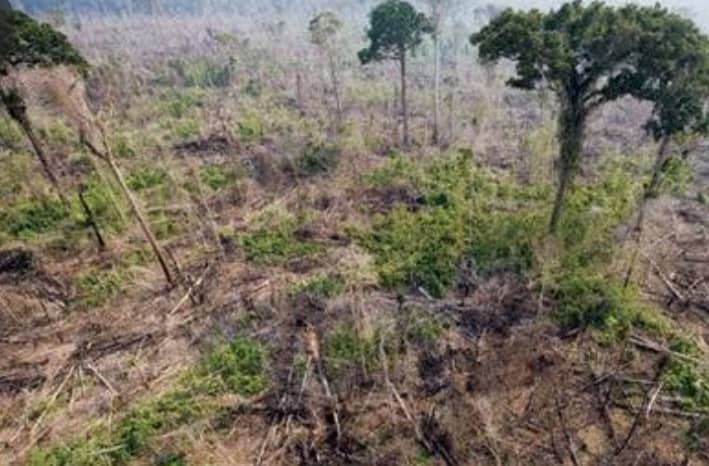
Deforestation occurs when a forest is cleared, and the land is permanently converted to something else, such as farmland, cattle pasture, roads, mines, reservoirs, or urban development.
And this is where I think the usual image of deforestation can be misleading. We picture someone simply cutting down thousands of trees. In reality, the bigger issue is what happens after those trees disappear. If trees are harvested but the forest regenerates, FAO does not necessarily classify that as deforestation. The key issue is long-term conversion away from forest.
Globally, agriculture remains the biggest direct driver.
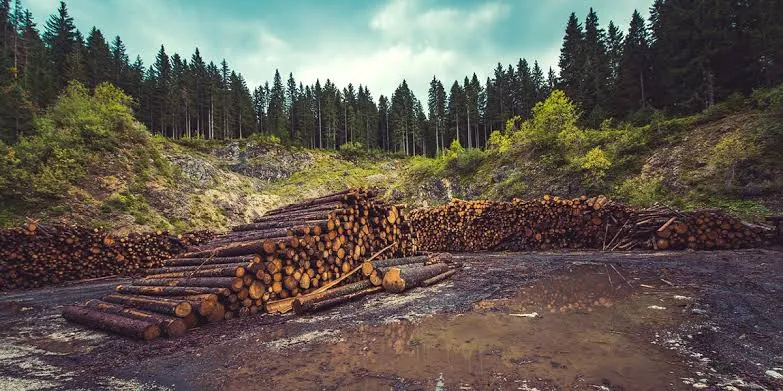
Major Causes
Deforestation rarely has just one cause. According to FAO, major direct drivers include commercial agriculture, subsistence farming, infrastructure expansion, mining, and urban growth.
Driver | What happens to the forest |
|---|---|
Agriculture | Forest is cleared for crops or livestock |
Logging | Trees are removed for timber, sometimes opening forests to later clearing |
Mining | Vegetation is removed for extraction and infrastructure |
Roads | Forest is fragmented and previously remote land becomes accessible |
Urban expansion | Forest land becomes housing or commercial areas |
Infrastructure | Land is converted for dams, power projects or transport |
I'd pay particular attention to agriculture. UNEP identifies agricultural expansion as the main driver of deforestation and forest biodiversity loss.
How Deforestation Happens
It doesn't always happen in one dramatic event.
A road might first be built through a forest. Logging follows. Once previously remote land becomes accessible, farms, settlements, or mining may expand into it.
FAO specifically notes that unsustainable logging is primarily associated with forest degradation, but logging roads can provide access that eventually leads to complete deforestation.
That's why I wouldn't look only at the person cutting the final tree. Commodity demand, land policies, weak enforcement, poverty, infrastructure, and land rights can all sit behind what we eventually see on the ground.
Deforestation vs. Degradation
These terms sound interchangeable, but they aren't.
Deforestation means long-term loss of forest and conversion to another land use.
Forest degradation means the forest remains, but its condition or ability to provide ecological functions has declined.
Think of it this way: a damaged forest is still a forest. A forest turned permanently into a soybean field isn't.
The worrying part is that degradation can sometimes make eventual deforestation easier.
Environmental & Human Impacts
When forests disappear, we lose much more than trees.
Forests store carbon, provide wildlife habitat, influence water cycles, protect soils, and support people's livelihoods. UNEP says forests are home to more than half of the world's terrestrial species and play an important role in carbon sequestration.
Clearing forests can:
Release stored carbon and reduce future carbon absorption
Destroy and fragment wildlife habitat
Affect local water systems
Increase soil erosion
Reduce biodiversity
Disrupt forest-dependent communities
This human side gets overlooked surprisingly often. The World Bank has estimated that hundreds of millions of people living in or near dense forests depend on them for subsistence and income.
Solutions
Planting trees helps, but I'd be careful about presenting tree planting as the whole solution. Protecting an existing natural forest and planting a row of new saplings are not equivalent.
More meaningful approaches, according to me, are sustainable agriculture, stronger forest governance, responsible commodity supply chains, clearer land rights, protected areas, restoration of degraded landscapes, and reducing illegal or unsustainable forest clearing.
From my perspective, the smartest approach is preventing unnecessary forest loss first, then restoring what has already been damaged.
Frequently Asked Questions (FAQs)
1. What is the biggest cause of deforestation?
Agricultural expansion is the main global driver, although its specific causes and commodities vary by region.
2. Does logging always cause deforestation?
No. Logging can cause degradation without permanent forest loss. It becomes deforestation when the forest is ultimately converted to another land use.
Must Read: Suggest some approaches towards the conservation of forests?
 Answered by