
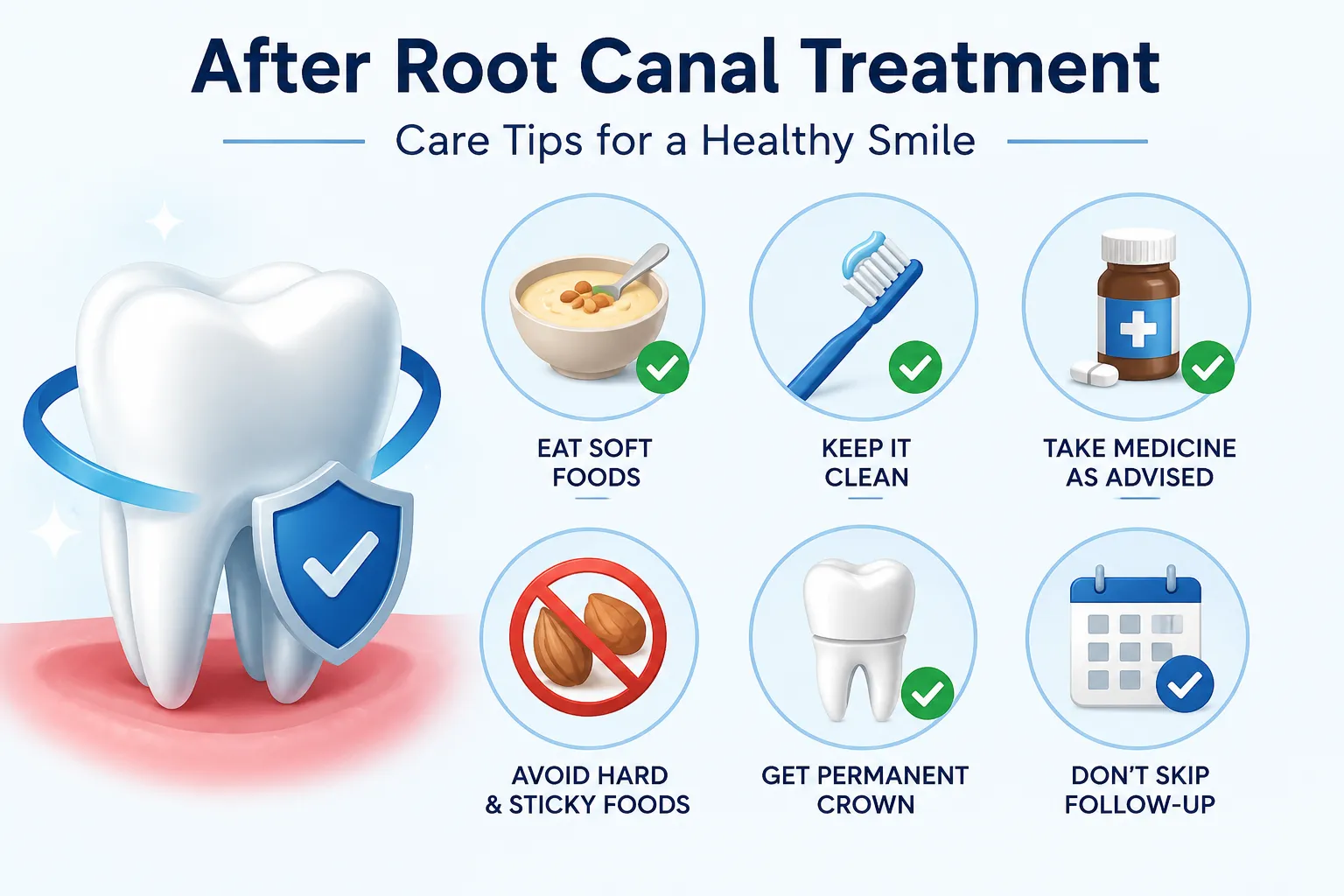
After a root canal treatment, proper care helps protect the treated tooth, reduce discomfort, and support long-term healing. For the first few days, avoid chewing hard or sticky foods on the treated side, especially if the permanent crown has not yet been placed. Mild tenderness or sensitivity can be normal after treatment and usually improves gradually. Follow your dentist’s instructions about pain medication, oral hygiene, and follow-up appointments. Most importantly, have the tooth restored with a permanent filling or dental crown when your dentist recommends it, because a root-canal-treated tooth can be more vulnerable to fracture.
What to Do After a Root Canal
1. Avoid Chewing Hard Foods
Until your dentist confirms that the tooth is fully restored, avoid hard, crunchy, or sticky foods around the treated area. Chewing ice, hard candy, nuts, or other very hard foods can put excessive pressure on the tooth.
If only a temporary filling has been placed, be especially careful because it can become damaged or dislodged.
2. Maintain Good Oral Hygiene
You can generally continue brushing and flossing your teeth after a root canal. Brush gently around the treated tooth and clean between your teeth every day. Good oral hygiene helps prevent plaque buildup and reduces the risk of future dental problems.
Do | Avoid |
|---|---|
Brush twice daily with fluoride toothpaste | Chewing ice or very hard foods |
Floss carefully every day | Sticky foods around a temporary filling |
Follow your dentist’s instructions | Delaying the permanent restoration |
Take prescribed medication as directed | Using excessive pressure while chewing |
Attend your follow-up appointment | Ignoring persistent pain or swelling |
3. Manage Mild Pain or Sensitivity
Some soreness or tenderness after root canal therapy can occur, particularly when biting down. Your dentist may recommend an appropriate over-the-counter pain reliever or prescribe medication depending on your situation.
Do not exceed the recommended dose of any medication. If pain becomes severe, continues to worsen, or does not improve as expected, contact your dentist rather than simply continuing to take pain medication.
4. Get the Permanent Restoration
A root canal removes infected or inflamed pulp from inside the tooth, but the tooth still needs protection afterward. Depending on the tooth’s condition and location, your dentist may recommend a permanent filling or dental crown.
Avoid unnecessarily delaying this restoration. A properly placed crown or other restoration can help protect the tooth from fracture and restore normal chewing function.
When Should You Contact Your Dentist?
Contact your dentist if you experience severe or increasing pain, significant swelling, fever, difficulty opening your mouth, or problems with the temporary filling or restoration. These symptoms may require professional evaluation.
A small amount of tenderness can be expected, but persistent or worsening symptoms should not be ignored. Your dentist can determine whether additional treatment is necessary.
Conclusion
Caring for a tooth after root canal treatment mainly involves keeping it clean, avoiding excessive chewing pressure, managing discomfort appropriately, and completing the recommended permanent restoration. Follow your dentist’s specific instructions because recovery can vary depending on the tooth and the complexity of the treatment. With proper dental care and regular checkups, a successfully treated tooth can remain functional for many years.
FAQs
1. Can I brush my teeth after a root canal?
Yes. You can generally brush and floss as usual, while being gentle around the treated tooth, particularly if a temporary restoration is present.
2. How long should I avoid chewing on the treated tooth?
Avoid heavy chewing on the treated tooth until your dentist has completed or approved the permanent restoration. Your dentist can tell you when normal chewing is appropriate.
3. Is pain normal after root canal treatment?
Mild soreness or sensitivity, especially when biting, can occur after treatment. Severe, worsening, or persistent pain should be evaluated by your dentist.
4. Why does a root-canal-treated tooth need a crown?
A tooth that has undergone root canal treatment may be more susceptible to fracture, particularly when substantial tooth structure has been lost. A crown may provide additional protection and restore the tooth’s function.
Also read : Why would one get root canal on loose tooth?