Whenever someone says, "I want to create a website," my first question isn't "Which platform will you use?"
It's "What do you want the website to do?"
Because a portfolio, an online store, a company website and a personal blog all have completely different goals.
I've seen people spend weeks choosing themes and colours before they've even decided who the website is for.
Trust me, that's the harder question to answer.
Once you're clear about your purpose, almost every other decision becomes easier.
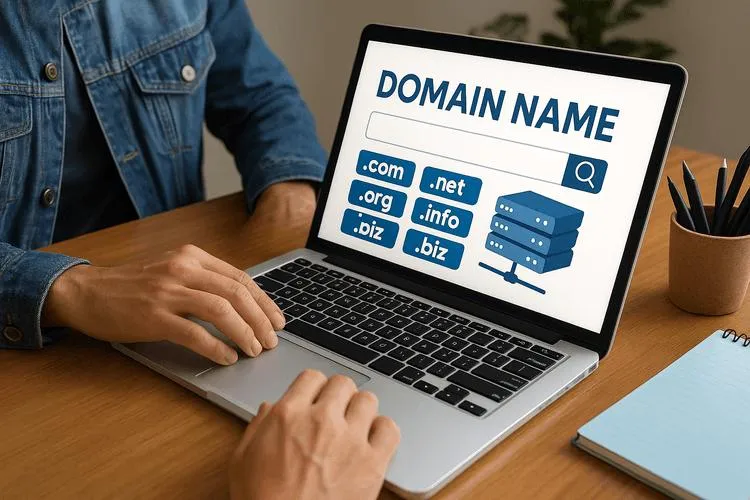
Choose Domain
Your domain is simply your website's address.
But I'd think of it more like your brand name online.
Choose something that's easy to remember, easy to spell and doesn't make people wonder whether they've typed it correctly.
One thing I'd avoid is stuffing keywords into the domain just because someone said it's good for SEO.
People remember simple names much better than long, keyword-heavy ones.
Select Platform & Hosting
This is where most beginners get overwhelmed.
Should you use WordPress?
Wix?
Shopify?
Or build everything from scratch?
Honestly, there's no universal winner.
If you want flexibility and long-term control, WordPress is hard to ignore.
If you just want to launch quickly without worrying about technical details, website builders can be a good starting point.
The best platform isn't the one with the most features. It's the one you'll actually be comfortable managing six months from now.
Design Website
Here's something I learnt after looking at hundreds of websites.
People don't stay because your animations are impressive.
They stay because they immediately understand what your website is about.
Instead of asking, "Does this look cool?", I'd ask,
"Can someone find what they're looking for within a few seconds?"
A clean layout, readable text and simple navigation usually outperform complicated designs trying too hard to impress.
Create Content
A beautiful website with weak content is like a well-designed shop with empty shelves.
People don't visit websites because they enjoy clicking menus.
They visit because they're looking for answers, products or services.
Every page should help someone do something.
Before publishing anything, I'd ask myself,
"If I landed on this page from Google, would it actually answer my question?"
If the answer is yes, you're probably moving in the right direction.
Optimize for SEO
SEO isn't about adding the same keyword twenty times anymore.
It's about making your content genuinely useful.
Write clear headings.
Answer real questions.
Improve page speed.
Add descriptive image alt text.
Link related pages together.
The easier your website is for both people and search engines to understand, the better your chances of being discovered.
Test
This is the step people love skipping.
Open your website on your phone.
Then on your laptop.
Click every button.
Submit every form.
Check every link.
A website that looks perfect on your computer might behave very differently on someone else's device.
I'd rather spend thirty minutes testing than discover a broken contact form after launch.
Publish
At some point, you have to stop tweaking.
I've met people who've been "almost ready" to launch their website for six months.
The truth is, no website is ever perfect.
Publish it.
Collect feedback.
Keep improving.
That's how most good websites become great ones.
Maintain
Launching your website isn't the finish line.
It's the starting line.
Update plugins.
Refresh old content.
Fix broken links.
Improve slow pages.
Watch what visitors actually do on your website instead of guessing.
The websites that grow aren't always the ones that launch perfectly.
They're the ones that never stop improving.
FAQs
Do I need coding knowledge to create a website?
Not necessarily. Platforms like WordPress and website builders allow beginners to create websites without writing code.
How much does it cost to build a website?
It depends on your domain, hosting, platform and design needs. A simple website costs much less than a custom-built business website.
Which platform is best for beginners?
WordPress is a popular choice because it's flexible, beginner-friendly and supported by a large community.
How long does it take to create a website?
A basic website can be launched within a day or two, while larger or custom websites may take several weeks.
Can I improve my website after publishing?
Absolutely. In fact, the best websites are updated regularly based on user feedback, new content and performance data.
Must Read: Best plugin for WordPress website