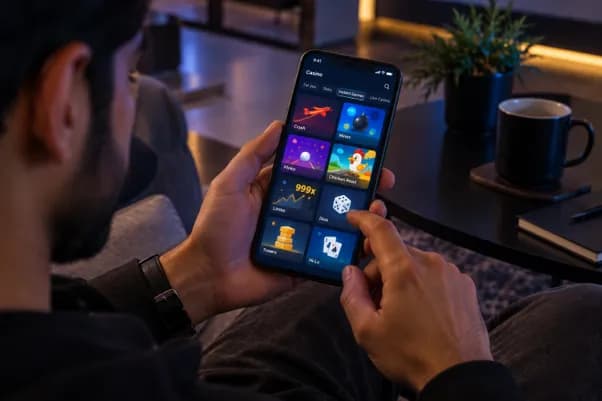
A hospital's front desk queue, a teleconsultation app's payment screen, and a diagnostic lab's home-collection app share a problem that rarely makes it into board decks, and that’s the payment layer.
This is often the weakest link in the entire patient journey, whether you see it from the healthcare provider’s or the pharmacy’s perspective.
An OPD counter running on manual POS reconciliation, a teleconsultation payment that times out mid-booking, a home-sample-collection order stuck in an unreconciled ledger, and many situations like these erode trust in the organization and are not just a billing hiccup.
For CFOs and CTOs in Indian healthcare, pharmacy, and diagnostics, payment infrastructure is no longer a back-office line item.
It sits directly against the DPDP Act, 2023, RBI's card-on-file tokenisation mandate, and the operational reality that a failed payment at a diagnostic counter is a patient who may not come back.
This piece evaluates the gateways healthcare operators are actually deploying against, and what to check before signing.
Why Healthcare, Pharmacy, and Diagnostics Need a Different Payment Stack?
Healthcare payments don't behave like retail payments; they cluster into three distinct patterns, and a gateway built for one often fails the other two.
The Payments Triangle
IPD deposits are high-ticket and often need EMI or multi-bank routing to avoid failure at the worst possible moment. Teleconsultation fees are low-ticket, high-frequency, and need sub-second checkout so the payment reflects before the doctor’s appointment.
Pharmacy and diagnostic orders are time-critical; a failed payment on a same-day report or a chronic-medicine refill directly affects adherence, not just revenue.
Tokenisation is Not Optional
RBI's card-on-file (CoF) tokenisation framework means hospitals and pharmacy platforms cannot legally store raw card numbers on their own servers.
For chronic-illness subscriptions and repeat OPD billing, a compliant token vault is what lets a patient's card be charged next month without re-entering details, and without the platform ever touching the underlying PAN.
Any healthcare payment stack that still routes raw card data through application servers is a compliance liability.
Compliance Checklist to Onboard the Best Payment Gateway for Healthcare
RBI-compliant CoF tokenisation vaults are operational, and the card details are not just added in "encrypted storage".
DPDP Act, 2023 alignment for health data handling is operational across the network.
PCI-DSS Level 1 certification with ISO 27001 as the baseline standard at the healthcare organisation.
Automated, instant refunds for cancelled appointments and out-of-stock medications.
Split settlement support for multi-specialty doctor payouts and diagnostic franchise models.
Gateways that treat healthcare as a generic e-commerce vertical tend to miss the last two points entirely, because refund velocity and payout splitting aren't retail problems. These are operational necessities in a multi-stakeholder billing chain involving hospitals, doctors, TPAs, and patients simultaneously.
Top Payment Gateways for Healthcare, Diagnostic, and Pharmacy in India
Gateway | MDR / Transaction Fee | Settlement Timeline | Payment Success Rate | Currency Support |
|---|---|---|---|---|
Cashfree Payments | 0% platform fee on domestic transactions up to ₹20L GMV for new merchants (festive offer, valid till March 2027). | T+1 (next-day) as standard | 98% to 99% | 180+ currencies |
Pine Labs | 1.5% to 3.0% | T+1 or T+2 | 95% | 50+ currencies |
PayU | 2.0% to 3.0% | T+2 | 98% | 130+ currencies |
CCAvenue | 2.0% to 3.5% | T+2 | Variable | 27 currencies |
Razorpay | 1.0% to 3.0% | T+2 | 90% to 95% | 135+ currencies |
Easebuzz | 1.5% | T+2 | 95% | 30+ currencies |
Cashfree
Cashfree's architecture is oriented around the exact friction points healthcare billing produces. Its token vault and auto-debit infrastructure support recurring, e-mandate-based charging, ensuring pharmacies can set up 1-click refills for chronic prescriptions, and diagnostic chains can auto-bill repeat tests and panel bookings.
UPI Autopay combined with split payouts routes the consultation fee for teleconsultation and multi-doctor platforms.
Instant refunds suite is available, allowing a diagnostic lab cancelling a home-collection slot, or a pharmacy app unable to fulfil an out-of-stock SKU, enabling them to clear refunds fast enough that it doesn't become a support escalation.
T+1 settlement cycle also gives operators complete visibility into cash position, which matters when a hospital network is reconciling deposits against IPD admissions daily.
Cashfree runs multi-bank dynamic routing to route around individual bank downtime, and this removes dependency on a single acquiring bank and protects the transaction from outage-related delays.
Cashfree's roadmap includes readiness for ABDM (Ayushman Bharat Digital Mission)-aligned workflows, faster insurance co-pay handling, and automated TPA settlement reconciliation, positioning it for hospitals and diagnostic networks.
Pine Labs
Pine Labs is a popular choice for on-premises OPD and IPD billing desks and physical pharmacy retail. Its strength is multi-bank EMI integration for high-ticket in-patient treatments, Plutus POS terminals that plug into hospital HIS/EMR systems, and dynamic QR at collection counters.
Integrations with Plutus Smart terminals allow hospitals to process insurance co-pays.
mPOS handheld terminals offer QR code generation and card swipes where the patient is instantly.
Direct connectivity with barcode scanners and the hospital’s inventory management system.
PayU
PayU is oriented towards enterprise hospital portals and medical-equipment distributors. The routing algorithms added here are built to reduce transaction drops on high-value insurance co-pay and surgery-advance payments, and it supports multi-currency collection for medical value travel (MVT), relevant for hospitals with a meaningful international-patient book.
Automated split payments infrastructure is added for aggregators and large hospitals.
e-NACH for chronic care patients, enabling recurring mandate and auto-deduction from patient accounts.
HIS Webhook reconciliation system offers advanced real-time synchronisation with the Hospital Information System.
CCAvenue
A legacy payment gateway for healthcare organisations, especially government hospital portals, public health trusts, and regional diagnostic labs. Its breadth across 200+ payment options, including Tier-2/3 regional net banking, and multi-lingual checkout pages, serves accessibility needs that metro-first gateways seldom deliver.
Pay to Unlock diagnostics systems with integrated links connecting to the Laboratory Information System (LIS) SMS and email based invoices.
Multi-tenant architecture allows parent diagnostics to monitor, manage, and reconcile collections.
Using a non-PCI-DSS iFrame checkout system allows older on-premise hospital portals to accept secure payments using an embedded iFrame.
Razorpay
A common choice for digital-first healthtech startups, D2C wellness brands, and boutique clinic SaaS platforms. Standardised APIs, payment links over WhatsApp/SMS for remote tele-booking, and subscription billing for preventive-care plans make it a reasonable starting stack for early-stage healthtech.
Marketplace routing for telehealth consultation aggregators splits the payments between doctor’s consultation fees and the aggregator fees.
Offers pre-filled verified patient addresses and localised payment methods to drastically reduce drop-offs.
API integration into WhatsApp bots allowing patients to book scans and schedule tele-consults.
Easebuzz
Fits mid-sized hospitals, regional diagnostic chains, and medical colleges or training institutes. Low-code payment link integration, automated invoice generation for diagnostic reports, and institutional fee collection cover the administrative-billing side of the vertical well.
Hub and Spoke lab reconciliation is ideal for franchise diagnostic models and managing complex commission splits.
Scheduled IPD advanced handles staggered billing for longer hospital stays and maternity packages.
Government health schemes integration using certified Single Nodal Account (SNA) compliance.
Conclusion
Patient trust and payment reliability must work on the same line in Indian healthcare; a failed teleconsultation charge or a delayed diagnostic refund carries the same reputational weight as a clinical service gap.
The gateway decision should be made against tokenisation compliance, settlement speed, and payout-splitting capability first, and pricing second.
Healthcare, pharmacy, and diagnostics operators evaluating their payment stack for FY27 can consult Cashfree's payment gateway team to scope RBI-compliant tokenisation, automated doctor payout splits, and an ABDM-aligned reconciliation workflow suited to their specific billing chain.