Electric cars in India are no longer a buzzword—have arrived, and are revolutionizing the way we think about transportation. Increasing petrol and diesel prices, tougher emission standards, and government subsidies have all accelerated EV adoption in India to the next level. Two-wheelers are taking the lead, electric cars are gradually picking up customers, and charging points are springing up in cities. But here's the million-dollar question: are we really ready for an EV revolution? Though costs, infrastructure, and battery technology are promising, issues abound. In this blog, we dive into how EVs are growing in India, the opportunities to come, the obstacles that are keeping us behind, and if 2025 will indeed be the year that India goes electric.
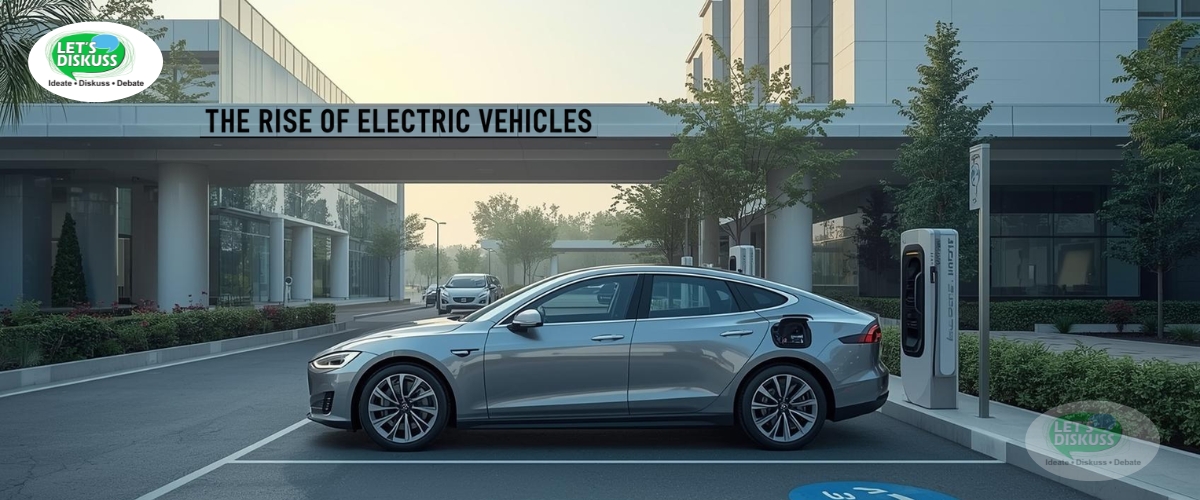
EV Adoption in India – Current Status & Growth
Electric vehicles in India are no longer a farfetched thought; it is becoming a tangible change in the Indian mobility industry. EV adoption has been gaining pace in India, both in electric two-wheelers in India 2025 and electric cars in India 2025 with sales making record numbers in both categories. It is reported that the two- and three-wheelers represent the largest part of EV sales, which is why they are the true engines of the change. Although the electric cars are in their infancy over the two-wheelers, they are gaining popularity with more electric cars being introduced into the market. The consumers are starting perceiving EVs as an alternative to petrol and diesel cars, particularly in the cities. The sector is also being driven along by government subsidies, tax breaks, and investments in EV charging stations in India. Nevertheless, there is still disproportionate adoption- metros and Tier-1 cities have been the first to experience it whereas small towns and rural areas encounter barriers due to lack of awareness and infrastructure.
Cost of Owning an EV in India vs Petrol
The affordability of owning an EV in India compared to gasoline cars is one of the largest questions of buyers. Electric cars appear to be more costly at first sight because of the higher initial prices. Nevertheless, in the case of long term ownership, the situation is different. The operating price of electric cars in India is far cheaper, as electricity is also cheaper than petrol, and the maintenance needs are minimal in comparison with a combustion engine. The cost difference can be offset by savings on fuel and servicing of electric cars and electric motorcycles in a matter of years. Nevertheless, the overall ownership cost will depend on such factors as state subsidies, battery replacement cost, and the presence of EV charging stations in India. The lifetime savings of EVs are obvious to many urban users, but in rural regions, due to the absence of infrastructure and relative scarcity of charging points, petrol vehicles seem more convenient.
Charging Infrastructure Challenges in India
An efficient charging network is as essential as electric vehicles themselves in order to adopt the electric vehicles in India at large scale. Currently, the count of EV charging stations in India is increasing, yet it is not yet even close to the required level in the next few years. Uneven distribution is one of the largest challenges of charging infrastructure in India. The majority of charging stations are metro- and highway-based, and the Tier-2 and rural regions are not well served. This leaves possible customers doubtful particularly when the commute is long. The other issue is speed and compatibility. Although it does have the fast-charging technology, it is still confined to some places, and the problem of standardization makes it hard to count on one network. Unless these gaps are filled, EV adoption in India might be hindered with some severe obstacles.
EV Battery Technology in India – Progress & Challenges
The future of EVs in India is dependent on the progress of the EV battery technology in India. Batteries are the one most expensive part in an EV, and they usually constitute 30-40 percent of the car cost. Next-generation battery efficiency, life and recyclability would render EVs far more affordable and sustainable. Currently, the majority of the batteries deployed in the electric vehicle in India 2025 and the electric two-wheelers in India 2025 are based on lithium-ion technology. Although, efficient, these batteries are experiencing issues such as dependence on imports, unavailability of raw materials and disposal issues. The government and the players are also investing in research of other alternatives like solid state batteries and also in creating local manufacturing capacity. Scaling up is however a challenge. The financial aspect of owning an EV in India vs petrol will continue to be a thorn in the flesh of many buyers unless the production of the batteries becomes more affordable and sustainable.
EVs vs Hybrid Cars in India – Which is Better for 2025?
With the future of cleaner mobility, numerous consumers are divided on whether to buy electric cars in India or EV vs hybrid cars in India debates are becoming a common occurrence. Although EVs offer zero tailpipe emissions and reduced running costs, hybrids offer a compromise to that by integrating petrol engines with electric motors. Hybrids may appear more viable in short term. They remove range anxiety and do not depend on the scarcity of the EV charging stations in India. Hybrids may seem safer when used by individuals who commute up to great distances, or those who reside in areas with ineffective charging systems. But electric cars and electric motorcycles can probably be more economical in the long term, as the networks of charging stations grow and the battery technology advances. Governmental policies also seem to be more supportive of full EV, as there are more incentives and subsidies than hybrids.
The Road Ahead – Opportunities & Challenges for India’s EV Future
The emergence of electric vehicles in India is not merely a trend, but a huge change in transportation and energy of the country. By 2025 analysts forecast that EV in India will grow faster due to the decrease in battery prices, government policy, and the increasing need to use sustainable mobility. However, challenges remain. The scaling up of EV battery technology in India, expansion of EV charging stations in India and solving the issue of charging infrastructure in India are all important to ensuring that EVs are mainstream. These questions need to be resolved, and until then the debate of whether an EV is expensive to own in India as compared to petrol will be a persistent debate. Nevertheless, the challenges are significantly less than the opportunities. India has millions of potential customers, and with a robust push in electric two-wheelers in India 2025 and electric cars in India 2025, and global demand to find clean energy solutions, India is at the edge of an EV revolution.
Conclusion
The Indian electric cars market is full of anticipation and fear. On the one hand, the increasing awareness, state subsidies, and the ever-decreasing time of developing EV batteries in India and EV charging points in India demonstrate that the transition to cleaner mobility is quite unavoidable. On the other, the problems of electric cars in India, such as their high initial price, difficulties in charging infrastructure in India, etc. serve as a reminder that the way has its challenges. By 2025, the adoption of EVs in India may change the way people travel, and with electric two-wheelers in India 2025 taking the centre stage of urban mobility, and electric cars in India 2025 becoming a new norm, the country is set to become EV-driven. However, the major point of concern is, will India skip the step in the direct jump into full-scale EVs, or will hybrids and petrol cars still prevail in a few more years? One aspect is evident, the controversy regarding the price of owning an EV in India versus petrol is not going to go away, yet the tide is shifting. India is definitely going to have an electric future in terms of transportation, be it electric cars or electric motorcycles or electric hybrids.
FAQs
How do you think the future of e-vehicles in India will be in 2025?
The rapid adoption of EVs in India is predicted in the future, with electric two-wheelers in India 2025 and electric cars in India 2025 being increasingly prevalent as battery costs decrease and the charging networks increase.
What are the greatest challenges of electric vehicles in India?
The major obstacles are the lack of EV charging points in India, high initial expenditure, reliance on imported batteries, and problems with charging infrastructure in India, in particular beyond large cities.
Is owning an EV in India vs petrol even cheaper?
Yes, the running and maintenance costs of electric cars and electric motorcycles are lower, even though they are sold at a higher price. In the long run, it will render EVs cheaper than petrol cars.
What is the level of EV battery in India?
The current EVs typically have lithium-ion batteries. Efforts are being done in research and investment to enhance EV battery technology in India, towards longer life, faster charge and less dependence on imports.
Is it better to purchase a hybrid or a full EV?
The debate on EV vs hybrid cars in India is based on your lifestyle. Hybrids are practical in places with low charging capacity, with EV charging stations expanding in India full EVs will be more valuable and sustainable.