Understanding king size mattress sizes: a comprehensive guide to dimensions and features

0
4.8K

Table of Contents

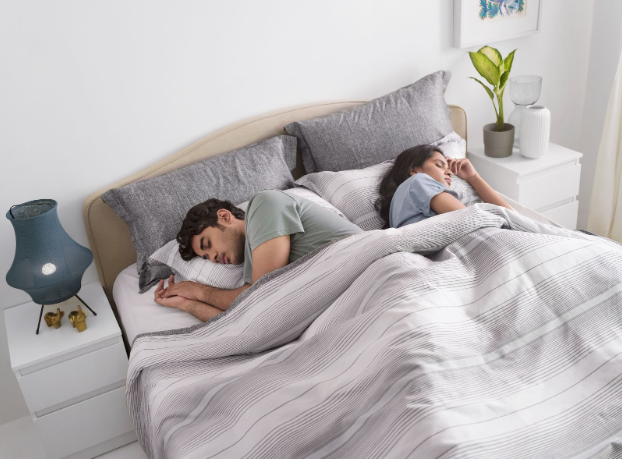
A king-size mattress is the one that is the largest bed mattress that you can get in the market. This mattress is big enough to accommodate a couple and also their child, or a pet if they have one. After accommodating three people, it still has enough space for each one of them to turn and toss around and spread out if they want to. Sounds like the best mattress one should get, right? Yes, but you still need to consider a few things. 


A king size mattress is 72” X 84” inches in dimensions. One of them is a large carpet size. Along with that, a king-size mattress is the most expensive of all types of mattresses, however, a king size mattress price does depend on the foams used and its quality as well. Let’s discuss all these aspects of a king size bed mattress in this article. 


To present you with the difference between a king size mattress and other mattresses, here’s a table that demonstrates the size in inches : 


Single size bed mattress

72” X 30” inches 

Double bed size mattress

72” X 50” inches 

Queen-size bed mattress

72” X 60” inches 

King-size bed mattress

72” X 84” inches 


Understanding king size mattress sizes: a comprehensive guide to dimensions and features


When should you buy a king-size mattress?


The sheer size of the mattress is enough to tell you that you need to take a lot of things into consideration before you place a king size mattress in your bedroom. Let’s understand what is the size of king size mattress, concerning other factors. 


Room size: This is the single most important factor that you need to consider before buying a mattress. A good bedroom is in the ratio 3:1. The size of the room should be three times the size of the bed so that you have enough space to keep other essential furniture in the room, along with having enough walking space. If you want to place a king-size mattress, then your room should be at least 18” X 21” feet in dimensions; otherwise, chances are that the bed may congest your room. However, if you're fine with having a king-size bed mattress in a slightly smaller room with less furniture, then you can opt for that option. 


Bed frame: A lot of people make the mistake of buying the bed frame first and then purchasing the mattress. That should never be the case. The bed frame should always be bought after the mattress, and if required, it should be customized to the size of the mattress. The simple logic behind it is that you sleep on the mattress, not on the bed frame. Only when you are satisfied with the size, quality, and performance of the mattress should you then buy the mattress. Only after the purchase has been made should you buy a bed frame that fits the mattress rather than a mattress that fits the bed frame. 


Maintenance: This is a harsh truth that a king size mattress does require maintenance. You need to clean it now and then and have to change the placements to make it more durable. And since the size of the mattress is such that it is prone to attract dust and disease-causing pathogens, its cleanliness should be the top priority after buying the mattress. 


Usability: A king size mattress is the best type of mattress for couples and couples who have children. However, it's always a personal choice to get any size of mattress, but if it has to be used just by a single person then spending money on such a large mattress is like paying an exorbitant amount for something that won’t have usability worth the money spent. 


Best king size bed mattresses 


As discussed above, a king size bed mattress requires a lot of maintenance. But what if we tell you that you don't have to worry about its maintenance and that the mattress will stay and serve you for more than ten years? That is possible only if you get yourself the best quality mattress. You should get premium-quality mattresses, as they are made with the best quality foams and are spun well, which gives them higher durability than most mattresses on the market. Now the question is, where will you find such a mattress? The simple answer is Sleepwell.


Sleepwell has a wide range of mattresses that are available in all sizes along with customized size options. If we have to talk about the best mattress in its inventory, then it has to be the Pro Nexa series of mattresses that carry one of the best mattresses in the market. These mattresses have not just aced the industry standards but have also received certification from RMIT University, Australia. Let’s take a look at them one by one.  


Pro Nexa Classic Mattress: Sleepwell’s premium quality mattress with four layers of foams goes 12.5 cm layers deep and is equipped with distinct foams to give you ultimate comfort. 

The first layer is the Pro Nexa and Quilted foam together which makes it responsive and gives it a luxurious texture. The second layer is Sleepwell’s very own Resitec foam which has been designed to provide better flexibility and offers comfort to pressure points of the body.  

The mattress has a layer of Resitec Foam with an Acuprofile support layer that is a ContourPro+ technology which is known to provide excellent back support and evenly distribute the body’s pressure. The foam is also equipped with an improved ventilation system that facilitates airflow in the mattress. 


Sleepwell's ingenious Air-O-Fresh foam makes up the last layer of this mattress. It offers uniform support to the body and promotes air circulation in humid weather. The mattress is covered with International quality European knitted fabric that gives it softness and a luxurious finish. The Pro Nexa Classic king size mattress price is ₹22,410.


Pro Nexa Premium Mattress: With every Pro Nexa mattress, Sleepwell provides better and elevated comfort to the body.  This mattress is a 15 cm thick mattress that comes with an anti-skid boom fabric to hold all these layers of foam intact.  


The first layer is the Pro Nexa and Quiltec foam together which is a responsive foam. The second layer is that of Sleepwell Pro Nexa foam which is a smart recovery foam that offers 27% faster heat dissipation, 67% better body conformance, and 32% higher pressure relief. 

The third layer is that of Sleepwell’s Resitec foam which offers the mattress resilience and better flexibility, thereby comforting the pressure points of the body. 


The fourth layer is Resitec Foam with Acuprofile support which is a 3-zoned Resitec profiling system, that is known to provide even pressure distribution, and improved ventilation. And finally, the last layer of Sleepwell's ingenious Air-O-Fresh foam is designed to keep the mattress dry in humid weather and give you a refreshing sleep every time. The king size mattress price of this mattress is ₹22,410.  


Pro Nexa Luxury Mattress: This is a five-layered mattress that goes 17.5 cm deep. The mattress comes with a European knitted fabric top and an Anti-skid bottom. The mattress is held together with an engineered side wall that provides it with durability and allows airflow through the mattress.  


The mattress is layered with Sleepwell Pro Nexa foam and Quilted foam together on the top. The second layer is smart recovery Pro Nexa foam that provides body contouring and pressure relief. The third layer is Sleepwell’s Resitec foam which provides it with strength and feels medium firm on the body. 


The fourth layer is Resitec Foam with Acuprofile, which provides support to the body and evenly distributes the pressure of the body, giving relief and a rejuvenating sleep experience. Finally, the fifth layer is made up of Air-O-Fresh foam that maintains the optimal temperature of the mattress and keeps it cool and dry in humid weather conditions. The Pro Nexa Luxury Mattress is Sleepwell’s 17.5 cm thick mattress that is layered with five layers of foam. Sleepwell Nexa king size mattress price is ₹31,408. 


These were some of the best king size bed mattresses available in the market that you can consider buying. Sleepwell has a wide range of other mattresses as well that cater to all the needs of all age groups. If you want to get your perfect mattress, then go to Sleepwell’s official website, select preferences in the filter section, and your best mattress options will appear right in front of you. 


H

Written By Himani Saini

Author|1 followers
View Profile
Please sign in to join the discussion.

Comments

No comments yet. Be the first to comment!

More from Himani Saini

View All

Related Blogs

A
Amelia GarciaTen years translating financial complexity into writing that informs decisions — not just fills pages. | 1 followers

How Rising Energy Costs Are Changing Homes, Shops, and Small Businesses

Short Introduction Rising energy costs are higher household, commercial, and industrial expenses caused by changes in electricity, gas, fuel, heating, cooling, and grid-related charges. They are not just numbers on a bill. They change how families heat rooms, how shops light products, how restaurants run equipment, and how small companies plan cash flow. The pressure feels bigger because demand is still growing. The International Energy Agency reported that global electricity demand rose by 4.3% in 2024 and is forecast to keep growing close to 4% through 2027, driven by industrial output, air conditioning, electrification, and data centers. That means homes, shops, and small businesses now have to treat energy as a management issue rather than a background cost. This guide explains why bills are changing, which habits are shifting first, where businesses feel the pain, and how practical efficiency upgrades can protect budgets. Why Are Energy Costs Rising in 2026? Energy costs are rising for many users because demand growth, changes in the fuel market, grid investment, seasonal weather, and supplier charges all affect the final price homes and businesses pay. Even when wholesale electricity prices soften in some regions, the bill a customer receives can still include network costs, taxes, service charges, and standing fees. Electricity is also becoming more central to daily life. Heating, cooling, transport, refrigeration, cloud computing, and manufacturing all rely on power. The U.S. Energy Information Administration expects residential and commercial power demand in summer 2026 to grow by 3% compared with the previous summer, with commercial summer demand growth reaching 6% in 2027. Fuel markets still matter too. People who follow broader energy trends often research topics such as how to invest in oil and gas because oil, gas, electricity generation, and heating costs are interconnected through supply, demand, policy, and infrastructure. Which Energy Bills Have Increased the Most? Electricity and gas bills usually create the most pressure because they recur monthly and affect almost every room, appliance, and business process. Electricity powers lighting, cooling, refrigeration, computers, payment systems, signage, machinery, and security. Gas is often used for heating, cooking, hot water, and some production processes. The effect depends on location. In the UK, Ofgem set the energy price cap for a typical household paying by Direct Debit at £1,641 per year for April to June 2026, which was lower than the previous quarter but still a major recurring household expense. For businesses, the problem is not only the per-unit rate. It is the timing of use. A bakery, convenience store, hotel, or workshop may use power exactly when tariffs are high because customer demand and production schedules leave little room for delay. How Are Rising Energy Costs Changing Homes? Rising energy costs are changing homes by forcing families to rethink comfort, appliance use, insulation, heating schedules, and lighting choices. A home is now an energy system made of rooms, habits, appliances, windows, wires, and daily routines. When one part wastes power, the whole bill rises. Many households start with behavior because it costs nothing. They lower thermostats, wash clothes off-peak, air-dry laundry, turn off standby devices, and heat only occupied spaces. These changes feel small, but they matter because energy use is repetitive. There are five home upgrades that usually deliver practical savings: Reduce heat loss with insulation, draught sealing, and better window performance. Replace old bulbs with LED lighting that uses less electricity for the same brightness. Install smart thermostats to control heating and cooling based on schedules and occupancy. Upgrade old boilers, heat pumps, or air conditioners when repairs become too frequent. Add solar panels or battery storage where roof space, sunlight, and budget make sense. LED lighting is a low-energy lighting technology that converts electricity into visible light through light-emitting diodes. It fits this topic because lighting is one of the easiest household loads to reduce without changing comfort. How Are Shops and Retail Stores Being Affected? Shops are being affected because rising energy costs reduce margins in spaces that must remain bright, safe, comfortable, and visually appealing. A retail store cannot simply turn everything off. It needs lighting for product displays, heating or cooling for visitors, refrigeration for food, security systems after hours, and payment technology all day. The fastest-rising pressure often appears in equipment that runs for long periods. Refrigerated cabinets, display lighting, air conditioning, and exterior signs can operate for many hours before owners notice how much they cost. A small increase in unit rates can quietly turn a profitable product line into a thin-margin sale. Retailers are responding by measuring usage more closely. They are switching to LEDs, using timers, zoning lights, cleaning refrigerator coils, limiting open-door cold displays, and setting equipment to match trading hours. Some stores are also replacing printed promotions with digital displays, not because screens use no power, but because timed messages can reduce printing waste and make promotions easier to change. How Are Small Businesses Responding to Higher Utility Bills? Small businesses are responding to higher utility bills by combining quick operational fixes with longer-term investments in efficient equipment, better controls, and smarter purchasing. A small firm usually cannot absorb energy shocks as easily as a large corporation. One bad winter bill or summer cooling spike can affect hiring, stock levels, and marketing spend. The first response is usually visibility. Owners review bills, compare months, check peak hours, and ask which machines run when no one needs them. The second response is control. They create opening and closing routines so lights, ovens, compressors, chargers, and HVAC systems do not run by habit. There are five quick wins most businesses can start this month: Review recent bills and identify the highest-use periods. Replace high-use lighting with LEDs in customer and staff areas. Service equipment that runs hot, is loud, is dirty, or is inefficient. Reduce idle time on ovens, compressors, computers, and chargers. Train staff to shut down zones, doors, and equipment correctly. Which Industries Feel the Biggest Pressure From Energy Prices? Energy-intensive industries are business sectors that rely heavily on electricity, gas, refrigeration, heating, cooling, fuel, or powered machinery. They fit this article because rising costs do not affect all businesses equally. A consultant with laptops experiences the change differently than someone in a restaurant, fabrication shop, grocery store, laundromat, gym, bakery, or hotel. Restaurants and commercial kitchens face some of the toughest pressure. A commercial kitchen is a food preparation space that uses professional-grade cooking, refrigeration, washing, ventilation, and storage equipment. Ovens, ranges, fryers, dishwashers, exhaust hoods, ice machines, and commercial refrigeration can run for long periods, so efficiency directly affects profit. Manufacturing and fabrication also feel the strain. Press brakes, cutters, compressors, motors, extraction systems, and climate control can consume power in concentrated bursts. When shops quote jobs, energy is included in the real production cost, not just overhead. Travel and leisure businesses feel pressure through fuel, laundry, heating, lighting, and customer comfort expectations. What Are the Main Benefits of Improving Energy Efficiency Now? Improving energy efficiency now can cut bills, protect margins, improve comfort, and make homes and businesses more resilient. Efficiency is not the same as doing less. It means getting the same useful output with less wasted input, whether that output is heat, light, chilled storage, machine motion, or customer comfort. There are six main advantages of improving energy efficiency: Cut monthly bills by reducing unnecessary electricity, gas, and fuel use. Protect profit margins by lowering one of the most persistent operating costs. Improve comfort through steadier heating, cooling, ventilation, and lighting. Reduce downtime by maintaining equipment that runs cleaner and fails less often. Strengthen brand image by showing customers that waste and sustainability matter. Raise property or equipment value by making the building easier to operate. The strongest benefit is predictability. When energy use is measured and controlled, budgets become easier to plan. What Mistakes Do Homes and Businesses Commonly Make? The most common energy mistakes are ignoring maintenance, delaying small upgrades, guessing instead of measuring, and allowing old habits to run expensive equipment. These mistakes usually seem harmless at first. A refrigerator door that does not seal properly, a thermostat left too high, or a machine left on after closing may not look dramatic. Over months, it becomes expensive. There are six common mistakes to avoid: Ignore air leaks, poor seals, blocked vents, and damaged insulation. Delay maintenance on HVAC, refrigeration, ovens, boilers, and compressors. Keep old lighting because replacement feels like a small priority. Run empty equipment during closed hours or low-demand periods. Miss tariff reviews and stay on unsuitable supply contracts. Overlook staff habits that affect doors, switches, idle time, and cleaning routines. The pattern is simple. Energy waste hides in repetition. The more often a small mistake happens, the more costly it becomes. Energy Efficiency vs Doing Nothing: Which Costs More? Doing nothing usually costs more over time because unmanaged energy use recurs daily, while efficiency upgrades often reduce waste for years. The comparison is not only about the purchase price of new bulbs, thermostats, seals, motors, or appliances. It is about the total cost of ownership. A home without insulation may pay higher heating and cooling bills each season. A restaurant that delays refrigeration maintenance may pay more for electricity and risk product loss. A shop that keeps outdated lighting may spend more while providing customers with a poorer visual experience. Factor Energy Efficiency Doing Nothing Monthly bills Lower and more predictable Higher and harder to control Comfort More stable Often inconsistent Equipment life Often longer with maintenance Shorter due to strain Cash flow Better protected More exposed to price spikes Customer experience Cleaner, brighter, more reliable More vulnerable to failures Efficiency has an upfront cost, but inaction creates a permanent leak. How to Build a Simple 90-Day Energy Saving Plan A 90-day energy-saving plan starts by measuring use, fixing obvious waste, and then choosing upgrades with the highest return. The goal is not to solve every problem at once. The goal is to create momentum and stop the most visible losses first. There are five practical steps in a simple 90-day plan: Collect bills from the last 12 months and compare usage by season. Walk through the home or business at opening, peak use, and closing time. List equipment that runs longest, looks oldest, or creates heat, noise, or waste. Fix low-cost issues first, including lighting, seals, timers, cleaning, and shutdown routines. Price larger projects such as insulation, HVAC upgrades, solar, refrigeration, or efficient production equipment. This process works because it turns energy from a vague expense into a visible operating map. Once the biggest loads are known, every decision becomes clearer. Conclusion Rising energy costs are changing how people live, shop, cook, travel, and run small businesses. The pressure is real, but it is also forcing better decisions. Homes are becoming more careful with heat, light, and appliances. Shops are studying every hour of operation. Restaurants and workshops are treating equipment efficiency as a profit issue. The best response is not panic. It is measurement, maintenance, and steady improvement. Start with the bill. Find the waste. Fix what repeats every day. Then invest where the savings are strongest. Energy costs may keep shifting, but a home or business that uses power intelligently is always in a stronger position than one that simply waits for prices to fall.

July 14, 2026
Celebrate
1
037

More Recommendations