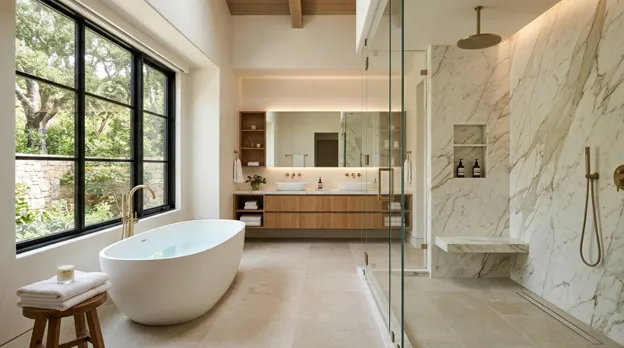
A walk-in shower is designed for quick, easy access and usually takes up less visual space, while a bathtub offers a deeper, more relaxing bathing experience and can be useful for families with young children.
Showers are often better for daily use and accessibility, while tubs can provide greater flexibility for families and may support resale appeal. For many Palo Alto homeowners, a walk-in shower is the better choice for a primary bathroom because it offers a modern look, easier entry, and efficient use of space.
However, keeping at least one bathtub elsewhere in the home can be a smart choice, especially for families with children or homeowners who may sell later. The best option depends on the bathroom size, household needs, and long-term plans.
Walk-In Shower vs. Bathtub: Which One Is Better?
A walk-in shower often works well in a primary bathroom where adults want a quick and comfortable place to bathe. It can make a smaller room feel more open and can be designed with modern glass, large tiles, built-in niches, and simple hardware.
A bathtub still has an important role in many homes. Families with young children may prefer a tub because it makes bathing easier. A tub can also appeal to buyers who want a soaking option.
For this reason, homeowners should look at the whole house rather than choosing between the two based on one bathroom alone.
Complete Walk-In Shower vs. Bathtub Comparison
The best option depends on how the bathroom will be used. A walk-in shower usually offers better access and uses space efficiently, while a bathtub provides a deeper bathing experience and can be useful for families.
The table below compares the main factors homeowners should consider before making a decision.
Feature | Walk-In Shower | Bathtub | Better Choice Depends On |
|---|---|---|---|
Daily Use | Quick and convenient for regular showers | Better for longer, relaxing baths | Personal routine |
Space | Usually uses space efficiently | Can take more room, especially freestanding tubs | Bathroom size |
Accessibility | Easier entry, especially with a low or zero threshold | Higher step-over can be harder to use | Long-term mobility needs |
Water Use | Usually uses less water for a short shower | Can use a large amount of water for a full bath | Water-saving goals |
Cleaning | Glass may need regular cleaning | Tub surface is easy to wipe, but surrounds can collect grime | Cleaning habits |
Family Use | Works well for older children and adults | Useful for bathing young children | Household needs |
Design | Clean, modern, open appearance | Traditional or luxury appearance | Design preference |
Storage | Niches and built-in shelves work well | Storage may need to be added around the tub | Bathroom layout |
Accessibility Features | Can include grab bars, seating, and curbless entry | Grab bars can be added, but entry remains higher | Aging-in-place plans |
Resale Appeal | Popular in modern primary bathrooms | Useful to have in at least one bathroom | Future resale plans |
Relaxation | Best for a standing shower experience | Better for soaking and relaxing | Personal preference |
Small Bathrooms | Can make the room feel more open | May make a compact room feel crowded | Available floor area |
Installation | May require careful waterproofing and drainage | Installation depends on tub type and plumbing | Existing bathroom setup |
Long-Term Flexibility | Can be designed for different mobility needs | Useful for families and soaking | Future household needs |
Best Location | Primary or modern guest bathroom | Family or secondary bathroom | Home layout |
Why Walk-In Showers Work Well in Palo Alto?
Many homeowners choose a walk-in shower because it fits modern bathroom design and everyday routines. A glass enclosure can keep sightlines open, while a simple shower floor and large-format tiles can make the space look less busy.
For homeowners planning an upgrade, a trusted company like The Kitchen and Bath Company of Palo Alto can help with Bathroom remodeling in Palo Alto, including walk-in shower designs that improve both function and appearance.
When a Bathtub Is the Better Choice?
A bathtub remains useful for many households. Parents with young children may find a tub easier for bathing, while some adults simply prefer soaking instead of taking a shower.
A bathtub can also become a strong design feature when there is enough room for a freestanding model. Homeowners should also think about how many bathrooms are in the house.
If the property has several bathrooms, one can have a walk-in shower while another keeps a tub. This gives the household more flexibility and avoids removing every bathing option from the home.
Consider a Wet Room for Both Options
Homeowners who want both a shower and a tub can consider a wet room. This design places the walk-in shower and bathtub within the same waterproofed area. A glass panel or enclosure can help control water while keeping the overall design open.
A wet room can be a good choice for a larger primary bathroom because it provides both bathing options without needing separate areas for each. It can also create a clean, modern appearance.
However, the waterproofing, drainage, floor slope, and installation must be planned carefully because water can reach more areas of the room.
How to Choose the Right Option?
Before making a final decision, homeowners should consider more than appearance. Ask how the bathroom is used now and how it may be used in the future. A shower may be better for quick daily routines, while a tub may be more useful for children or relaxing baths.
Consider these questions:
Is this the primary or secondary bathroom?
Does another bathroom already have a bathtub?
Will young children use the bathroom?
Do you plan to age in place?
Is the bathroom too small for both options?
How important is easy entry?
Do you prefer quick showers or long baths?
Are you planning to sell the home in the future?
The Best Choice May Be to Use Both
There is no single answer for every Palo Alto home. A walk-in shower is often the better choice for a primary bathroom because it offers easy access, efficient use of space, and a modern appearance. A bathtub remains valuable in family bathrooms and can support future resale appeal.
For homeowners with enough space and more than one bathroom, using both options may be the smartest approach. A walk-in shower can handle everyday use in the primary suite, while a bathtub can remain available in another bathroom. This gives the household flexibility without forcing one design choice across the entire home.
Final Thoughts
Choosing between a walk-in shower and a bathtub comes down to how you use your home. Walk-in showers are often practical for daily use, smaller bathrooms, modern designs, and long-term accessibility.
Bathtubs can be a better fit for families with young children, relaxing baths, and homeowners who want to maintain a traditional feature for resale. Before removing a tub, check whether another bathroom already has one.
For many Palo Alto homes, the most flexible plan is a modern walk-in shower in the primary bathroom and a bathtub in a secondary bathroom. This approach balances comfort, space, accessibility, design, and future buyer needs.