
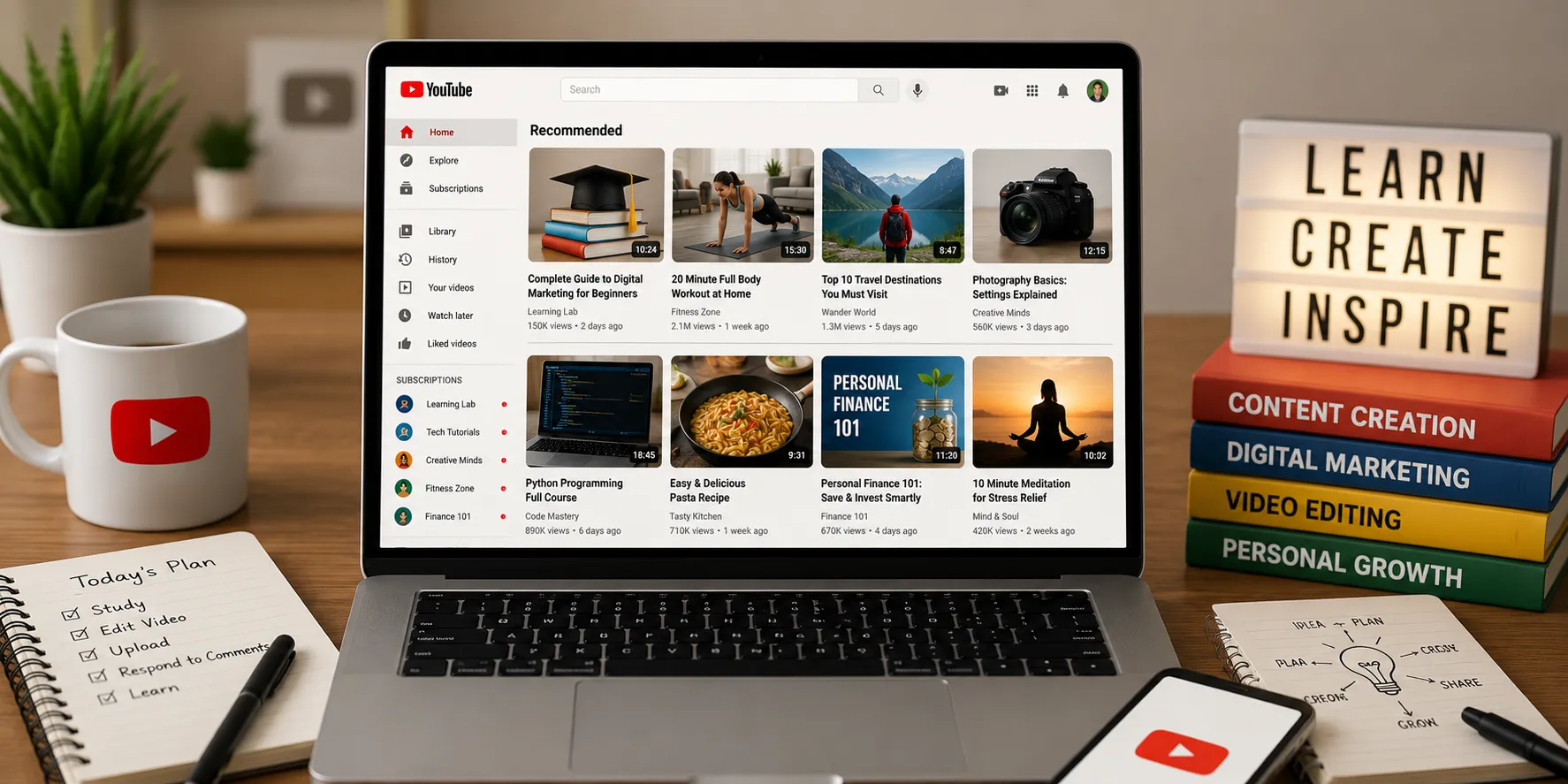
YouTube is one of the most powerful online platforms for learning, entertainment, creativity, and business, but like any technology, it comes with both benefits and drawbacks.
On one hand, YouTube gives you free access to millions of educational videos, tutorials, documentaries, expert interviews, and skill-based courses. On the other hand, its recommendation algorithm and endless stream of content can make it highly addictive, leading to excessive screen time and reduced productivity.
The key isn't deciding whether YouTube is good or bad. It's understanding how you use it.
Advantages
1. Unlimited Learning Opportunities
This is probably YouTube's biggest strength.
No matter what you want to learn, chances are someone has already created a video about it.
You can learn:
-
Digital marketing
-
Programming
-
Cooking
-
Photography
-
Mathematics
-
Music
-
Languages
-
Finance
-
Graphic design
-
Fitness
Many people have built successful careers after learning skills entirely through YouTube. Educational videos have become an important supplement to formal learning because they're visual, easy to access, and available for free.
2. Learn at Your Own Pace
Unlike a classroom, YouTube lets you:
-
Pause videos
-
Replay difficult concepts
-
Watch at different speeds
-
Learn anytime
That flexibility makes it suitable for beginners as well as professionals.
3. Free Access to Experts
One thing I genuinely appreciate about YouTube is that it has made knowledge accessible.
Years ago, learning from industry experts often required expensive courses or attending seminars.
Today, professors, doctors, engineers, scientists, entrepreneurs, and creators regularly share valuable knowledge for free.
4. Career & Business Opportunities
YouTube isn't just for watching videos.
It's also a platform where people:
-
Build personal brands
-
Market businesses
-
Earn advertising revenue
-
Sell products
-
Promote services
-
Create educational content
Many creators have turned YouTube into a full-time profession.
5. Global Perspective
Watching creators from different countries exposes you to:
-
New cultures
-
Different viewpoints
-
Travel experiences
-
International trends
It broadens your understanding of the world beyond your local environment.
Disadvantages
1. Extremely Addictive
If there's one downside I've personally noticed, it's this.
You open YouTube intending to watch one video.
An hour later, you're still scrolling.
The recommendation system is designed to keep users engaged by suggesting related videos continuously. Research has linked certain patterns of YouTube use with problematic or addictive viewing behaviors, especially when users consume entertainment content for long periods.
2. Time Can Disappear Without Realizing It
This is something many people experience.
You may start with an educational video.
Then YouTube recommends:
-
Funny clips
-
Shorts
-
Celebrity gossip
-
Podcasts
-
Gaming
-
Memes
Before you know it, several hours have passed.
3. Low-Quality or Misleading Information
Anyone can upload a video.
That means not every creator is an expert.
Especially in topics like:
-
Health
-
Finance
-
Science
-
Nutrition
it's important to verify information using reliable sources rather than relying on a single video.
4. Too Much Focus on Other People's Lives
Another downside that's becoming increasingly common is spending excessive time following creators' personal lives.
Instead of watching content that teaches or inspires, people sometimes become deeply invested in:
-
Online drama
-
Daily vlogs
-
Celebrity controversies
-
Influencer relationships
There's nothing wrong with entertainment in moderation, but when it starts replacing your own goals, productivity, or relationships, it's worth reassessing how you're using the platform.
5. Reduced Productivity
Notifications, autoplay, and endless recommendations can interrupt work or study sessions.
Without clear limits, YouTube can easily become a major source of procrastination.
Who Benefits Most?
YouTube can be incredibly valuable when used intentionally.
It benefits:
-
Students preparing for exams.
-
Professionals learning new skills.
-
Entrepreneurs researching business ideas.
-
Content creators building an audience.
-
Teachers looking for visual resources.
-
Hobbyists exploring photography, cooking, gardening, music, or DIY projects.
-
Language learners practicing with native speakers.
The platform becomes most useful when you visit it with a specific purpose rather than simply browsing.
Tips for Safe & Effective Use
You don't have to stop using YouTube.
You just need to use it more intentionally.
Here are a few practical habits:
-
Decide what you want to watch before opening the app.
-
Create playlists for educational content.
-
Turn off unnecessary notifications.
-
Set daily screen-time limits.
-
Avoid watching videos continuously through autoplay.
-
Follow creators who genuinely educate or inspire you.
-
Fact-check information before making important health or financial decisions.
Small changes like these can completely transform your YouTube experience.
Common Misconceptions
"YouTube is only for entertainment."
Not anymore.
Millions of people use YouTube every day for education, professional development, business, and skill building.
"Everything on YouTube is trustworthy."
No.
Because anyone can upload videos, viewers should always evaluate the credibility of the creator, especially for medical, legal, financial, or scientific topics.
"Watching YouTube is always a waste of time."
It depends entirely on what you're watching.
An hour spent learning a new skill is very different from an hour spent endlessly scrolling without a purpose.
Frequently Asked Questions (FAQs)
1. What are the biggest advantages of YouTube?
Its biggest advantages include free learning resources, access to experts, entertainment, career opportunities, and the ability to learn almost any skill at your own pace.
2. What is the biggest disadvantage of YouTube?
Many users find YouTube highly addictive because personalized recommendations and autoplay encourage longer viewing sessions.
3. Is YouTube good for students?
Yes, when used wisely. Educational channels, lectures, tutorials, and explanatory videos can significantly support classroom learning.
4. Can YouTube help with career growth?
Absolutely. Many professionals use YouTube to learn technical skills, improve communication, study industry trends, and even build personal brands.
5. How can I avoid wasting time on YouTube?
Watch with a clear goal, disable autoplay if needed, limit screen time, and prioritize educational or productive content over endless recommendations.
YouTube at a Glance
| Aspect | Summary |
|---|---|
| Biggest Advantage | Free access to learning, skills, and expert knowledge |
| Biggest Disadvantage | Highly addictive with endless recommendations |
| Best For | Learning, creativity, entertainment, business, and career growth |
| Use It Wisely By | Setting goals, limiting screen time, and following credible creators |
| Overall Verdict | YouTube is one of the internet's most valuable platforms, but its impact depends far more on how you use it than the platform itself. |
 Answered by
.jpeg&w=640&q=75)