
Pay-per-click (PPC) advertising is a digital advertising model in which businesses pay only when someone clicks on their advertisement. Instead of paying simply for showing an ad, advertisers are charged only when a user actually interacts with it by clicking. PPC is widely used on search engines, social media platforms, e-commerce marketplaces, and websites.
Think of it this way.
If you search for "best running shoes" on Google and the first few results are marked as Sponsored, those are PPC ads. The advertiser only pays Google if you click on one of those ads.
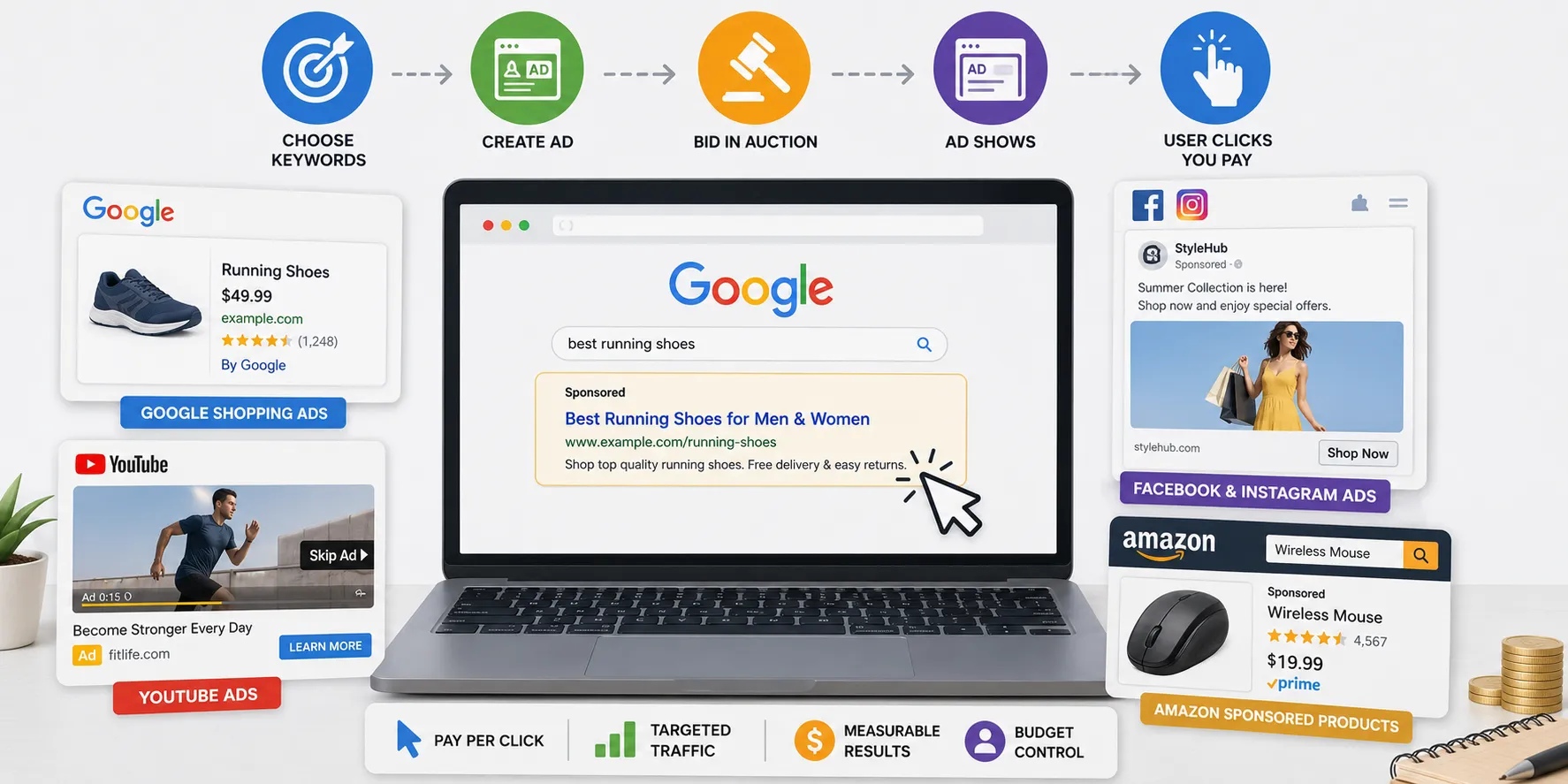
Common Examples
PPC advertising comes in many formats. Here are some of the most common examples you'll encounter every day.
1. Google Search Ads
This is the most well-known example of PPC advertising.
Example:
Someone searches:
"Buy wireless headphones"
A company selling headphones bids on that keyword, and its sponsored ad appears at the top of the search results. If the user clicks the ad, the advertiser pays for that click.
2. Google Shopping Ads
When searching for products such as:
-
Smartphones
-
Shoes
-
Laptops
-
Watches
you'll often see product listings with:
-
Images
-
Prices
-
Store names
-
Ratings
These are Google Shopping Ads, another popular PPC format.
3. YouTube Ads
Many YouTube ads also operate on PPC or related performance-based bidding models.
For example:
A fitness brand may run an advertisement before workout videos and pay when users interact with or click through to its website.
4. Facebook & Instagram Ads
Suppose a clothing brand launches a summer collection.
Its sponsored posts appear in users' feeds with buttons like:
-
Shop Now
-
Learn More
-
Sign Up
The advertiser pays according to the campaign objective, and many campaigns are optimized around clicks to a website.
5. Amazon Sponsored Products
Search for:
"Wireless Mouse"
on Amazon.
The products labeled Sponsored are PPC advertisements.
Sellers bid on keywords, and they pay Amazon when shoppers click those sponsored listings.
6. Microsoft (Bing) Search Ads
Just like Google Ads, Microsoft Advertising allows businesses to display sponsored search results on Bing and partner networks.
Types of Pay-Per-Click Advertising
| PPC Type | Example |
|---|---|
| Search Ads | Google Search, Microsoft Bing Ads |
| Shopping Ads | Google Shopping, Amazon Sponsored Products |
| Display Ads | Banner ads on websites |
| Social Media Ads | Facebook, Instagram, LinkedIn, X (Twitter) |
| Video Ads | YouTube sponsored advertisements |
| Remarketing Ads | Ads shown to previous website visitors |
Each type serves a different purpose, but they all aim to bring qualified visitors to a business.
How It Works
Although PPC platforms differ slightly, the overall process is very similar.
Step 1
Choose keywords or a target audience.
Example:
Running Shoes
Step 2
Create an advertisement.
Include:
-
Headline
-
Description
-
Landing page
-
Call-to-action
Step 3
Set a budget and maximum bid.
This determines how much you're willing to pay for a click.
Step 4
The advertising platform runs an auction.
Factors such as:
-
Bid amount
-
Ad quality
-
Relevance
-
Expected click-through rate
help determine which ad appears first. High-quality ads can sometimes rank above higher bids because platforms reward relevance.
Step 5
When someone clicks your ad, you pay the platform.
If nobody clicks, you generally don't pay for that impression.
Benefits
One reason PPC has become such an important part of digital marketing is that it delivers measurable results.
Some major advantages include:
Immediate Visibility
Unlike SEO, which may take months, PPC can place your business in front of potential customers almost immediately.
Highly Targeted
You can target people based on:
-
Keywords
-
Location
-
Language
-
Device
-
Interests
-
Age
-
Time of day
Measurable Performance
You can track nearly everything, including:
-
Clicks
-
Impressions
-
Click-through rate (CTR)
-
Conversions
-
Cost per click (CPC)
-
Return on ad spend (ROAS)
Budget Control
You decide:
-
Daily budget
-
Monthly budget
-
Maximum bid
-
Campaign duration
This flexibility makes PPC suitable for both small businesses and large enterprises.
Limitations
Despite its advantages, PPC isn't perfect.
Costs Can Increase
Highly competitive keywords often have expensive cost-per-click values.
Traffic Stops When You Stop Paying
Unlike SEO, PPC usually stops generating traffic once the advertising budget ends.
Click Fraud
Occasionally, invalid or fraudulent clicks can occur, although major advertising platforms use automated systems to detect and filter suspicious activity.
Requires Continuous Optimization
Successful PPC campaigns aren't "set and forget."
Advertisers regularly test:
-
Headlines
-
Keywords
-
Landing pages
-
Bids
-
Audience targeting
to improve performance.
Common Misconceptions
"PPC only means Google Ads."
Not true.
PPC is available across many platforms, including Google, Microsoft Bing, Amazon, Facebook, Instagram, LinkedIn, YouTube, Pinterest, and more.
"The highest bidder always wins."
Not necessarily.
Platforms also evaluate ad quality, relevance, and expected user experience. A well-optimized ad can often outperform a higher bid.
"PPC guarantees sales."
No.
PPC brings visitors to your website, but conversions also depend on factors like product quality, pricing, website experience, and landing page design.
Frequently Asked Questions (FAQs)
1. What is the best example of PPC advertising?
A Google Search Ad is the most common example. Businesses bid on keywords, and they pay only when someone clicks their sponsored ad.
2. Are Facebook and Instagram ads considered PPC?
Yes. Many campaigns on Meta platforms use pay-per-click or click-optimized bidding models to drive website traffic.
3. What industries use PPC advertising?
Almost every industry uses PPC, including e-commerce, healthcare, education, finance, travel, real estate, SaaS, legal services, and local businesses.
4. Is PPC better than SEO?
They serve different purposes. PPC provides immediate visibility, while SEO focuses on building long-term organic traffic. Many successful businesses use both strategies together.
5. What is the biggest advantage of PPC?
Its biggest advantage is that advertisers only pay when users actively click their ads, making campaigns measurable, targeted, and easier to optimize.
PPC Advertising at a Glance
| Feature | Summary |
|---|---|
| What It Is | An advertising model where you pay only when someone clicks your ad |
| Most Common Example | Google Search Ads |
| Other Examples | Google Shopping, YouTube, Facebook, Instagram, Amazon, Bing |
| Best For | Driving targeted traffic, leads, and online sales |
| Main Benefit | Measurable results with full budget control |
| Main Limitation | Traffic generally stops when ad spending stops |
Must Read: How to Optimize PPC Campaigns for Better Clicks and Conversions?
 Answered by