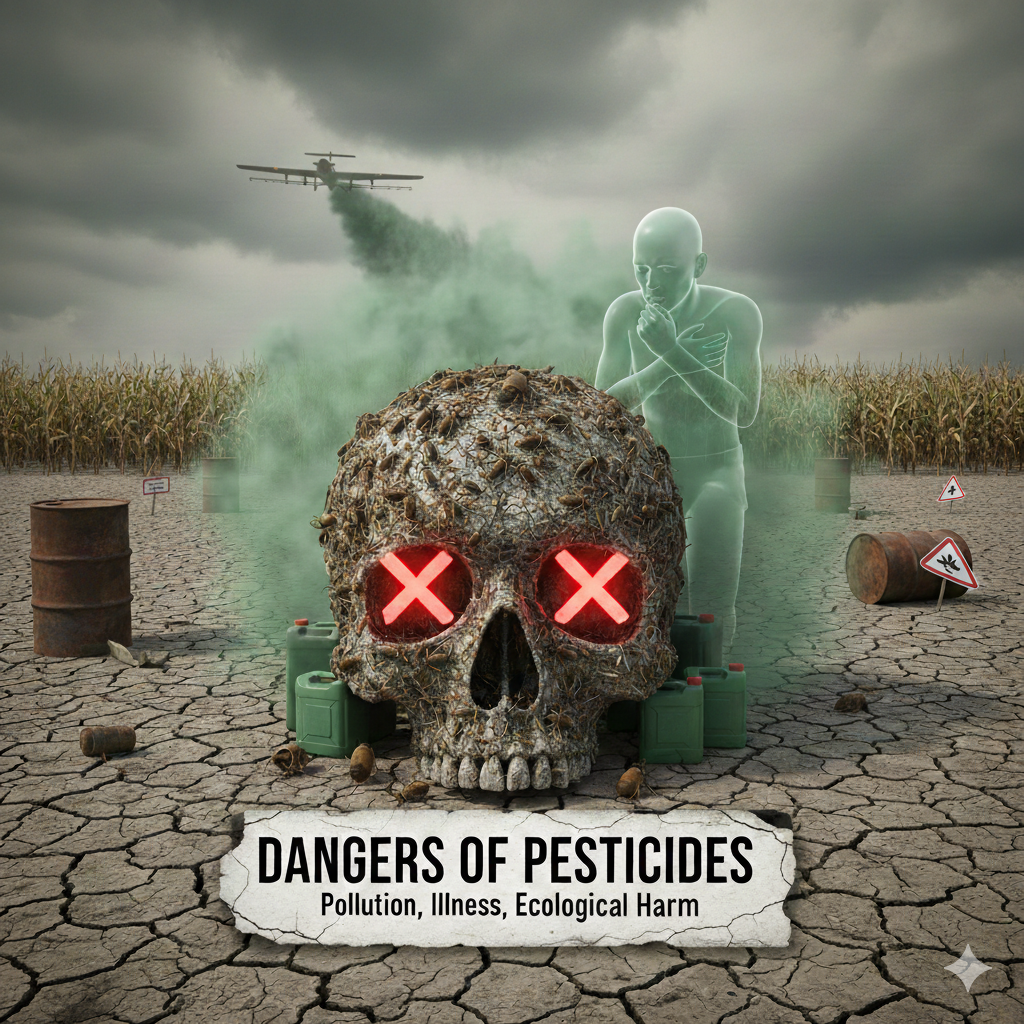
As a pest control professional, I work with pesticides daily, so here's an honest, practical breakdown. The key principle is that the dose and the exposure route make the poison — a product that's safe when used as labelled can be dangerous when misused.
1. Acute poisoning (short-term, high exposure). This is the most immediate danger: nausea, headaches, dizziness, skin and eye irritation, and in severe cases breathing difficulty. It almost always comes from misuse — mixing concentrates without gloves, spraying in enclosed spaces without ventilation, or accidental ingestion. This is overwhelmingly an occupational risk or the result of unsecured DIY products in the home.
2. Skin and respiratory irritation. Even common household sprays can irritate eyes, skin, and airways if you walk back into a room before it's dry or spray against the wind outdoors. Always respect the re-entry time on the label.
3. Residues on food and surfaces. Produce can carry residues, which is why maximum residue limits exist and why washing fruit and vegetables matters. Indoors, residues on kitchen counters or children's toys are a concern only when products are applied carelessly — another reason professionals use targeted gel baits and crack-and-crevice treatments instead of broadcast spraying.
4. Long-term, low-level exposure. This is the area of most scientific debate. Farm workers with years of heavy, unprotected exposure show higher rates of certain health issues in studies. For the general public, typical exposure from a professional home treatment is far below levels of concern.
How to keep risk minimal: hire licensed professionals, tell them about children, pets, and health conditions; keep people and pets away until treatments are dry; never decant pesticides into food containers; and store everything locked away like medicines.