

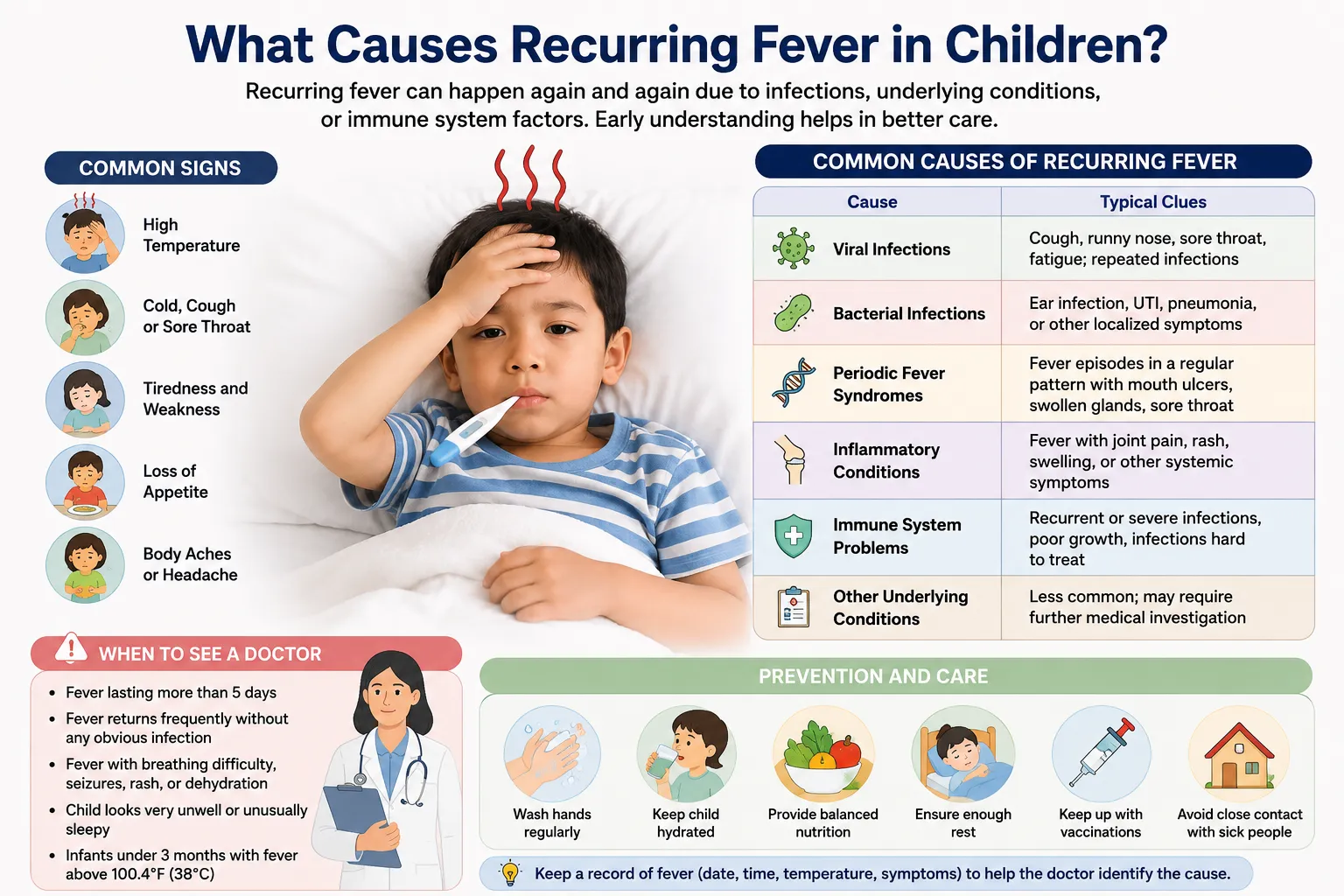
Recurring fever in children can be caused by repeated infections, especially viral infections, but it may also occur because of bacterial infections, inflammatory conditions, or less common immune-system disorders. Children who attend school or daycare may experience several separate infections close together, making the fever appear to be recurring. In some cases, the fever follows a predictable pattern, which can point toward periodic fever syndromes or another underlying condition. The child’s age, fever pattern, duration, accompanying symptoms, and overall health are important when identifying the cause. Most episodes are related to common infections, but persistent, unusually frequent, or unexplained fever should be evaluated by a pediatrician.
Common Causes of Recurring Fever
Cause | Typical clues |
|---|---|
Viral infections | Cough, runny nose, sore throat, fatigue, or several infections occurring over time |
Bacterial infections | Ear infection, urinary tract infection, pneumonia, or other localized symptoms |
Periodic fever syndromes | Fever episodes that repeatedly follow a similar pattern, sometimes with mouth ulcers, swollen glands, or sore throat |
Inflammatory conditions | Fever accompanied by joint pain, rash, swelling, or other systemic symptoms |
Immune-system problems | Recurrent or unusually severe infections, poor growth, or infections that are difficult to clear |
Other underlying conditions | Less commonly, persistent fever can be associated with conditions requiring further medical investigation |
When Should Parents Be Concerned?
The pattern of fever matters more than simply counting how many times a child has had a fever. A child who gets separate colds every few weeks may simply be experiencing repeated childhood infections. However, medical evaluation is important when fevers continue for an extended period, return frequently without an obvious infection, become progressively more severe, or occur alongside symptoms such as unexplained weight loss, persistent rash, swollen joints, unusual tiredness, breathing difficulty, or poor growth.
Parents should also seek prompt medical attention if a child appears seriously unwell, is difficult to wake, has trouble breathing, becomes dehydrated, develops a seizure, or has other concerning symptoms. Infants younger than 3 months with a temperature of 100.4°F (38°C) or higher require prompt medical assessment.
How Doctors Find the Cause
A pediatrician will usually consider the child's fever history, temperature pattern, duration, associated symptoms, exposure to infections, vaccination history, medications, and medical history. Depending on the findings, the doctor may perform a physical examination and order tests such as blood tests, urine testing, cultures, or imaging. Testing is not always necessary when a child has clear symptoms of an uncomplicated viral infection.
Conclusion
Recurring fever in children is most often linked to repeated infections, but a predictable or persistent fever pattern can sometimes indicate a periodic fever syndrome, inflammatory disease, or another underlying condition. Keeping a record of temperature, dates, duration, associated symptoms, and recovery between episodes can help a pediatrician identify patterns and determine whether further evaluation is needed.
FAQs
1. Why does my child keep getting fever every few weeks?
Repeated viral infections are a common reason, particularly in children exposed to other children at school or daycare. If episodes are unusually frequent, predictable, severe, or occur without typical infection symptoms, a pediatric evaluation is appropriate.
2. Can recurring fever be caused by a periodic fever syndrome?
Yes. Periodic fever syndromes can cause repeated episodes of fever that follow a recognizable pattern. Some children also develop symptoms such as sore throat, mouth ulcers, swollen lymph nodes, abdominal pain, or joint symptoms.
3. When is recurring fever in a child serious?
Seek medical care when fever is persistent or repeatedly unexplained, or when it occurs with breathing difficulty, dehydration, severe weakness, seizures, unusual rash, poor growth, or other significant symptoms. A baby under 3 months with a fever of 100.4°F (38°C) or higher needs prompt medical assessment.
4. What should parents record during recurring fever episodes?
Record the child's temperature, when the fever starts and ends, other symptoms, medicines given, possible exposures to illness, and how the child behaves between episodes. This information can help the pediatrician identify whether the episodes follow a pattern.
Also read : What is Allergy and Hay fever?