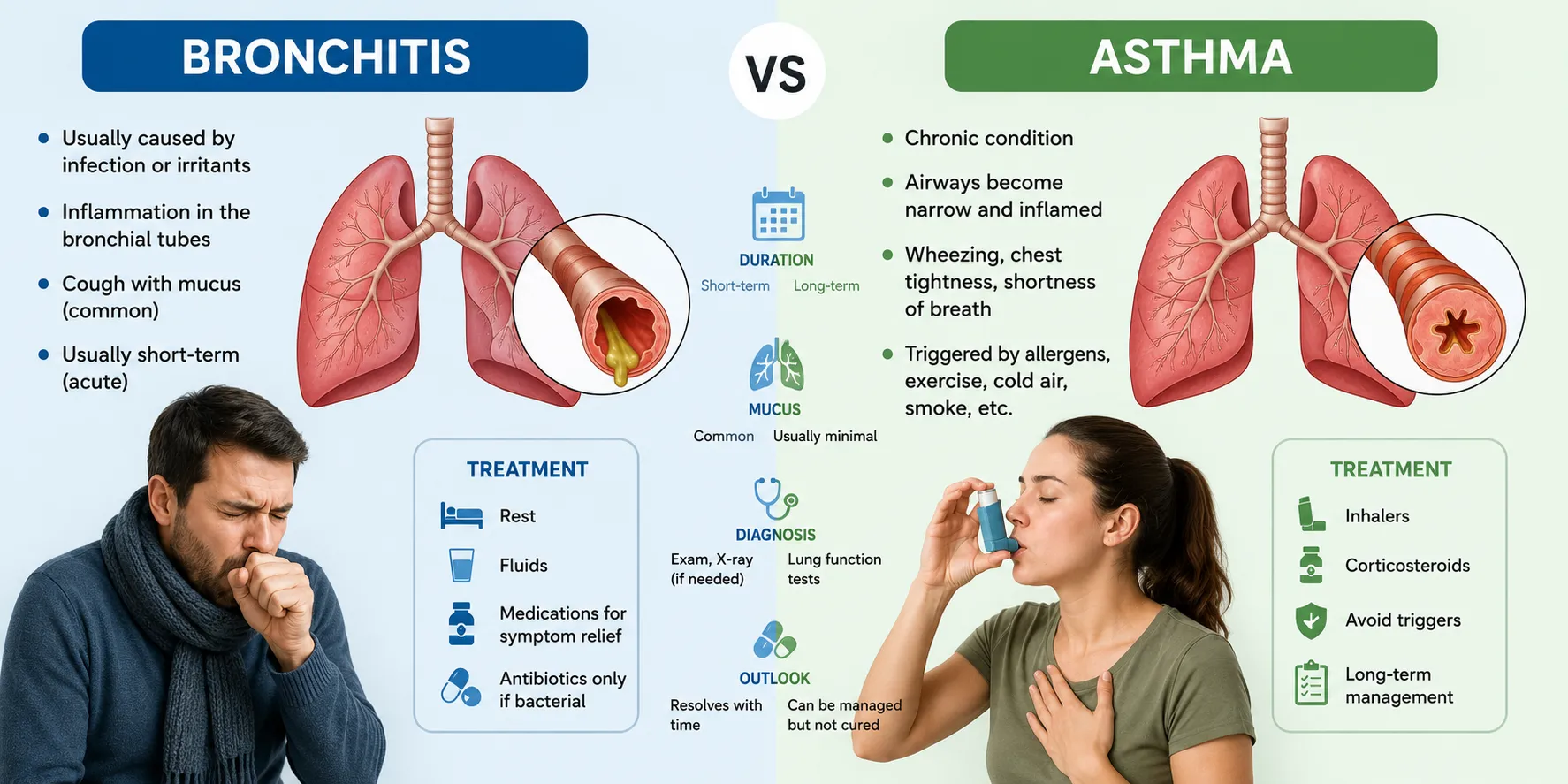
Bronchitis and asthma are both respiratory conditions that affect the airways and can cause symptoms such as coughing, wheezing, chest tightness, and shortness of breath. However, they are different conditions with different causes, durations, and treatments.
Bronchitis is the inflammation of the bronchial tubes, usually caused by a viral infection (acute bronchitis) or long-term exposure to irritants such as cigarette smoke (chronic bronchitis). Asthma, on the other hand, is a chronic inflammatory disease in which the airways become overly sensitive and narrow in response to triggers like allergens, exercise, cold air, or pollution. While bronchitis is often temporary, asthma is a long-term condition that requires ongoing management.
Comparison Table
| Feature | Bronchitis | Asthma |
|---|
| Definition | Inflammation of the bronchial tubes | Chronic inflammatory disease of the airways |
| Duration | Acute (days to weeks) or chronic | Long-term (chronic) |
| Main Causes | Viral infections, smoking, air pollution, irritants | Genetics, allergies, environmental triggers |
| Common Symptoms | Cough (often with mucus), wheezing, chest discomfort | Wheezing, dry cough, chest tightness, shortness of breath |
| Mucus Production | Usually common, especially in acute bronchitis | Usually minimal unless infection is present |
| Triggers | Respiratory infections, smoking, pollutants | Allergens, exercise, cold air, smoke, stress |
| Diagnosis | Medical history, physical exam, chest X-ray (if needed) | Spirometry, lung function tests, medical history |
| Treatment | Rest, fluids, symptom relief; antibiotics only for certain bacterial cases | Inhalers, corticosteroids, trigger avoidance, long-term asthma management |
| Can It Be Cured? | Acute bronchitis usually resolves; chronic bronchitis cannot be cured but can be managed | No cure, but symptoms can be effectively controlled |
Symptoms
Because both conditions affect the airways, they share several symptoms. However, there are important differences.
Bronchitis Symptoms
-
Persistent cough
-
Cough producing mucus (clear, yellow, or green)
-
Wheezing
-
Chest discomfort
-
Mild fever (especially with acute bronchitis)
-
Fatigue
-
Shortness of breath
Asthma Symptoms
-
Wheezing
-
Shortness of breath
-
Chest tightness
-
Dry cough (often worse at night or early morning)
-
Difficulty breathing after exposure to triggers
-
Symptoms that come and go in episodes
One of the biggest differences is that bronchitis commonly causes a productive cough with mucus, while asthma more often causes a dry, trigger-related cough.
Causes
Although both conditions involve inflammation of the airways, the reasons behind that inflammation are different.
Causes of Bronchitis
-
Viral infections (most common)
-
Bacterial infections (less common)
-
Cigarette smoking
-
Air pollution
-
Chemical fumes
-
Dust and other lung irritants
Causes of Asthma
Asthma develops because the airways are overly sensitive to triggers, whereas bronchitis is usually caused by infection or irritation of the bronchial tubes.
Diagnosis
Doctors diagnose bronchitis and asthma using different methods because their underlying causes differ.
Bronchitis Diagnosis
A healthcare provider may use:
-
Medical history
-
Physical examination
-
Listening to the lungs with a stethoscope
-
Chest X-ray (to rule out pneumonia if needed)
-
Oxygen level measurement
-
Occasionally sputum testing
Asthma Diagnosis
Asthma is commonly diagnosed using:
Lung function testing is especially important for confirming asthma because it measures how well air moves in and out of the lungs.
Treatment
Since bronchitis and asthma have different causes, their treatments also differ.
Bronchitis Treatment
-
Rest
-
Drinking plenty of fluids
-
Pain relievers or fever reducers (if needed)
-
Humidified air
-
Cough medicine (in selected cases)
-
Bronchodilators for some patients
-
Antibiotics only when a bacterial infection is suspected or confirmed
Asthma Treatment
-
Rescue inhalers (short-acting bronchodilators)
-
Inhaled corticosteroids
-
Long-term controller medications
-
Avoiding known triggers
-
Personalized asthma action plan
-
Regular medical follow-up
Unlike acute bronchitis, asthma usually requires long-term management even when symptoms are well controlled.
Can They Occur Together?
Yes.
A person with asthma can develop acute bronchitis, especially after a viral respiratory infection. Infections such as the common cold or influenza may irritate the airways and trigger an asthma flare-up. Although people sometimes use the term "asthmatic bronchitis," it is not an official medical diagnosis. Instead, it generally refers to bronchitis occurring in someone who already has asthma.
Common Misconceptions
"Bronchitis and asthma are the same disease."
No.
They share several symptoms, but they have different causes, durations, and treatment approaches.
"Every cough with wheezing is asthma."
Not necessarily.
Bronchitis, pneumonia, COPD, allergies, and several other conditions can also cause wheezing and coughing. A proper medical evaluation is needed for an accurate diagnosis.
"Bronchitis always needs antibiotics."
No.
Most cases of acute bronchitis are caused by viruses, so antibiotics usually aren't helpful unless a bacterial infection is suspected.
"Asthma can be cured permanently."
No.
Asthma currently has no cure, but with appropriate medication and trigger management, most people can keep their symptoms well controlled and live active lives.
Frequently Asked Questions (FAQs)
1. What's the main difference between bronchitis and asthma?
Bronchitis is inflammation of the bronchial tubes, often caused by infection or irritants, whereas asthma is a chronic inflammatory condition in which the airways become overly sensitive to specific triggers.
2. How can I tell if I have bronchitis or asthma?
A productive cough with mucus is more common in bronchitis, while recurrent wheezing, chest tightness, and symptoms triggered by allergens or exercise are more typical of asthma. A healthcare provider may perform lung function tests to confirm asthma.
3. Can bronchitis turn into asthma?
No.
Bronchitis does not become asthma. However, respiratory infections can trigger asthma symptoms in people who already have asthma.
4. Which condition is more serious?
Both conditions can become serious if left untreated. Acute bronchitis usually improves within a few weeks, whereas uncontrolled asthma can lead to severe asthma attacks requiring emergency treatment.
5. Can someone have both asthma and bronchitis?
Yes.
People with asthma can develop bronchitis, particularly during viral respiratory infections, which may temporarily worsen their asthma symptoms.
Although bronchitis and asthma share several symptoms, they are distinct respiratory conditions with different causes, diagnosis methods, and treatment approaches. Bronchitis is usually linked to infections or long-term airway irritation, while asthma is a chronic condition characterized by airway inflammation and sensitivity to specific triggers. Understanding these differences can help individuals seek timely medical evaluation and receive the most appropriate treatment. If you experience persistent coughing, wheezing, or difficulty breathing, consult a qualified healthcare professional for an accurate diagnosis rather than relying on symptoms alone.
Must Read: what is the best herbal medicine for asthma

 Answered by