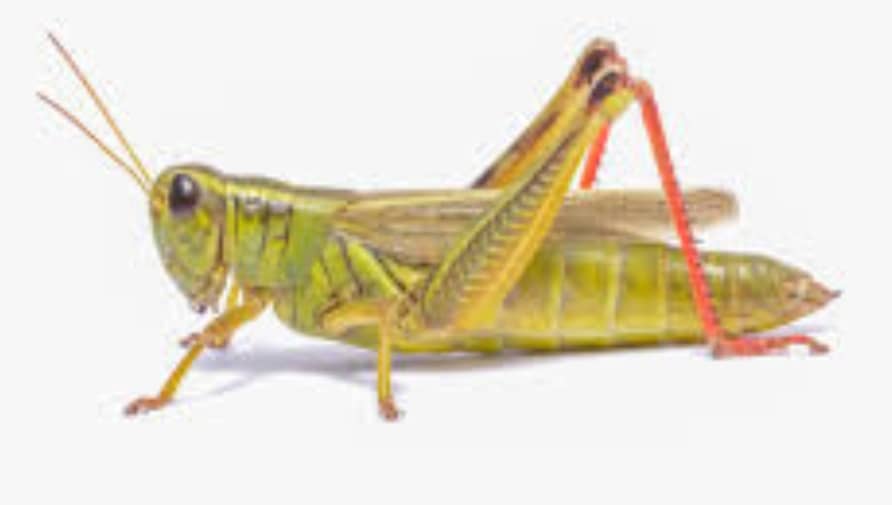
When a grasshopper stays in one place without food, it gradually begins to use the energy stored in its body to survive. As starvation continues, the insect becomes weaker, less active, and less able to jump, fly, or escape predators. If it cannot find food for an extended period, its body eventually runs out of energy reserves, causing organ functions to fail and ultimately leading to death. Like most insects, grasshoppers depend on regular feeding because they obtain both nutrients and much of their water from the plants they eat.
The exact survival time varies depending on the grasshopper species, age, temperature, humidity, and access to water. Under favorable conditions, some grasshoppers may survive several days without food, but prolonged starvation significantly reduces their chances of survival.
Stages or Process
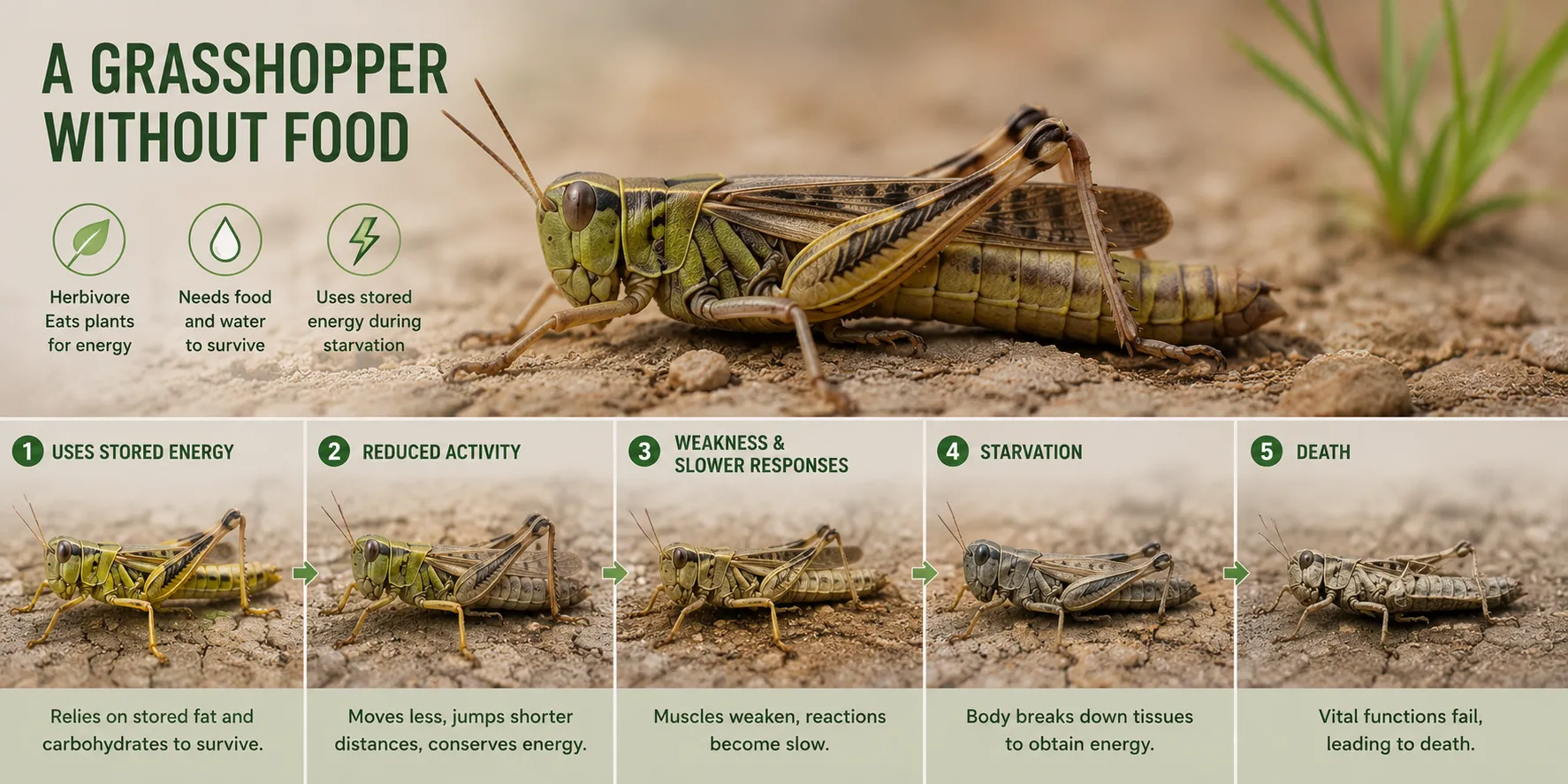
When a grasshopper is unable to find food, starvation generally progresses through several stages.
Stage 1: Uses Stored Energy
During the first stage, the grasshopper survives by using stored carbohydrates and fats to maintain essential body functions.
Stage 2: Reduced Activity
As energy reserves decline, the grasshopper becomes less active. It jumps less often, flies shorter distances, and conserves energy by remaining still.
Stage 3: Weakness and Slower Responses
Without enough nutrients, muscles become weaker, and the insect reacts more slowly to predators or environmental changes.
Stage 4: Starvation
If food remains unavailable, the grasshopper begins breaking down more body tissues to obtain energy. Vital physiological processes gradually slow down.
Stage 5: Death
Eventually, the body can no longer produce enough energy to support basic life functions, leading to death from starvation.
Possible Causes
A grasshopper may remain without food for several reasons.
| Cause | Explanation |
|---|---|
| Lack of vegetation | Grass, leaves, or crops are unavailable. |
| Drought | Plants dry out, reducing available food. |
| Cold weather | Lower temperatures reduce feeding activity. |
| Injury | An injured grasshopper may be unable to search for food. |
| Captivity | A pet grasshopper may not receive suitable plants. |
| Habitat destruction | Farming, construction, or fires may remove food sources. |
Since grasshoppers are herbivores, they rely mainly on grasses, leaves, and other green plants for nutrition.
Signs & Symptoms
A starving grasshopper may show several noticeable signs.
-
Reduced movement
-
Less jumping or flying
-
Weak or slow responses
-
Weight loss
-
Lower feeding attempts
-
Difficulty escaping predators
-
Eventually becoming motionless
Scientists have also observed that starving insects often change their behavior to conserve energy or increase their chances of finding food. Some species may even travel farther in search of vegetation when food becomes scarce.
Recovery or Survival
If food becomes available before starvation reaches a critical stage, many grasshoppers can recover.
Recovery depends on factors such as:
-
The species
-
Age of the grasshopper
-
Duration of starvation
-
Environmental temperature
-
Availability of nutritious plants
After feeding again, the grasshopper gradually restores its energy reserves and normal activity. However, if starvation has lasted too long, recovery may not be possible because prolonged nutrient deficiency can permanently damage the insect's body.
Common Misconceptions
"A grasshopper can survive for weeks without food."
Not usually.
Most grasshoppers require regular feeding, and while survival time varies by species and environmental conditions, prolonged starvation greatly reduces survival.
"Grasshoppers only need water."
No.
Grasshoppers obtain essential nutrients from plants, and much of their moisture also comes from the vegetation they eat. Water alone cannot meet their nutritional needs.
"A motionless grasshopper is always dead."
Not necessarily.
A grasshopper may remain still to conserve energy, avoid predators, or because of cold temperatures. Lack of movement alone doesn't always indicate death.
Frequently Asked Questions (FAQs)
1. What happens if a grasshopper doesn't eat?
It gradually uses its stored energy, becomes weaker, moves less, and may eventually die if food isn't found.
2. How long can a grasshopper survive without food?
There is no single answer because it depends on the species, age, temperature, and environmental conditions. Under favorable conditions, some grasshoppers may survive for several days without food.
3. Do grasshoppers need water to survive?
Yes, but they obtain much of their moisture from the plants they eat. Fresh vegetation provides both nutrients and water.
4. Can a starving grasshopper recover?
Yes.
If food becomes available before severe starvation occurs, many grasshoppers can regain their strength and resume normal activity.
5. Why does a starving grasshopper stop moving?
Reducing movement helps conserve the little energy remaining in its body, increasing its chances of surviving until food becomes available.
When a grasshopper stays in one place without food, it doesn't die immediately. Instead, it goes through a gradual starvation process in which it first uses stored energy, becomes less active, and eventually weakens if food remains unavailable. The exact survival time varies depending on the species and environmental conditions, but regular access to plants is essential for its health and survival. Understanding this process helps explain how insects respond to food shortages and adapt to changing environments.
Must Read: Where Does the Phrase Patience Young Grasshopper Originate?