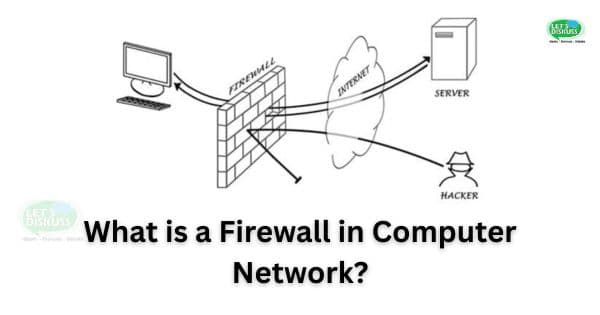
A firewall is a critical security system designed to monitor, filter, and control network traffic based on predefined security rules. It serves as a barrier between a trusted internal network and untrusted external networks, such as the internet, protecting sensitive data, preventing unauthorized access, and mitigating cyber threats.
Firewalls have evolved over time, adapting to new threats and technological advancements, and are essential components of modern cybersecurity infrastructures. They can be implemented as hardware, software, or a combination of both.
Functions and Importance of Firewalls
The primary purpose of a firewall is to:
-
Prevent Unauthorized Access: Blocks unwanted connections from external sources trying to access private networks.
-
Monitor Network Traffic: Examines incoming and outgoing traffic, allowing or blocking data packets based on security rules.
-
Defend Against Cyber Threats: Protects networks from malware, hacking attempts, and data breaches.
-
Establish Secure Communication: Ensures safe data exchange between internal and external networks.
-
Filter Content: Blocks access to certain websites or services that may be harmful or unnecessary.
Types of Firewalls
Firewalls can be classified based on their deployment and filtering methods:
1. Packet-Filtering Firewall
Packet-filtering firewalls inspect individual data packets traveling across the network. They analyze the packet’s source, destination address, port numbers, and protocol type, then compare them against a set of rules to allow or block them. These firewalls are fast but provide basic protection and lack deep packet inspection.
2. Stateful Inspection Firewall
Stateful firewalls maintain a table of active connections and keep track of the state of each connection. Unlike packet-filtering firewalls, they examine the entire session rather than individual packets, ensuring enhanced security by blocking unauthorized access attempts while allowing legitimate connections.
3. Proxy Firewall (Application Layer Firewall)
Proxy firewalls act as intermediaries between users and external networks, forwarding requests on behalf of users while masking their identities. They filter traffic at the application level, inspecting specific protocols such as HTTP, FTP, and DNS. Proxy firewalls enhance security by preventing direct communication between the internal network and external sources.
4. Next-Generation Firewall (NGFW)
NGFWs combine traditional firewall capabilities with advanced threat detection mechanisms, including deep packet inspection (DPI), intrusion prevention systems (IPS), and malware filtering. These firewalls offer improved security by detecting sophisticated cyberattacks.
5. Cloud-Based Firewall
Cloud firewalls, also known as Firewall-as-a-Service (FWaaS), are hosted in the cloud and provide network security for distributed environments. They are scalable, easy to deploy, and useful for securing remote connections.
6. Hybrid Firewall
Hybrid firewalls integrate multiple firewall types to provide comprehensive protection. They combine packet filtering, stateful inspection, application-layer filtering, and threat intelligence to create a robust security framework.
How Firewalls Work
Firewalls operate using various techniques to filter, inspect, and regulate network traffic:
-
Rule-Based Filtering: Configured rules define what traffic is permitted or blocked.
-
IP Address Filtering: Restricts access based on specific IP addresses.
-
Port Blocking: Controls communication through specific ports to prevent unauthorized entry.
-
Protocol Filtering: Allows or denies traffic based on the type of network protocol (TCP, UDP, ICMP).
-
Deep Packet Inspection: Analyzes the content of data packets to detect threats or anomalies.
Firewall Deployment Methods
Firewalls can be deployed in different ways depending on network needs:
1. Network-Based Firewall
Installed on network gateways or routers to protect entire networks from external threats. They filter traffic at a broader level, safeguarding multiple devices.
2. Host-Based Firewall
Installed directly on individual devices (e.g., laptops, servers) to secure specific endpoints. These firewalls prevent malware infections and unauthorized access at the device level.
3. Cloud Firewall
Used to protect cloud environments, including SaaS applications and remote networks. They provide scalable security for businesses with distributed operations.
Challenges and Limitations of Firewalls
While firewalls provide essential security, they also have limitations:
-
Cannot Stop Internal Attacks: Firewalls prevent external threats but may not detect insider threats.
-
Complex Configuration: Misconfigured rules can lead to vulnerabilities or unintended restrictions.
-
Performance Impact: Extensive filtering may slow down network traffic.
-
Advanced Cyber Threats: Firewalls may not detect sophisticated attacks like zero-day vulnerabilities or social engineering threats.
To overcome these challenges, firewalls are often integrated with antivirus programs, intrusion detection systems (IDS), and artificial intelligence-driven cybersecurity solutions.
Conclusion
A firewall is an indispensable security tool for networks, ensuring protection against cyber threats and unauthorized access. Whether used by enterprises, individuals, or cloud service providers, firewalls form the foundation of network security strategies.
With evolving cyber risks, organizations must continuously update firewall configurations, integrate advanced security solutions, and adopt multi-layered security approaches to maintain robust protection.