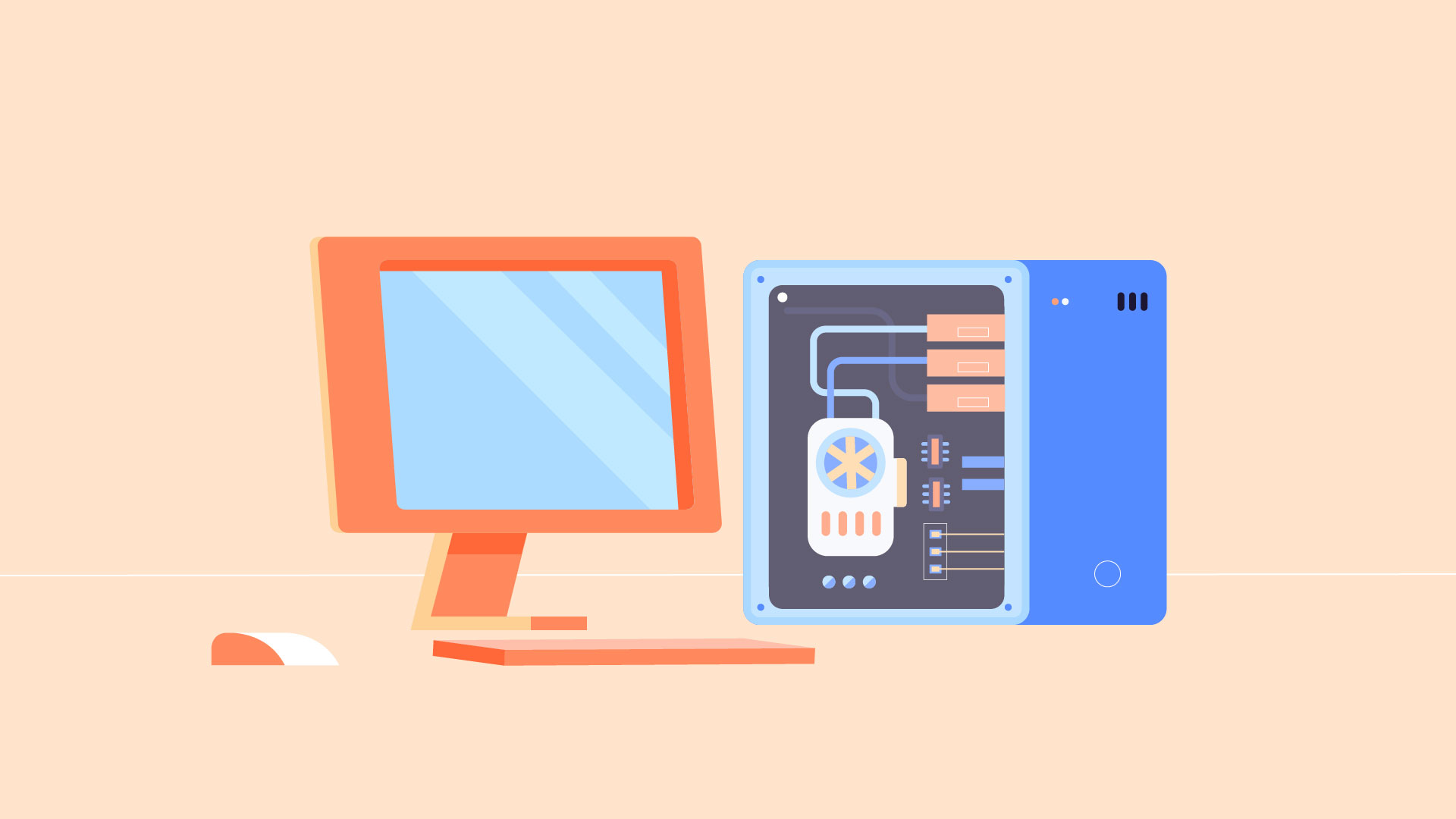
A computer is an electronic device that is designed to accept data as input, process that data according to a set of instructions (called programs), store the data if needed, and then produce meaningful information as output. It is one of the most important inventions in modern times and is widely used in almost every field such as education, business, healthcare, communication, and entertainment.
A computer works on the basic principle of Input → Process → Output (IPO cycle). First, it receives raw data through input devices like a keyboard, mouse, or scanner. Then, the Central Processing Unit (CPU), which is considered the “brain” of the computer, processes this data by performing calculations and logical operations. After processing, the results are shown to the user through output devices such as a monitor, printer, or speakers.
A computer also has the ability to store large amounts of data in storage devices like hard drives, SSDs, or memory units, so that the information can be used later. It operates with high speed, accuracy, and reliability, making it much more efficient than manual work. Computers can perform a wide variety of tasks, from simple calculations to complex operations like data analysis, designing, programming, and running applications. They come in different types, such as desktops, laptops, tablets, and supercomputers, depending on their size, power, and purpose. In simple terms, a computer is a powerful machine that helps humans perform tasks more quickly, accurately, and efficiently by processing data into useful information.