
Dehydration is a condition that occurs when the body loses more fluid than it takes in. Because water is essential for many body functions, including regulating temperature, supporting digestion, transporting nutrients, and maintaining normal blood circulation, too little fluid can affect how the body works.
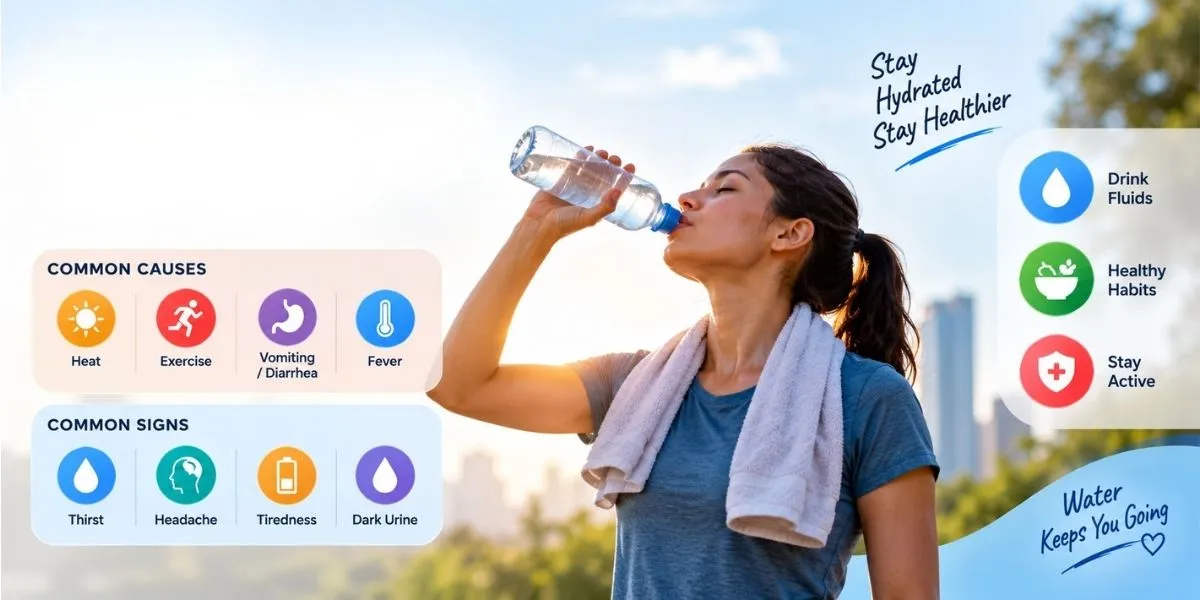
Dehydration can happen to anyone. Common causes include heavy sweating, vomiting, diarrhea, fever, prolonged physical activity, and not drinking enough fluids. Mild dehydration is common, but severe dehydration can be serious and may require medical attention.
What Causes Dehydration?
Dehydration usually occurs when the body loses fluids faster than they are replaced. Common causes include:
Heavy sweating: Exercise, hot weather, or strenuous activity can increase fluid loss.
Vomiting or diarrhea: These can cause significant losses of water and electrolytes.
Fever: An elevated body temperature can contribute to fluid loss.
Frequent urination: Some medical conditions and medicines can increase fluid loss.
Not drinking enough: Illness, reduced thirst, or simply forgetting to drink can lead to inadequate fluid intake.
Children and older adults can be more vulnerable to dehydration, particularly during illness or periods of increased fluid loss.
What Are the Symptoms of Dehydration?
Dehydration symptoms can vary depending on the amount of fluid lost. Common signs include:
Increased thirst
Dry mouth or lips
Dark-colored urine
Urinating less often
Tiredness or weakness
Dizziness or lightheadedness
Headache
More serious dehydration may cause confusion, fainting, very little or no urination, or other severe symptoms. These signs require prompt medical attention.
How Is Dehydration Treated?
The main goal of dehydration treatment is to replace lost fluids and, when necessary, electrolytes.
For mild dehydration, drinking water and other appropriate fluids can help restore hydration. When fluid loss is associated with vomiting or diarrhea, an oral rehydration solution (ORS) may be useful because it provides fluids and electrolytes in appropriate proportions.
Severe dehydration may require medical treatment, including fluids given through a vein. The underlying cause of the dehydration may also need to be treated.
If a person cannot keep fluids down, develops severe symptoms, or appears seriously unwell, medical care should be sought promptly.
How Can Dehydration Be Prevented?
Simple habits can help reduce the risk of dehydration:
Drink fluids regularly.
Increase fluid intake when exercising or spending time in hot conditions.
Replace fluids lost through heavy sweating.
Pay attention to thirst and other signs of fluid loss.
During vomiting or diarrhea, ask a healthcare professional about appropriate rehydration.
Fluid needs vary from person to person depending on factors such as age, activity level, weather, diet, and health conditions.
Why Is Water Important?
Water supports many essential processes, including temperature regulation, circulation, digestion, and normal cellular function. The body continually loses water through urination, sweating, breathing, and other processes, so fluids need to be replaced regularly.
Conclusion
Dehydration means the body does not have enough fluid to function normally. It can result from not drinking enough, excessive sweating, fever, vomiting, diarrhea, or other causes of fluid loss.
Recognizing dehydration symptoms and replacing lost fluids can help prevent the condition from becoming more serious. When dehydration is severe or occurs alongside significant illness, professional medical care is important.
Also Read: What is Dizziness