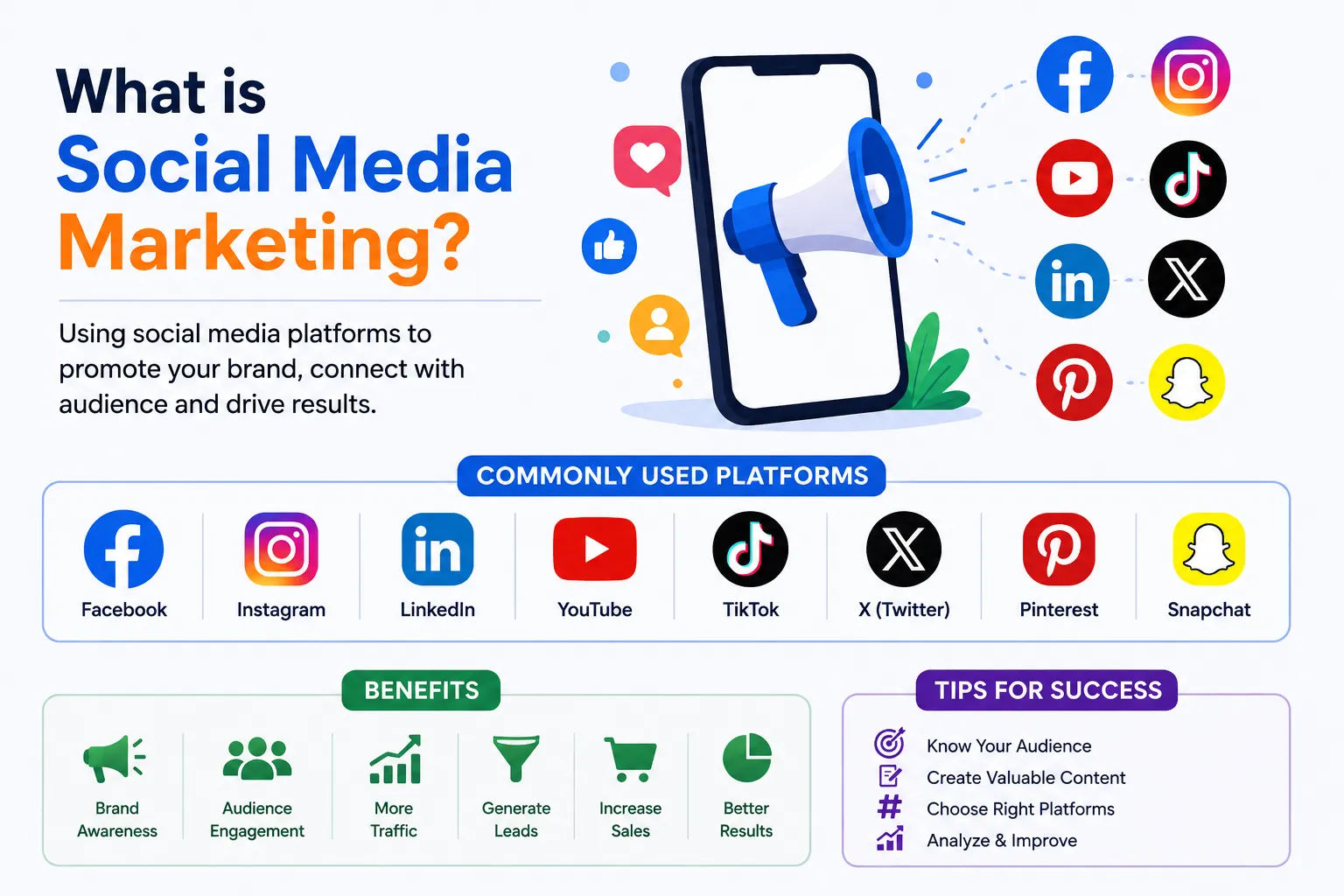
Social media marketing (SMM) is the use of social media platforms to promote a business, product, service, organization, or personal brand. It allows businesses to reach their target audience, increase brand awareness, interact with customers, and achieve objectives such as lead generation, website traffic, and sales.
Businesses can use platforms such as Facebook, Instagram, YouTube, TikTok, LinkedIn, Pinterest, X (formerly Twitter), and Snapchat.
However, not every business needs to be on every platform. The right choice depends on the target audience, type of business, content strategy, and marketing objectives.
What Is Social Media Marketing?
Social media marketing is a form of digital marketing that involves using social networking and content-sharing platforms to promote a brand, product, or service and connect with an audience.
Social media marketing can involve a range of activities, including:
Creating and sharing organic content
Building online communities
Responding to comments, questions, and messages
Collaborating with influencers and content creators
Running paid social media advertising campaigns
Promoting products and services
Driving traffic to a website or landing page
Generating leads and supporting sales
Monitoring performance and optimizing campaigns
One of the biggest advantages of social media is the direct communication businesses can have with their customers. Brands can do more than simply advertise. They can have conversations, answer questions, collect feedback, provide support, and build long-term relationships with their audiences.
What Are the Best Social Media Marketing Platforms?
Different social media platforms offer different benefits, audiences, and content formats. Businesses generally choose platforms based on where their target customers are most active and what they want to accomplish.
Platform | Common Marketing Uses |
|---|---|
Brand awareness, advertising, lead generation, customer engagement, community building | |
Visual marketing, Reels, Stories, creator collaborations, product promotion | |
YouTube | Product reviews, tutorials, educational content, video marketing, advertising |
TikTok | Short-form video, trending content, creator marketing, brand awareness, product discovery |
B2B marketing, professional networking, thought leadership, recruitment | |
Product discovery, visual search, inspiration, website traffic | |
X (formerly Twitter) | Customer engagement, brand communication, news, real-time conversations |
Snapchat | Short-form visual content, creator campaigns, advertising, audience engagement |
What Is the Best Social Media Platform for Marketing?
There is no single social media platform that works best for every business. The right platform depends on who you are trying to reach, the type of content you create, and what you are trying to accomplish.
Marketing Objective | Popular Platforms |
|---|---|
Brand awareness | Facebook, Instagram, TikTok, YouTube |
B2B marketing | |
Short-form video | TikTok, Instagram, YouTube |
Long-form video | YouTube |
Community building | Facebook, Instagram, LinkedIn |
Creator/influencer marketing | Instagram, TikTok, YouTube |
Product discovery | Instagram, TikTok, Pinterest |
Website traffic | Pinterest, Facebook, Instagram, YouTube |
Thought leadership | LinkedIn, YouTube, X |
The goal is not to be everywhere simply because you can. For most businesses, it makes more sense to focus on the platforms where their target audience is most active and where they can consistently produce quality content.
How Does Social Media Marketing Work?
A successful social media marketing campaign typically follows a few basic steps.
1. Define Clear Marketing Goals
First, define what you want to accomplish with your social media marketing.
Your objectives could include:
Building brand awareness
Increasing engagement
Driving traffic to your website
Generating leads
Increasing conversions
Increasing sales
Having a clear goal helps you determine what type of content you need to create and how you will measure success.
2. Know Your Audience
Next, learn about the people you want to reach.
Consider their:
Interests
Needs and problems
Age group
Online behavior
Content preferences
Preferred social media platforms
When you know who you are talking to, you can create content for them instead of simply trying to sell to them.
3. Pick the Right Platforms
Once you understand your audience, select the social media channels that align with your business and marketing goals.
For example, a company selling visually appealing products may benefit from Instagram or Pinterest, while a B2B company may find more value in LinkedIn.
You do not need to use every platform. Focus on the platforms your audience uses and where your business can consistently provide value.
4. Create Valuable and Engaging Content
Content is at the heart of social media marketing.
Businesses can publish:
Videos
Images
Stories
Short-form videos
Articles
Live streams
Educational content
Product demonstrations
Tutorials
Customer-generated content
Good content should give people a reason to stop, watch, read, share, or interact.
Depending on the brand, that could mean educating people, entertaining them, answering common questions, solving problems, or demonstrating how a product or service can help.
5. Engage With Your Audience
Social media is not simply about posting content and leaving.
Businesses should also be prepared to respond to:
Comments
Messages
Questions
Reviews
Feedback
Regular interaction can make a brand more approachable and help businesses build stronger relationships with their audiences.
6. Use Paid Advertising When Necessary
Businesses can pay social media platforms to show their content or advertisements to specific audiences.
Social media advertising can be targeted using factors such as:
Location
Demographics
Interests
Online behavior
Other audience characteristics
Paid campaigns can be particularly useful when a business wants to expand its reach, generate leads, promote a product, or achieve a specific campaign goal.
7. Track and Measure Results
Finally, businesses need to look at what is actually working.
Common social media marketing metrics include:
Metric | What It Measures |
|---|---|
Impressions | The number of times content or an advertisement was displayed |
Reach | The number of people who saw the content |
Engagement | Interactions such as likes, comments, shares, and saves |
Click-through rate (CTR) | The percentage of people who clicked a link or advertisement |
Website visits | Traffic generated from social media |
Leads | Potential customers generated through campaigns |
Conversions | Desired actions completed by users |
ROAS | Revenue generated compared with advertising spend |
These insights help businesses understand what appeals to their audience and make better decisions about future campaigns.
Why Is Social Media Marketing Important?
Social media is an important part of digital marketing because it provides businesses with a direct way to connect with potential and existing customers.
Some of the major benefits include:
Build Brand Awareness
Social media can help businesses reach more people and increase brand recognition over time.
Engage With Customers
Brands can communicate directly with customers through comments, messages, reviews, and other interactions.
Reach the Right Audiences
Businesses can target specific audience segments through organic content and paid advertising.
Drive Website Traffic and Leads
Social posts and campaigns can drive people to websites, landing pages, product pages, and other online assets.
Promote Products and Services
Videos, images, product demonstrations, tutorials, and creator content can make products and services easier to discover.
Provide Customer Service
Social media can provide another channel for answering customer questions, addressing concerns, and offering support.
Build Online Communities
Brands can connect people who are interested in their products, services, industry, or ideas.
Measure Marketing Performance
Social media analytics allow businesses to track engagement, traffic, leads, conversions, and other campaign results.
Having a social media profile does not guarantee success. Results depend on choosing the right channels, understanding the audience, creating useful content, maintaining consistency, and analyzing performance.
Organic vs. Paid Social Media Marketing
There are generally two main types of social media marketing: organic social media marketing and paid social media marketing.
Organic Social Media Marketing | Paid Social Media Marketing |
|---|---|
Uses unpaid content and engagement | Uses paid advertising |
Focuses on building an audience and community | Focuses on targeted reach and campaign objectives |
Includes posts, Stories, videos, and community engagement | Includes sponsored posts, video ads, lead ads, and other paid formats |
Can help build long-term relationships | Can quickly increase reach and exposure |
Does not require an advertising budget for distribution | Requires an advertising budget |
Many businesses use a combination of both strategies.
Over time, organic content can help a brand build trust, personality, and a loyal community. Paid advertising can help expose the business to a broader or more targeted audience and support specific marketing goals.
Frequently Asked Questions About Social Media Marketing
What Is Social Media Marketing in Simple Words?
Social media marketing is the use of social media platforms to promote a brand, engage with customers, share content, and achieve goals such as increasing awareness, driving traffic, generating leads, or increasing sales.
What Are the Best Social Media Marketing Platforms?
Popular platforms include Facebook, Instagram, YouTube, TikTok, LinkedIn, Pinterest, X, and Snapchat. The right platform depends on the business, target audience, content strategy, and marketing goals.
What Are the Benefits of Social Media Marketing?
The benefits of social media marketing include increasing brand awareness, engaging with customers, building communities, promoting products and services, generating leads, driving website traffic, providing customer service, and measuring marketing performance.
What Is the Difference Between Organic and Paid Social Media Marketing?
Organic social media marketing involves sharing content and engaging with people without paying to promote it. Paid social media marketing involves paying a social media platform to display advertisements or sponsored content to targeted audiences.
Which Social Media Platform Is Best for Marketing?
There is no single best social media platform for every business. Businesses should consider where their target audience spends time, what type of content they can consistently create, and what they want to achieve.
For example, LinkedIn can be particularly effective for B2B marketing, while Instagram, TikTok, and YouTube can be useful for brands that rely heavily on visual or video content.
Key Takeaway
Social media marketing is much more than posting on social media. It involves understanding your audience, choosing the right platforms, creating useful content, engaging with customers, using paid advertising when appropriate, and measuring results.
Businesses can use Facebook, Instagram, YouTube, TikTok, LinkedIn, Pinterest, X, Snapchat, and other platforms to increase brand awareness, promote products or services, generate leads, drive website traffic, and build stronger relationships with customers.
Ultimately, it is not about being everywhere. Businesses should invest their time and resources in the platforms that best fit their audience, content, budget, and marketing goals.
Also Read: How does a Digital Marketing Agency Work?
Source & Reference: