
A sporophyll is a specialized leaf that bears one or more sporangia, the structures responsible for producing spores in plants. In simple terms, a sporophyll is a reproductive leaf whose primary function is to help the plant reproduce by producing spores instead of seeds. Sporophylls are found in several groups of plants, including ferns, lycophytes, gymnosperms, and some algae. In seed plants, they have evolved into reproductive structures such as stamens and carpels.
The word "sporophyll" comes from two Greek words:
-
Spora = Seed or spore
-
Phyllon = Leaf
Together, sporophyll literally means "spore-bearing leaf."
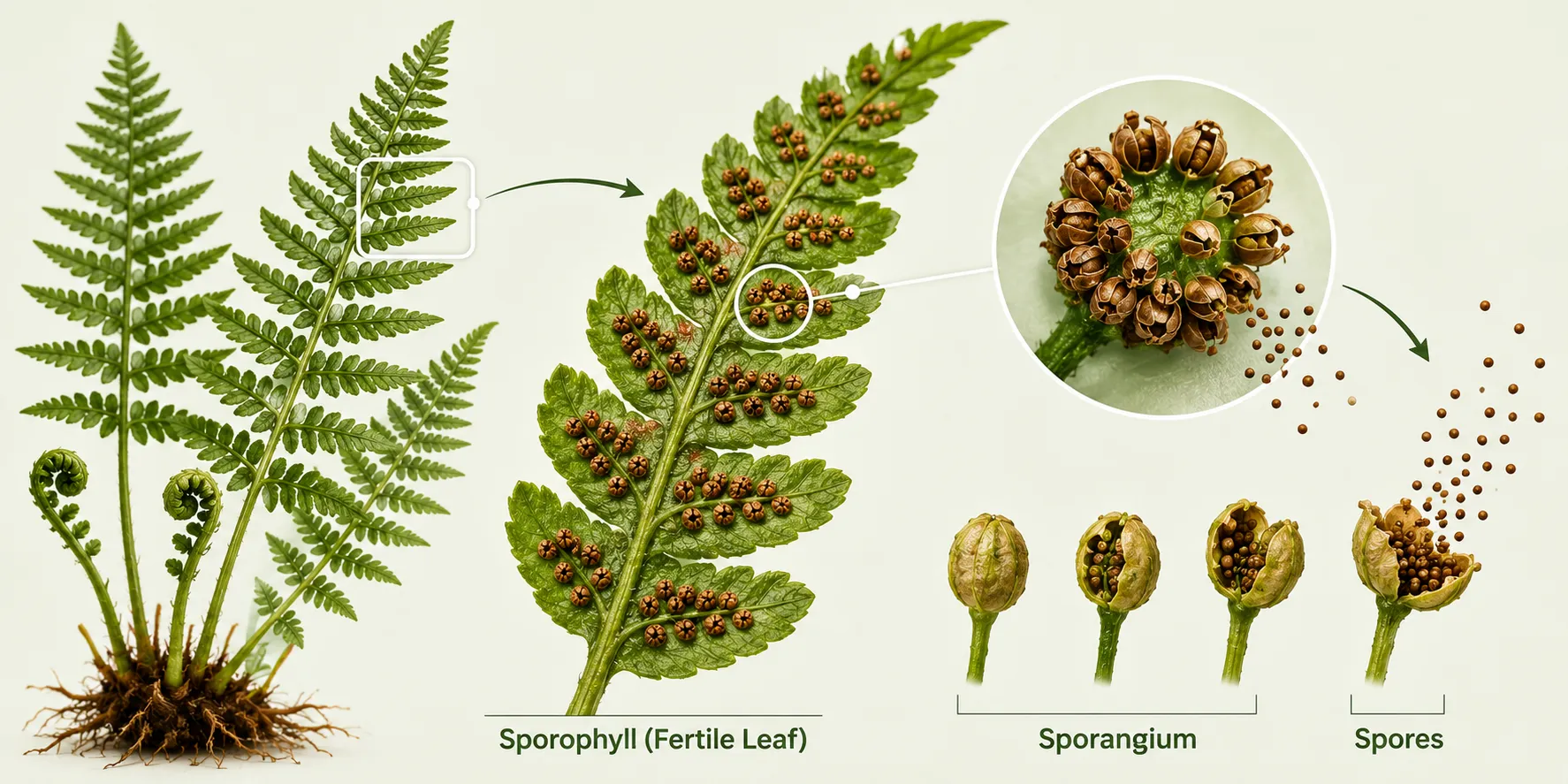
Structure
Although sporophylls vary among plant groups, they generally have the following structure:
| Part | Description |
|---|---|
| Leaf (Modified Leaf) | The main leaf structure that supports reproduction. |
| Sporangia | Small sac-like structures attached to the sporophyll where spores are produced. |
| Spores | Reproductive cells released from the sporangia. |
| Supporting Tissue | Connects the sporophyll to the plant and supplies water and nutrients. |
In many plants, multiple sporophylls are arranged together to form a strobilus (cone), especially in gymnosperms and some lycophytes.
Function
The primary function of a sporophyll is spore production and reproduction.
Its major functions include:
-
Produces and supports sporangia.
-
Protects developing spores.
-
Helps disperse spores for reproduction.
-
Supports the plant's life cycle through spore formation.
-
Contributes to the continuation of plant species.
-
In some plants, also performs photosynthesis if the sporophyll remains green.
Without sporophylls, many spore-producing plants would not be able to complete their reproductive cycle.
Types
In heterosporous plants, sporophylls are classified into two main types.
| Type | Function |
|---|---|
| Microsporophyll | Bears microsporangia, which produce microspores that develop into male gametophytes (or pollen in seed plants). |
| Megasporophyll | Bears megasporangia, which produce megaspores that develop into female gametophytes. |
Plants that produce only one type of spore generally have a single type of sporophyll, whereas heterosporous plants produce separate microsporophylls and megasporophylls.
Examples
Sporophylls occur in several groups of plants.
| Plant Group | Example |
|---|---|
| Ferns | Fertile fronds bearing sori on the underside of leaves |
| Lycophytes | Selaginella, Lycopodium |
| Gymnosperms | Pine, Cycas, Ginkgo |
| Flowering Plants | Stamens (microsporophylls) and carpels (megasporophylls), according to botanical interpretation |
For example:
-
In ferns, sporophylls often resemble ordinary leaves but carry clusters of sporangia (sori) on their underside.
-
In pine trees, microsporophylls and megasporophylls are arranged into separate male and female cones.
-
In Cycas, large cone-like reproductive structures are composed of specialized sporophylls.
Related Structures
Several botanical terms are closely related to sporophylls but refer to different structures.
| Structure | Primary Function |
|---|---|
| Sporophyll | Specialized leaf that bears sporangia. |
| Sporangium | Sac-like structure where spores are produced. |
| Strobilus (Cone) | Compact arrangement of many sporophylls around a central axis. |
| Trophophyll | Sterile leaf specialized mainly for photosynthesis rather than reproduction. |
A simple way to remember the difference is:
A sporophyll is the leaf, a sporangium is the spore-producing structure attached to it, and multiple sporophylls together may form a strobilus (cone).
Importance
Sporophylls are essential for the reproduction of many plants.
Their importance includes:
-
Enable plants to reproduce through spores.
-
Protect developing reproductive structures.
-
Support the alternation of generations in the plant life cycle.
-
Increase reproductive success through efficient spore production.
-
Help maintain plant diversity and evolution.
-
Play a crucial role in gymnosperms and seedless vascular plants.
From an evolutionary perspective, sporophylls represent one of the earliest specialized reproductive structures in land plants and have contributed significantly to the evolution of modern plant reproduction.
Common Misconceptions
"A sporophyll is the same as a normal leaf."
Not exactly.
A sporophyll is a specialized reproductive leaf that bears sporangia, whereas ordinary leaves mainly perform photosynthesis.
"All leaves are sporophylls."
No.
Most leaves are vegetative leaves designed for photosynthesis. Only leaves that bear sporangia are called sporophylls.
"Sporophylls are found only in ferns."
Incorrect.
Sporophylls occur in ferns, lycophytes, gymnosperms, and some algae. In flowering plants, reproductive organs such as stamens and carpels are often interpreted as highly modified sporophylls.
"Sporophylls produce seeds."
No.
Sporophylls produce spores, not seeds. Seeds develop only in seed plants after fertilization, whereas spores are single reproductive cells capable of developing into a new generation without containing an embryo.
Frequently Asked Questions (FAQs)
1. What is a sporophyll?
A sporophyll is a specialized leaf that bears sporangia, the structures that produce spores for plant reproduction.
2. What is the function of a sporophyll?
Its primary function is to produce, support, and protect sporangia that generate spores.
3. Where are sporophylls found?
They are found in ferns, lycophytes, gymnosperms, some algae, and—according to botanical interpretation—in the reproductive organs of flowering plants.
4. What is the difference between a sporophyll and a sporangium?
A sporophyll is the leaf that bears the reproductive structures, while a sporangium is the sac-like structure where spores are actually produced.
5. What are microsporophylls and megasporophylls?
Microsporophylls produce microspores (male spores), while megasporophylls produce megaspores (female spores) in heterosporous plants.
A sporophyll is a specialized reproductive leaf that plays a vital role in the life cycle of many plants by producing and supporting sporangia, where spores are formed. Found in groups such as ferns, lycophytes, and gymnosperms, sporophylls are fundamental to plant reproduction and have played an important role in the evolution of land plants. Understanding the relationship between sporophylls, sporangia, and spores provides a strong foundation for learning plant biology and the reproductive strategies that evolved long before flowering plants became dominant.
Must Read: How many plant species are there?
 Answered by