
A tattoo is a permanent or long-lasting design, image, symbol, or text placed into the skin using pigment. Tattoos are a form of body art and body modification and have been used by different cultures around the world for thousands of years.
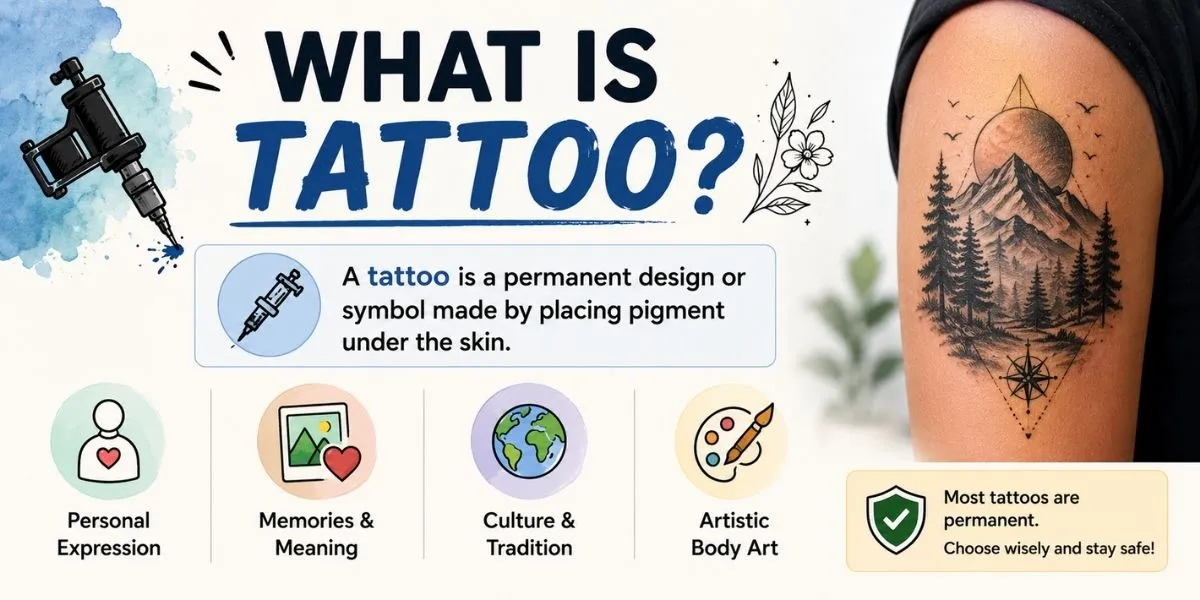
In simple words, a tattoo is ink or pigment placed beneath the surface of the skin to create a lasting design.
People may get tattoos for many different reasons. Some choose designs that represent their culture, beliefs, memories, interests, or personal experiences, while others see tattoos simply as a form of artistic expression.
How Does a Tattoo Work?
A tattoo is created by placing pigment into a deeper layer of the skin. Professional tattooing uses specialized equipment designed to deposit pigment beneath the skin's surface.
Because the pigment is placed below the outermost layer of skin, it can remain visible for a very long time. This is why tattoos are generally considered permanent.
The skin naturally changes over time, so tattoos can gradually fade or change in appearance. However, they do not normally disappear simply because the skin's surface is replaced.
What Is a Tattoo Used For?
Tattoos can have many different purposes.
1. Personal expression
Some people use tattoos to express their personality, interests, or creativity.
For example, someone might choose an artistic design that represents a hobby or an important idea.
2. Memories and meaningful events
A tattoo may represent an important person, place, date, or experience.
For some people, it can serve as a lasting reminder of something meaningful in their lives.
3. Cultural or traditional purposes
Tattooing has a long history in many cultures. Traditional tattoo practices have been used to represent identity, community, status, beliefs, or cultural heritage.
The meaning of a tattoo can therefore vary greatly from one culture to another.
4. Artistic purposes
Many people view tattooing as a form of visual art. Tattoo artists may create detailed designs involving patterns, illustrations, symbols, lettering, or other artwork.
Are Tattoos Permanent?
Most tattoos are considered permanent.
Although tattoos can fade over time, removing them completely can be difficult. Tattoo removal may require professional medical procedures, and results can vary depending on factors such as the tattoo's pigment, size, location, and the individual's skin.
This is one reason getting a tattoo is a decision that should be considered carefully.
Are Tattoos Safe?
Tattooing involves breaking the skin, so it carries potential health risks. These can include infection, allergic reactions, skin irritation, and scarring.
Using unsterile equipment can increase the risk of infection and transmission of blood-borne infections.
Anyone considering a tattoo should understand the risks and follow local health and safety requirements. Laws about tattooing, including minimum age requirements and parental consent, vary by location.
Tattoo vs. Temporary Tattoo
Feature | Permanent Tattoo | Temporary Tattoo |
|---|---|---|
Duration | Long-lasting/permanent | Short-term |
Pigment placement | Beneath the skin | On or near the skin's surface |
Removal | Can be difficult | Usually fades or washes away |
Skin procedure | Involves breaking the skin | Usually does not involve needles |
Purpose | Long-term body art | Temporary decoration or experimentation |
Temporary tattoos can be an alternative for someone who wants to try a design without making a permanent change to their skin.
What Does a Tattoo Symbolize?
A tattoo can symbolize almost anything, depending on the person and the culture.
Common meanings include:
Love or friendship
Family
Cultural identity
Personal memories
Important experiences
Beliefs or values
Creativity and self-expression
There is no universal meaning for every tattoo design. The same symbol can have different meanings in different cultures or for different people.
What Is a Tattoo?
A tattoo is a permanent or long-lasting design, symbol, image, or text created by placing pigment beneath the skin. It is a form of body art that can be used for personal expression, cultural identity, remembrance, or artistic purposes.
A tattoo is a lasting design or mark made by placing pigment beneath the skin. Tattoos can represent personal memories, cultural traditions, beliefs, creativity, or individual expression. Because they are generally permanent and involve the skin, getting one is a decision that should be considered carefully.
Also Read: What is purity?