
Fiber is an important part of a healthy diet. It helps keep your digestive system working properly, supports regular bowel movements, and can also play a role in overall health. The good thing is that you can get plenty of fiber naturally from everyday foods.
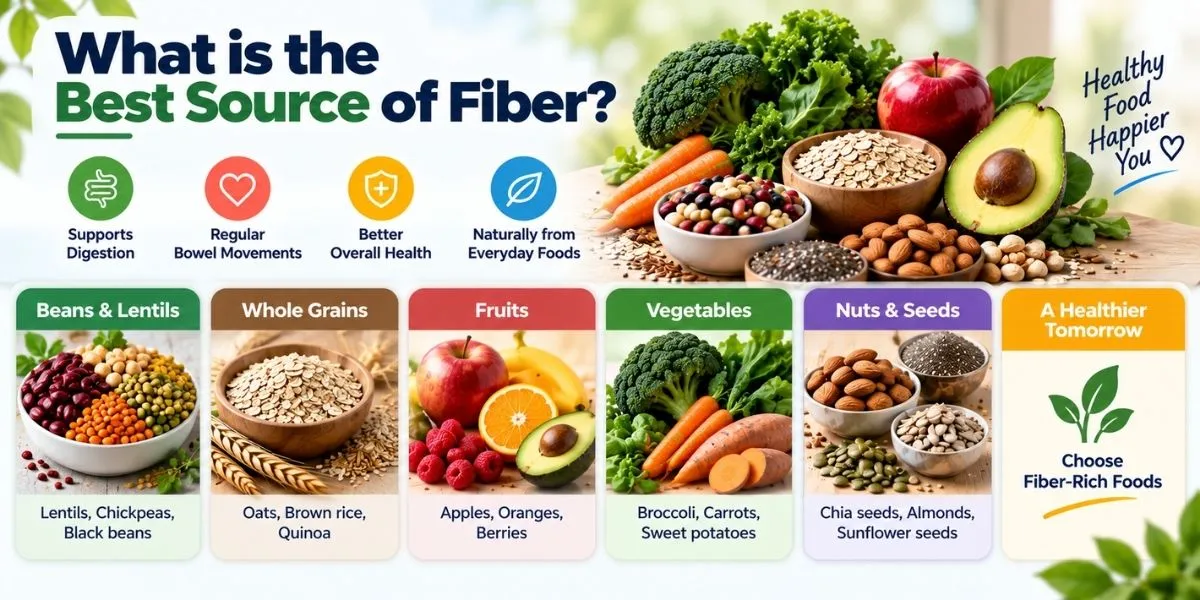
There is no single food that can be called the “best” source of fiber for everyone. A better approach is to include different fiber-rich foods in your daily meals, such as fruits, vegetables, beans, lentils, whole grains, nuts, and seeds.
What does fiber mean?
Fiber is a type of carbohydrate that is mainly found in plant-based foods. Unlike many other carbohydrates, your body does not completely digest fiber.
It moves through the digestive system and can support healthy digestion. Fiber is generally divided into two main types: soluble fiber and insoluble fiber, and many foods contain both.
What Are the Best Sources of Fiber?
Some of the best natural sources of fiber are:
Lentils and beans
Whole grains
Fruits
Nuts
Seeds
Vegetables
The good news is these foods are more than just fiber. They also can supply important vitamins, minerals, protein, healthy fats and other nutrients.
Beans and Legumes
When you want more fiber, beans and lentils are some of the easiest foods to add to your diet. They are also filling and can offer you plant-based protein.
Good choices are:
Lentils
Chickpeas
Black beans
Kidney beans
Split pea
You can add them to soups, salads, curries, rice dishes and wraps.
Whole Grains
Whole grains are also a great source of fiber. Foods like oats, brown rice, barley and whole-wheat products are more naturally grainy than their refined counterparts.
Some options are:
Oats
Br. rice
Wholemeal bread
Whole grain noodles
Barley
Quinua
For example, an easy way to add more fiber to your meals is to swap out cereal for oatmeal or white rice for brown rice for breakfast.
Fruit
Fruits are a good source of fiber and are tasty and convenient. They also provide vitamins, minerals and other beneficial plant compounds.
Options rich in fiber include:
Raspberries
Pears
Apples
Oranges
Bananas
Avocadoes
Choose whole fruit instead of juice when possible. Whole fruits contain fiber, but many fruit juices contain little or no fiber.
Vegetable
Vegetables are another important part of a high fiber diet. Adding a variety of vegetables to your meals can make it easier to get enough fiber throughout the day.
The good choices are:
Green peas
Broccoli
Carrots
Brussels sprouts
Sweet potatoes
Artichokes
You can add them to salads, soups, sandwiches, curries or just serve them with your main meal.
Seeds & Nuts
Nuts and seeds can also contribute to your daily fiber intake. They are easy to add to foods you already eat and can provide healthy fats and other nutrients as well.
Some good choices include:
Chia seeds
Flaxseeds
Almonds
Pistachios
Sunflower seeds
Try adding them to oatmeal, yogurt, salads, or smoothies.
How much fiber should you eat?
Your age and sex are among the factors that determine how much fiber you need. A general guideline used in the United States is 14 grams of fiber for every 1,000 calories consumed.
Rather than worrying about getting fiber from one specific food, focus on eating a variety of plant-based foods throughout the day.
How to Add More Fiber
You might think adding fiber is hard. It’s not. A few simple changes can make all the difference:
Choose whole-grain bread instead of refined bread.
Include beans or lentils in your meals.
Eat whole fruit instead of drinking fruit juice.
Include vegetables with your lunch and dinner.
Add nuts or seeds to suitable meals and snacks.
Choose oatmeal or another whole grain for breakfast.
If you are increasing your fiber intake, do it gradually and drink enough fluids. Increasing fiber too quickly can sometimes cause bloating or digestive discomfort.
What Is the Best Overall Source of Fiber?
There isn't one food that deserves the title of the single “best” source of fiber.
Beans, lentils, whole grains, fruits, vegetables, nuts, and seeds can all be excellent choices. The best approach is to eat a variety of these foods so you get different types of fiber along with other important nutrients.
Conclusion
The best sources of fiber are natural, plant-based foods. Beans and lentils are particularly good choices, while whole grains, fruits, vegetables, nuts, and seeds can also make a valuable contribution to your daily fiber intake.
Instead of depending on one particular food, try to include a mix of fiber-rich foods in your everyday meals. It is a simple and practical way to support a healthy, balanced diet.
Also Read: What is the best diet plan?