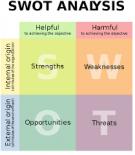
Internal and external environments differ in where they originate and how much control an organization has over them. The internal environment consists of factors within a company that management can influence directly, while the external environment includes outside forces that affect business operations but are generally beyond the organization's control.
In business and management, understanding both environments is essential because they shape decision-making, performance, growth, and long-term success. Companies that regularly analyze their internal strengths and external challenges are often better prepared to adapt to changing market conditions and maintain a competitive advantage.
The internal environment refers to everything that exists within an organization and influences its day-to-day activities. These factors are largely controllable because they are managed by the company itself. Common elements of the internal environment include employees, organizational culture, leadership style, company policies, financial resources, technology, and operational processes. For example, a business with skilled employees, strong leadership, and efficient systems is likely to perform better and respond more effectively to challenges.
Consider a technology company developing a new software product. If the company has experienced engineers, sufficient funding, and a culture that encourages innovation, these internal factors can positively impact product development and customer satisfaction. On the other hand, poor communication, high employee turnover, or limited resources may hinder growth and reduce productivity.
The external environment, in contrast, consists of factors outside the organization that can influence business activities but cannot be controlled directly. These factors include economic conditions, competitors, government regulations, technological advancements, customer preferences, social trends, and environmental issues. Businesses must monitor these external forces and adjust their strategies accordingly.
For instance, a retail company may experience declining sales during an economic recession because consumers reduce spending. Similarly, changes in government regulations may require businesses to modify their operations to remain compliant. Advances in technology can also create opportunities for innovation while increasing competitive pressure.
One practical way businesses analyze the external environment is through tools such as PESTLE analysis, which examines political, economic, social, technological, legal, and environmental factors. To evaluate internal strengths and weaknesses alongside external opportunities and threats, many organizations use a SWOT analysis. These strategic management tools help companies make informed decisions and prepare for future uncertainties.
A common misconception is that businesses can completely control their success through internal improvements alone. While strengthening internal capabilities is important, external factors such as market demand, industry competition, and regulatory changes can significantly influence outcomes. Successful organizations recognize the importance of balancing internal efficiency with external adaptability.
In conclusion, the internal environment includes controllable factors within an organization, such as employees, culture, and resources, while the external environment consists of uncontrollable outside influences, including economic conditions, competitors, and regulations. Understanding both environments enables businesses to make better strategic decisions, manage risks effectively, and improve their chances of long-term success.