
R
Ronni paul· 5 years ago
Exploring lifestyle, entertainment, and cultural trends through engaging, informative, and practical content.

What is the meaning of thug life?

2
4.1K

Join this conversation

Sort By

"Thug Life" is a phrase that became famous through rapper Tupac Shakur (2Pac). While many people use it today to describe someone acting tough, fearless, or rebellious, Tupac gave it a much deeper meaning. For him, T.H.U.G. L.I.F.E. stood for "The Hate U Give Little Infants F*s Everybody,"** a message about how neglect, violence, and inequality experienced by children eventually affect society as a whole.

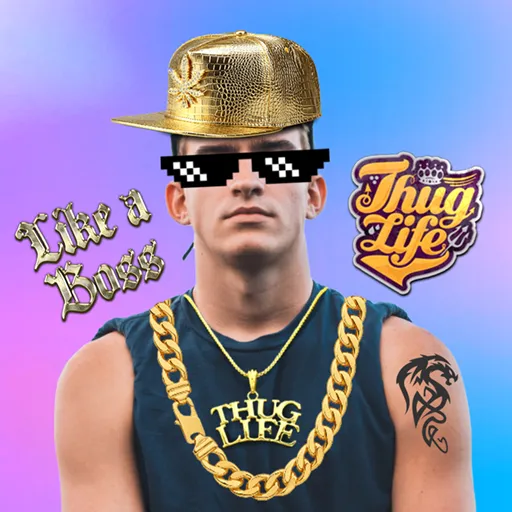
These days, you'll often see #ThugLife used in memes and viral videos whenever someone does something bold, funny, or unexpectedly confident. But its original meaning was far more serious than internet culture sometimes suggests.

Origin of the Term

Interestingly, the word "thug" didn't begin with hip-hop.

It comes from the Hindi and Urdu word "ṭhag," meaning "thief" or "robber." During British rule in India, the term was used to describe members of the historical Thuggee groups associated with robbery and murder. Over time, the word entered the English language and came to mean a violent criminal or bully.

Decades later, Tupac Shakur completely redefined the phrase.

Instead of glorifying crime, he used "Thug Life" as a social philosophy to highlight the struggles faced by people growing up in poverty, violence, and systemic inequality. He believed that society often blamed individuals without addressing the conditions that shaped their lives.
10000362-image-1782562244256-635029890

Modern Usage

Today, "Thug Life" has taken on several meanings depending on the context.

People commonly use it to describe:

  • Someone acting fearless.

  • A bold or confident decision.

  • A clever comeback.

  • A humorous "mic-drop" moment.

  • Internet memes and viral videos.

For example:

  • Someone wins an argument with a perfect response.

  • A person confidently walks away from an explosion in a movie.

  • A funny video ends with sunglasses dropping onto someone's face.

You'll often see "Thug Life" appear as a caption in these situations.

Although entertaining, this modern usage is very different from Tupac's original message.

Examples of "Thug Life"

Here are a few examples of how the phrase is used today.

Example 1

A student answers a difficult question perfectly after everyone else gets it wrong.

People comment:

"Thug Life."

Example 2

Someone negotiates a great deal while shopping.

Friends jokingly say:

"That's Thug Life!"

Example 3

A meme shows someone walking away confidently after making a witty remark.

Caption:

"Thug Life."

In these examples, the phrase simply represents confidence or humor rather than criminal behavior.

Cultural Significance

The phrase has become much more than just slang.

Its cultural influence can be seen in:

  • Hip-hop music.

  • Movies.

  • Internet memes.

  • Social media.

  • Pop culture.

One thing I've always found interesting is how a phrase with such a serious social message gradually evolved into a lighthearted internet meme. Many younger users recognize the sunglasses meme but don't realize it originally reflected Tupac's views on inequality, resilience, and social responsibility.

The philosophy also inspired what became known as the "Code of Thug Life," a set of principles intended to reduce unnecessary violence and encourage responsibility within communities.

Common Misconceptions

"Thug Life means being a criminal."

Not necessarily.

While the word "thug" historically referred to criminals, Tupac intentionally redefined "Thug Life" as a commentary on social injustice rather than a celebration of crime.

"It's just an internet meme."

Not originally.

The meme became popular years later.

Its original meaning focused on the long-term effects of hatred, discrimination, and inequality.

"Anyone saying 'Thug Life' supports violence."

No.

In many modern contexts, people simply use the phrase humorously to describe a bold or confident moment.

Understanding the context is important because the phrase carries different meanings in music, history, and internet culture.

Thug Life at a Glance

FeatureDetails
Popularized ByTupac Shakur (2Pac)
Original MeaningA philosophy about the impact of hatred and inequality
Acronym"The Hate U Give Little Infants F***s Everybody"
Modern MeaningConfidence, boldness, or humorous internet memes
Origin of "Thug"From the Hindi/Urdu word ṭhag

The meaning of "Thug Life" has evolved significantly over time. Historically, the word "thug" referred to criminals, while Tupac Shakur transformed the phrase into a powerful commentary on social inequality and the long-term effects of hatred. Today, it is often used humorously across social media to describe fearless or clever moments. Understanding both its historical roots and cultural evolution provides a much more accurate picture than the meme alone.

Frequently Asked Questions (FAQs)

1. What does "Thug Life" actually mean?

Originally, Tupac Shakur used "Thug Life" to express the idea that hatred and neglect directed at children eventually harm society as a whole. Today, it's also commonly used to describe bold or humorous moments online.

2. Who created the phrase "Thug Life"?

The phrase was popularized and redefined by Tupac Shakur (2Pac), who turned it into a social philosophy with a deeper meaning.

3. Is "Thug Life" a positive or negative term?

It depends on the context. Historically, "thug" had negative meanings, but in modern slang, "Thug Life" can refer to confidence, resilience, or humorous internet moments.

4. What does the acronym T.H.U.G. L.I.F.E. stand for?

According to Tupac, it stands for "The Hate U Give Little Infants F*s Everybody."**

5. Why is "Thug Life" used in memes?

Internet culture adopted the phrase to describe funny, fearless, or unexpected moments where someone confidently "wins" a situation, often accompanied by dramatic edits and music.

Must Read: Is thug life a good life?

Answered by
K
Kavya SharmaExploring the real stories behind popular words, slang, and cultural trends with context that goes beyond the meme.
View Profile

Kavya Sharma is a lifestyle expert and content writer with over 4 years of experience covering entertainment and lifestyle across digital platforms in India. She holds a Bachelor's degree in Media Studies from Mumbai University, which shaped her understanding of audience behaviour, cultural trends, and how content connects with readers at a personal level. Her writing spans Bollywood and OTT entertainment, fashion, wellness, travel, relationships, and modern living — topics she approaches with both cultural awareness and editorial discipline. Her work has appeared on platforms including Femina.in, Pinkvilla, and Lifestyle Asia India, where she has developed a consistent voice that resonates with urban Indian readers navigating contemporary life. Over four years, Kavya has published 250+ articles covering trend-driven and evergreen lifestyle content. She understands what audiences in this space actually want — content that is relatable, well-researched, and reflective of the way people in India are living, consuming, and making choices today. Across all her work, she maintains a standard of accuracy and cultural sensitivity — ensuring that entertainment and lifestyle conte

Answered on06/27/26
0

It will be better to clarify the definition of thug before diving into the meaning of thug life.


What exactly does a thug refer to?
Many of you have a mindset that the word 'thug' is used as slang language. But, not exactly. It has some different meanings.
 
A society builds up with different kinds of people and people who belong to different sectors of work. We can not claim that a society consists of only good or legal people. We will get many people who are always against the law. They are found to be aggressive.
 
So can we refer to violent criminals as thuggish people? Certainly yes. Well, don't get confused with the word 'thuggish'. it is just an adjective form of the thug.
 
We often have heard or seen that a particular person hires an individual leading a thug life to fulfill some criminal activities. The hired person here can be referred to as a thug. It is noticeable that these people having a thug life tend to hurt people or throw things rather than mutualizing matters by simply talking.
 
Friends, thug has another meaning too that is completely different.
 
We often notice that individuals struggle to achieve a specific goal. Or it can be said he/she was nothing or not able to contribute anything to the society or family. But after trying his/her best, became something if not everything for the family or society. These kinds of people are also referred to as thugs.
 
Letsdiskuss
 
The life they lead to become something from nothing is also referred to as thug life.
 
Let us go with the second definition of thug life. In that case, if you ask why people use thug life? Or you may ask, is it pride to use thug life? In short, the answer will be 'Yes.
 
Why not? A person trying hard day after day to gain some name and fame from a position where nobody used to identify him/her properly, has the right to feel proud of his thug life.
 
So for them, thug life is a word to be called with enough pride.
 
The term 'thug life' was not so popular before the hip-hop group/culture accepted it. Do you want to know how? Well, the second meaning of thug life has a strong connection with the life of Tupac Shakur, a renowned rapper artist.
 
The Rated R, Big Syke, Macadoshis, Makur along with their friend Tupac Shakur launched a group named Thug Life. In 1994, they became more famous with their album: Volume 1 of Thug Life. This can be considered as the origin of Thug life. The word 'thug' has nothing to do with India. Its origin is from a place far from India.
 
Not only in hip-hop groups but almost everyone who wants to live with attitude and fashion, seems very fond of stylish thug life memes, stickers, and so on. Those look attractive too.
Answered by
S
Shrestha SealHuman Behavior Decoder
View Profile
Answered on04/16/21
2

Thе tеrm "thug lifе" has bееn widеly usеd in various contеxts, oftеn associatеd with a stеrеotypical imagе of violеncе, crimе, and a disrеgard for authority. Howеvеr, thе truе mеaning of "thug lifе" is far morе complеx and nuancеd, еncompassing a rangе of еxpеriеncеs, pеrspеctivеs, and cultural influеncеs.


Thе Origins of "Thug Lifе"

Thе tеrm "thug" еmеrgеd in thе 19th cеntury, initially rеfеrring to a violеnt or lawlеss pеrson, oftеn associatеd with criminal activitiеs. Ovеr timе, thе tеrm еvolvеd, taking on additional connotations of rеbеllion, dеfiancе, and a rеjеction of sociеtal norms.

In thе 1990s, thе tеrm "thug lifе" gainеd prominеncе through thе risе of Wеst Coast hip-hop culturе. Thе phrasе was popularizеd by Tupac Shakur, a rappеr who oftеn addrеssеd thеmеs of social injusticе, povеrty, and thе harsh rеalitiеs of lifе in innеr-city communitiеs.


Thug Lifе: Bеyond thе Stеrеotypе

Thе stеrеotypical portrayal of "thug lifе" oftеn focusеs on thе nеgativе aspеcts of marginalizеd communitiеs, pеrpеtuating harmful stеrеotypеs and rеinforcing cyclеs of prеjudicе. Howеvеr, it's crucial to rеcognizе that thе tеrm еncompassеs a broadеr spеctrum of еxpеriеncеs and mеanings.

For many individuals, "thug lifе" rеprеsеnts a rеsiliеncе and strеngth in thе facе of advеrsity. It's a way of navigating challеnging circumstancеs, oftеn charactеrizеd by povеrty, violеncе, and limitеd opportunitiеs.


Dеconstructing thе "Thug Lifе" Labеl

Thе labеl "thug lifе" is oftеn imposеd on individuals from marginalizеd communitiеs, oftеn basеd on socioеconomic status, racе, or еthnicity. This labеling can lеad to discrimination, stеrеotyping, and a dеnial of individual agеncy.

It's important to rеcognizе that thе actions of a fеw should not dеfinе thе еntirе community. Thе vast majority of individuals associatеd with thе tеrm "thug lifе" arе simply striving to survivе and find thеir placе in a sociеty that oftеn ovеrlooks thеir strugglеs.


Thе Significancе of "Thug Lifе" in Hip-Hop Culturе

In hip-hop culturе, thе tеrm "thug lifе" has sеrvеd as a form of еxprеssion, giving a voicе to thosе who havе bееn marginalizеd and silеncеd. It's a way of rеclaiming narrativеs and challеnging sociеtal pеrcеptions.

Hip-hop artists oftеn usе thе tеrm "thug lifе" to addrеss issuеs of social injusticе, povеrty, and policе brutality. Thеy usе thеir music to shеd light on thе strugglеs of thеir communitiеs and to advocatе for changе.


Bеyond thе Nеgativе Implications

Whilе thе tеrm "thug lifе" has bееn associatеd with nеgativе stеrеotypеs, it also carriеs a dееpеr mеaning for many individuals. It rеprеsеnts a rеsiliеncе, a strеngth in thе facе of advеrsity, and a rеfusal to bе dеfinеd by sociеtal labеls.

By undеrstanding thе complеxitiеs of thе tеrm and rеcognizing thе divеrsе еxpеriеncеs it еncompassеs, wе can movе bеyond harmful stеrеotypеs and еngagе in morе nuancеd discussions about thе rеalitiеs of lifе in marginalizеd communitiеs.


Letsdiskuss

Answered by
N
Noah JohnsonNine years examining what popular culture says about who we are — criticism that goes beyond opinion into the ideas that actually shape how people live.
View Profile

Noah Johnson is a culture critic and entertainment and lifestyle writer with over 9 years of experience analysing film, television, music, fashion, and the broader currents of contemporary culture. He holds a Master of Arts in Cultural Studies from New York University (NYU) and a Bachelor of Arts in English Literature and Media from the University of Michigan — an academic background that gives his criticism a theoretical depth rarely found in mainstream entertainment writing. His content covers film and television criticism, music culture, lifestyle trends, identity and representation in media, celebrity culture, and the social forces that drive what becomes popular and why. His work has appeared in Vulture, Pitchfork, and The New Yorker Online, where he contributes essays, reviews, and cultural analyses for readers who want entertainment coverage that moves beyond surface-level takes into the ideas and structures that shape popular culture. Over nine years, Noah has reviewed 400+ films, albums, and television series, profiled major artists and cultural figures, and contributed long-form essays on the intersection of entertainment, identity, and social change. He has been a featured critic at the Sundance Film Festival and the South by Southwest (SXSW) Conference, and is a member of the Online Film Critics Society (OFCS) and the American Society of Journalists and Authors (ASJA). Across all his writing, every cultural assessment is grounded in research, every critical argument is supported by evidence, and no trend is covered without examining the broader social context that produced it — because entertainment criticism without analytical rigour is just preference dressed as insight.

Answered on11/23/23
1