A thermometer is a scientific instrument used to measure the temperature of a person, object, substance, or environment. It helps determine how hot or cold something is by converting temperature changes into a readable value, usually displayed in degrees Celsius (°C), Fahrenheit (°F), or Kelvin (K). Depending on the type, thermometers work by detecting changes in liquid expansion, electrical resistance, infrared radiation, or other temperature-sensitive properties.
The primary use of a thermometer is to obtain accurate temperature measurements, which are essential in medicine, science, weather forecasting, cooking, manufacturing, laboratories, and industrial processes. From checking whether someone has a fever to monitoring food safety or controlling industrial equipment, thermometers play a critical role in everyday life and professional applications.
Primary Uses
Thermometers are used in many fields because temperature affects health, safety, and product quality.
Some of the most common uses include:
-
Measuring human body temperature.
-
Detecting fever and monitoring illness.
-
Measuring air and weather temperature.
-
Monitoring laboratory experiments.
-
Checking food cooking and storage temperatures.
-
Measuring industrial process temperatures.
-
Monitoring refrigerators and freezers.
-
Measuring water, soil, and environmental temperatures.
Accurate temperature measurement helps people make informed decisions, whether it's diagnosing a medical condition, preventing food spoilage, or ensuring industrial equipment operates safely.
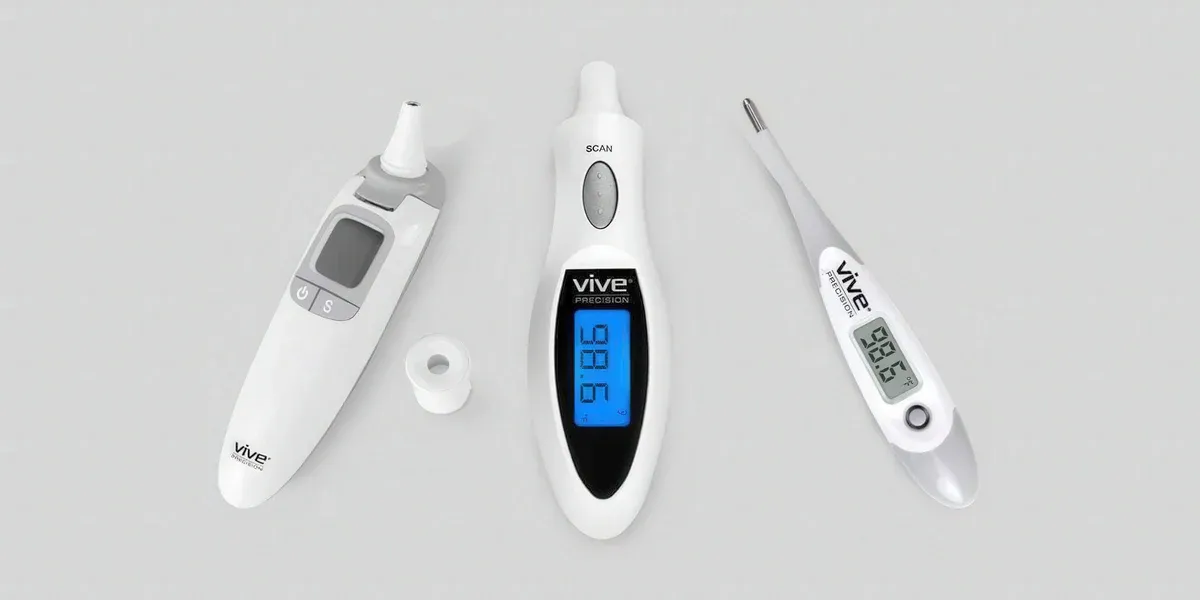
Types
Different thermometers are designed for different purposes.
| Type | Primary Use |
|---|---|
| Clinical Thermometer | Measuring human body temperature |
| Digital Thermometer | Medical, laboratory, and household use |
| Infrared Thermometer | Contactless temperature measurement |
| Laboratory Thermometer | Scientific experiments |
| Mercury-in-Glass Thermometer* | Traditional temperature measurement (largely phased out due to mercury safety concerns) |
| Alcohol Thermometer | Measuring low temperatures |
| Food Thermometer | Checking cooking and food safety |
| Industrial Thermometer | Manufacturing and industrial processes |
| Weather Thermometer | Measuring atmospheric temperature |
*Many countries discourage or restrict mercury thermometers because mercury is toxic if the thermometer breaks. Digital alternatives are now widely recommended.
Working Principle
Although different thermometers use different technologies, they all work on the same basic idea:
Certain materials change predictably when the temperature changes.
For example:
-
Liquid thermometers measure how mercury or alcohol expands or contracts with temperature.
-
Digital thermometers use electronic sensors (such as thermistors) that change electrical properties as temperature changes.
-
Infrared thermometers detect infrared radiation (heat energy) emitted by an object without touching it.
The thermometer converts these physical changes into a temperature reading displayed on a scale or digital screen.
Advantages
Using a thermometer offers several important benefits.
-
Provides accurate temperature measurements.
-
Helps detect fever and monitor health.
-
Improves food safety by ensuring proper cooking temperatures.
-
Supports scientific research and laboratory work.
-
Enhances industrial quality control.
-
Prevents equipment overheating.
-
Available in both contact and contactless models.
-
Easy to use at home, schools, hospitals, and workplaces.
Because temperature affects so many biological and industrial processes, thermometers have become one of the most widely used measuring instruments worldwide.
Common Applications
Thermometers are used across many industries and everyday situations.
| Field | Application |
|---|---|
| Healthcare | Measuring body temperature and detecting fever |
| Home | Monitoring room, refrigerator, and freezer temperatures |
| Cooking | Checking safe cooking temperatures for food |
| Laboratories | Scientific experiments and research |
| Weather | Recording atmospheric temperature |
| Agriculture | Monitoring soil and greenhouse temperatures |
| Manufacturing | Quality control and process monitoring |
| Automotive | Measuring engine and coolant temperatures |
Modern digital and infrared thermometers have expanded temperature measurement beyond healthcare into countless industries where precision is essential.
Maintenance Tips
Proper maintenance helps ensure accurate readings and extends the life of a thermometer.
-
Clean the thermometer after each use according to the manufacturer's instructions.
-
Store it in a protective case when not in use.
-
Replace batteries in digital thermometers when needed.
-
Avoid dropping or exposing it to excessive heat.
-
Keep sensors clean and dry.
-
Follow calibration recommendations for professional or industrial thermometers.
-
Never use a damaged thermometer for critical measurements.
For infrared thermometers, keeping the sensor lens clean is especially important to maintain measurement accuracy.
Common Misconceptions
"All thermometers work the same way."
No.
Different thermometers measure temperature using different principles, such as liquid expansion, electrical sensors, or infrared radiation.
"Mercury thermometers are the safest option."
Incorrect.
Because mercury is toxic if released, many health authorities now recommend digital thermometers instead.
"Infrared thermometers are always less accurate."
Not necessarily.
When used correctly and according to the manufacturer's instructions, infrared thermometers can provide fast and reliable temperature readings for many applications.
"One thermometer can measure every type of temperature."
No.
Clinical, laboratory, food, industrial, and weather thermometers are designed for different temperature ranges and specific applications. Choosing the right type improves both safety and accuracy.
Frequently Asked Questions (FAQs)
1. What is the main use of a thermometer?
The main use of a thermometer is to measure the temperature of a person, object, substance, or environment accurately.
2. Why is a thermometer important?
A thermometer helps monitor health, ensure food safety, support scientific research, and control industrial processes by providing accurate temperature measurements.
3. Which thermometer is best for measuring body temperature?
Digital thermometers are widely recommended because they are accurate, easy to use, and safer than mercury thermometers. Infrared forehead thermometers are also commonly used for quick, contactless screening.
4. Can one thermometer be used for every purpose?
No.
Different thermometers are designed for specific applications, such as medical, laboratory, industrial, cooking, or weather measurements.
5. What units do thermometers use?
Most thermometers measure temperature in degrees Celsius (°C) or degrees Fahrenheit (°F), while scientific applications may also use Kelvin (K).
Must Read: Who invented the thermometer?
 Answered by