K
kamini sahu· 4 years ago
Exploring innovations, digital trends, and scientific discoveries through reliable, practical, and easy-to-understand content.

What is vehicle to vehicle communication?

0
588

Join this conversation

Sort By

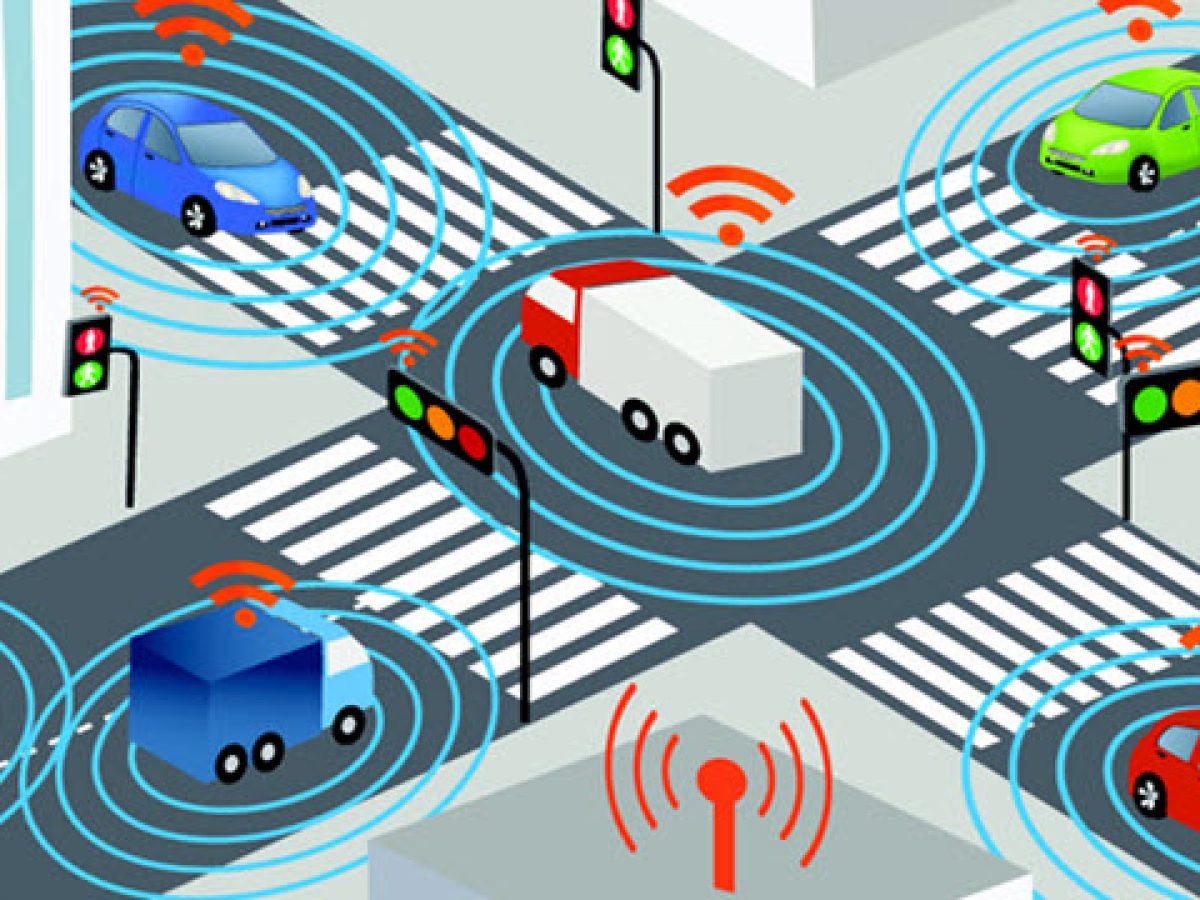
Vehicle-to-Vehicle (V2V) communication is a wireless technology that allows vehicles to exchange information with one another in real time. Cars can automatically share data such as their speed, location, direction, and braking status to help drivers avoid accidents and improve road safety.

Whenever I first heard the term Vehicle-to-Vehicle communication, I thought it meant cars could literally "talk" to each other. In a way, that's actually true. They don't communicate with words, but they constantly exchange important driving information within milliseconds.

How Does It Work?

V2V communication uses wireless signals to transmit information between nearby vehicles.

Each equipped vehicle continuously shares details like:

  • Current speed.

  • Direction of travel.

  • Position on the road.

  • Sudden braking.

  • Acceleration.

  • Lane changes.

Nearby vehicles receive this information almost instantly and can alert drivers or automatically activate safety systems if a potential collision is detected.

Why Is It Used?

The main goal of V2V communication is to make roads safer.

It helps:

  • Reduce road accidents.

  • Warn drivers about potential collisions.

  • Improve traffic flow.

  • Detect sudden braking ahead.

  • Support advanced driver-assistance systems (ADAS).

  • Prepare for autonomous driving technologies.

By allowing vehicles to "see" beyond what the driver can observe, V2V adds an extra layer of safety.

Imagine you're driving on a foggy highway.

A car several vehicles ahead suddenly brakes because of an accident.

Even before you can see the traffic, your car receives a warning through V2V communication and alerts you to slow down. This extra reaction time can help prevent a chain-reaction collision.

Advantages & Limitations

Advantages

  • Improves road safety.

  • Reduces the risk of collisions.

  • Provides real-time traffic information.

  • Supports autonomous and connected vehicles.

  • Helps reduce traffic congestion.

Limitations

  • Requires compatible technology in multiple vehicles.

  • Limited effectiveness if only a few vehicles use V2V.

  • Raises cybersecurity and data privacy concerns.

  • Requires industry-wide standards for compatibility.

V2V vs V2I Communication

People often confuse Vehicle-to-Vehicle (V2V) with Vehicle-to-Infrastructure (V2I) communication.

  • V2V allows vehicles to communicate directly with other vehicles.

  • V2I allows vehicles to communicate with traffic lights, road signs, toll booths, and other roadside infrastructure.

Together, they form part of a broader connected transportation system.

Future Applications

As connected and autonomous vehicles become more common, V2V communication is expected to play a major role in:

  • Self-driving cars.

  • Smart cities.

  • Intelligent traffic management.

  • Emergency vehicle priority systems.

  • Safer highways and urban roads.

Must Read: What is injector pressure in heavy vehicles? Why is it used?

Answered by
A
Aanya SharmaMaking future technologies simple with practical real world examples
View Profile

Aanya Sharma is a science and technology writer with over 5 years of experience and 300+ published articles across leading digital platforms. She holds a Bachelor's degree in Science (Physics) from Delhi University, which grounds her writing in scientific literacy and gives her the ability to evaluate technical claims with accuracy. Her work has appeared on platforms including The Wire Science, Analytics India Magazine, and Digit.in, where she has covered artificial intelligence, space exploration, consumer technology, environmental science, and emerging tech policy. With a focus on accuracy and clarity, her writing makes complex scientific and technological developments accessible to readers without a technical background. Aanya has participated in science communication panels at events including the India Science Festival and has been recognised as a contributor to responsible tech journalism in India. She is an active member of the National Association of Science Writers (NASW) and maintains a public portfolio of her published work. Across all her work, her writing is grounded in verified sources and a commitment to editorial standards — delivering content that readers can rely on in a space where misinformation spreads easily.

Answered on06/23/26
0

V2V communication is a computer System network which help vehicles to exchange information wirelessly about any speed, location. V2v allows vehicles to receive or send messages. Under V2v communication we can send or receive message in a range of 300 m and detect the traffic weather or any dangers. This new technology increases the safety of vehicles on roads by providing the incident alert before the drivers sees or detect.

Article image

Benefit of vehicle to vehicle communication are -

1. Improve traffic management by avoiding the traffic jams from a reasonable distance.

2. Stop the number of road accident.

3. Allow people to reach their destination quickly, safely.

4. Partially or fully automatic driving functions are also available.

There are also some disadvantages of vehicle to vehicle communication.

1. The data can be send or received so anyone can track your mobile so this is one of the limitation for your privacy.

2. Autonomous driving system can lead to measure accident during failure of the system.

3. Sometimes it provide incorrect data.

Answered by
K
View Profile
Answered on10/29/21
0

Vehicle to vehicle communication (V2V) is highly advanced automotive technology that uses the same radio frequency bands that humans use for all-purpose messaging. V2V systems are designed to allow cars to sense when they are in proximity of each other and warn each other of impending collisions while allowing them to communicate with one another in some situations. This type of technology allows drivers on the road, including yourself, to react faster and make better decisions while driving.


The V2V system helps drivers to avoid potential crashes by using advanced sensors and communications systems while sending and receiving information about the vehicle environment around the vehicle, helping to ensure that an accident does not occurs.

Is a V2V Communication System Worth It?

Answered by
D
View Profile
Answered on10/29/21
0

Vehicle-to-vehicle communication, or V2V, is a technology that sends messages from cars to other cars. Having two vehicles send messages to each other about their speed and position can help drivers navigate by reducing the number of dangerous collisions.

In the future, V2V may be able to warn drivers of icy bridges before they cross them in their car. This cutting-edge technology has the potential to save thousands of lives and create a safer environment in which we can all share our roads.

Sending these messages from one vehicle to another is not easy because it often relies on a main cellular network that may have weak connectivity where vehicles are located.

Article image

Answered by
V
View Profile

Hey! I am Vanisha Anand from indore, and i am pursuing graduation right now.

Answered on10/29/21
0