Answered on10/21/26
The main difference between baking and roasting is the type of food being cooked and the cooking technique. Both use dry heat in an oven, but they are commonly used for different purposes.
0

Join this conversation
The main difference between baking and roasting is the type of food being cooked and the cooking technique. Both use dry heat in an oven, but they are commonly used for different purposes.
Baking and roasting both use dry heat in an oven, but they differ mainly in the foods being cooked, the temperatures used, and the desired results.
Baking and roasting are two commonly confused cooking terms, and this is understandable because both involve placing food in an oven, and using dry heat to prepare it.
However, despite the similar start to each cooking process, the way in which heat affects the food is dramatically different in each, and the difference stems from two factors, the initial state of food that is being cooked, and the temperature at which such food is cooked.
The fundamental difference between baking and roasting is reflected in the definitions and equipment that one uses for each.
Baking tends to use deep-sided containers made from glass or ceramic to hold food in as it cooks gently, while roasting tends to use large shallow pans made from heavy-gauge aluminum or steel to encourage even heat distribution around the food.
The deep sides of a baking dish encourage gentle cooking for food that requires support, whereas shallow dishes and pans are used for roasting to allow hot air to circulate freely around the food.
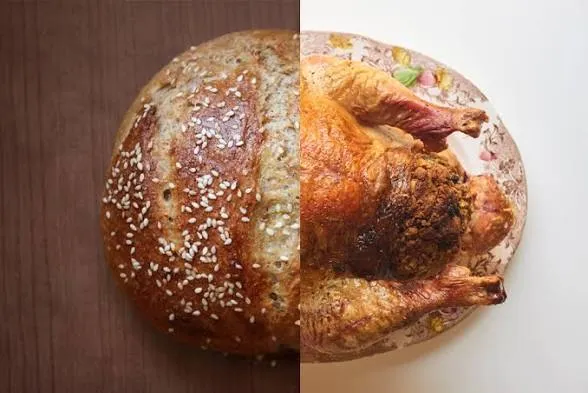
Steam is another factor that differentiates between the two cooking processes. Baking food that one has placed onto a small tray in a low oven will inevitably lead to the surface of the food becoming pale and undercooked, because the moisture is trapped by the small size of the tray and forms a pocket of steam around the food. By contrast, placing the same food onto a large tray, tossing it in oil and roasting it at a high temperature encourages the moisture to rapidly escape and evaporate as steam, allowing the temperature of the food to rise above 100 degrees Celsius and encouraging the Maillard reaction to occur.
Despite the differences between them, one will often see the terms baking and roasting used interchangeably, sometimes in deliberately misleading ways. For example, one would refer to a baked potato, rather than a roasted potato, even though the potato is cut into strips and tossed in oil before being placed on a baking sheet and cooked in a hot oven. Similarly, one might cut a winter squash in half before placing it in the oven to cook, and call it either a baked acorn squash or a roasted acorn squash depending on one's mood. Other examples might include macaroni and cheese, which is boiled, then mixed with cheese then placed in an oven to bubble and set. Such a dish is referred to as baked macaroni and cheese, even though the top layer is typically crisped up using high heat to encourage a Maillard reaction and produce a crunchy, savory crust. Confusion between the terms is inevitable, especially among professional chefs who would argue endlessly about the precise definition of each word and the technical differences between the two cooking methods. The easiest way to differentiate between the two methods is to observe whether one has taken the time to prepare specialized equipment to cook the food. If one has selected a high-sided baking dish or a glass casserole dish, a muffin tin or a pie dish to hold the food as it cooks, then there is a very strong likelihood that the food is intended to be baked. On the other hand, if one has selected a large rimmed baking sheet, a heavy bottomed skillet or a shallow roasting pan and wire rack to cook food that already has a set shape, then there is a very strong likelihood that the food is intended to be roasted.
In summary, while one might argue that the terms baking and roasting describe the same basic cooking process, namely cooking food in an oven using dry heat, such an argument would be misleading. Roasting and baking require dramatically different cooking temperatures and equipment, and attempting to use one method to prepare food that was intended to be prepared using the other is almost guaranteed to lead to unsatisfactory results. Roasting at high temperatures will lead to the surface of a delicate cake burning before the interior has a chance to set, while baking at low temperatures will fail to crisp up the surface of chicken wings or other similarly prepared dishes, leaving them gray, rubbery and unappetizing.

Baking and roasting are the same thing technically and that's a surprising thing to say. These two methods of cooking involve applying dry heat within an enclosed environment of an oven, which means your oven doesn't differentiate between a cake and a chicken. The two terms are different because of the way we have come to use them over time to describe different preparations of various foods. As with any activity, cooks have established a number of conventions, which are the reasons behind the two words. Baking generally takes things that used to be liquid or soft and turns them into something solid (think batter, dough or custard) and roasting generally deals with ingredients that are already solid (meat and vegetables), aiming to brown them and enhance their flavor. This is a subtle difference and it explains why the two are so often confused with each other.
What's the difference then? What actually happens to the food while it is being baked or roasted? When we bake, for example a cake, bread, rolls or muffins, the heat is helping us to change the structure of the ingredients. The proteins in the flour strengthen, the starches swell, the eggs thicken and the air bubbles created by the raising agents are allowed to expand and then set. The food needs to be exposed to this gentle type of heat to transform it from something soft and liquid into something with a nice crumb. Roasting is different as we are not looking to change the structure of the food, we are looking to improve its flavor. The dry heat will remove moisture from the surface of the food and trigger a chemical reaction (the Maillard reaction) and caramelization, resulting in the formation of a crisp layer and the deep, savory flavors that are so desirable in browned meats and vegetables. While both sets of reactions occur during baking and roasting respectively, the differences are enough to keep the two words separate.
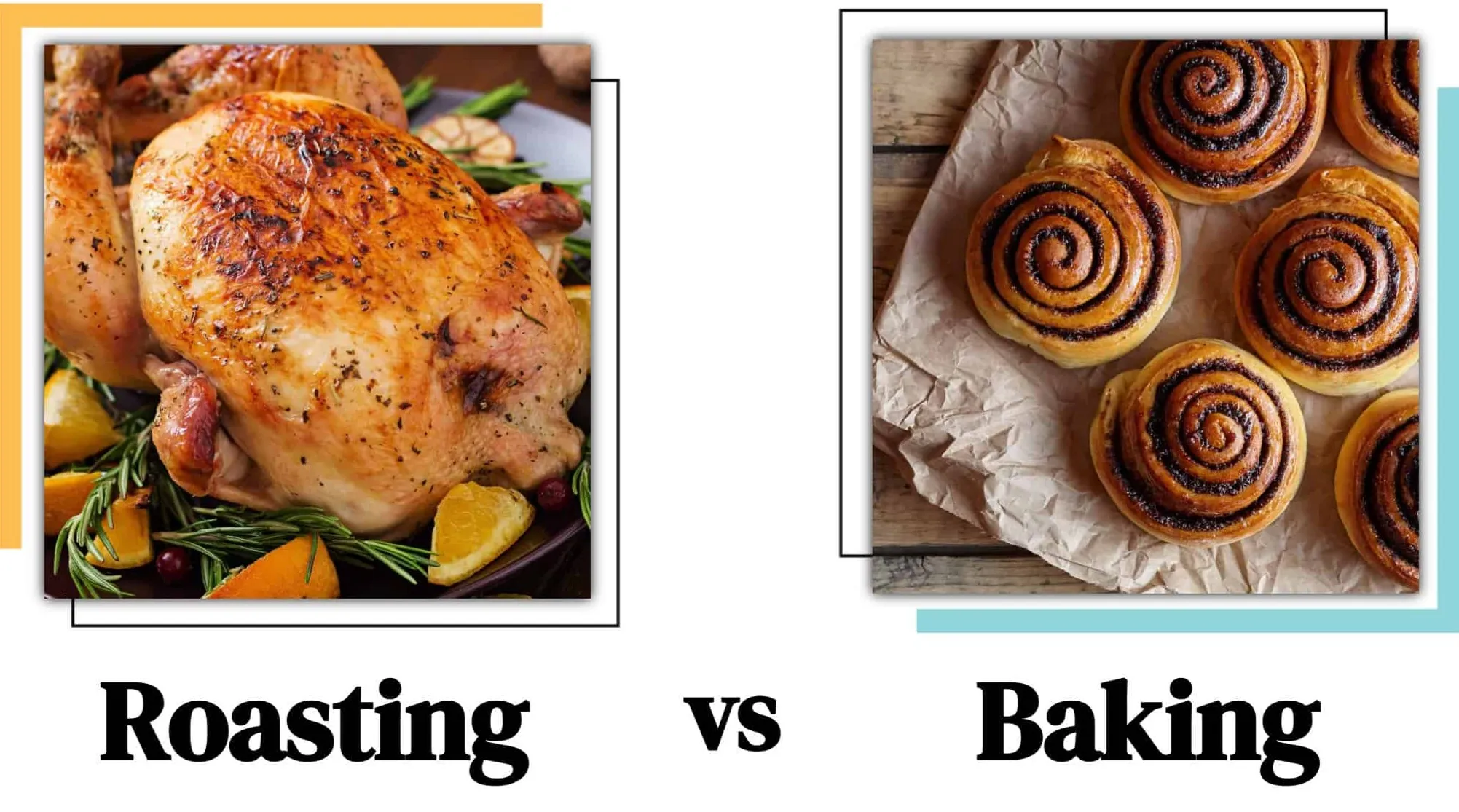
A common difference between the two is the temperature they are cooked at, technically. Baking tends to use lower temperatures than roasting and that's because a lot of baked goods need a gentler approach to get that perfect rise and cook through without burning on the outside. Roasting temperatures tend to be higher (around 200C) to encourage browning without drying out the ingredients too much, especially with meat. Of course, there are exceptions to every rule, the most obvious being bread, which is baked at very high temperatures to encourage that lovely crust. A leg of lamb could be roasted slowly in a low oven to render out the fat, so temperature is not a definitive answer either. Recipes will provide the correct temperatures for whatever you are cooking and most of the time they will use lower temperatures for baking and higher ones for roasting.
The words tend to apply to different things as well, mostly out of convention. We bake bread, cakes, cookies, pies, pastries, casseroles and macaroni cheese. We roast meat, poultry, potatoes, root veg., peppers, tomatoes and nuts. Fish is an interesting one as it is often somewhere between the two, depending on how it is being cooked and we'll get onto that shortly. Knowing the difference between baking and roasting will help you adapt recipes, know which type of pan to use and understand why you need to increase the temperature to get a crisp exterior or keep it low to allow things to rise.
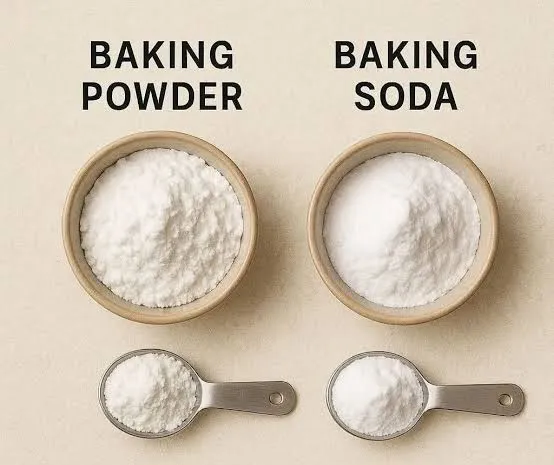
Baking soda and baking powder are very similar. They are often confused. However, they are not interchangeable. Both are leaveners. This means that they produce carbon dioxide gas to help baked items to rise. The difference between the two is in how they produce the gas. Baking soda is a single ingredient that requires an acid to activate it, whereas baking powder is a pre-made mixture that already contains an acid. This is why most recipes will use one or the other, or both.
Baking soda (sodium bicarbonate) by itself is alkaline, meaning it is the opposite of an acid. It will do very little on its own. When it is combined with something acidic, it creates a rapid reaction causing bubbles. This is the same reaction that occurs when you pour vinegar onto baking soda in a school volcano. When used in a cake or cookie, the acid is usually present within the recipe. This can be things such as yoghurt, buttermilk, lemon juice, vinegar, honey, brown sugar, molasses, cocoa powder or ripe bananas. Therefore if a recipe contains a lot of curd or buttermilk, it will often require baking soda. It is also a lot stronger than baking powder (3-4x stronger). Therefore recipes will only include a small amount of baking soda (often ½ teaspoon).
Soda requires a quick reaction so it is best to get your mixture into the oven fairly quickly. As soon as the wet ingredients are mixed with the acid, it will begin to react. If you leave the mixture to sit for an hour, the gas will escape and your baked item will be flat and dense. Another thing to note about baking soda, is that it increases the pH level of your mixture. This helps with browning, giving your cookies a deeper golden colour and a slight chewy texture. However, too much will cause a soapy and metallic taste and a very coarse texture.
Baking powder is a mixture of baking soda, one or more dry acids (such as cream of tartar or sodium aluminium sulphate) and a little cornflour/starch to keep it dry. As it already contains an acid, it will just require moisture and heat to react. This makes it great for recipes that do not contain much acid such as a plain sponge using normal milk. Most baking powders available today are double acting. This means that it will react twice. Once when it comes into contact with moisture and again when it comes into contact with heat in the oven. This means you can have a little more time to get your mixture into the oven, though still shouldn’t leave it to sit for an hour.
Recipes will often use one or the other, or both. Usually if there is a lot of acid in the recipe, baking soda will be required to neutralise the acid. Otherwise the baked item would taste quite sharp and acidic. If there is little or no acid in the recipe, baking powder will provide the acid. Many recipes will use both. For example, a batch of buttermilk pancakes may use baking soda to neutralise the buttermilk and baking powder for extra lift. As the baking soda would not provide enough lift. Chocolate cake often uses both as natural cocoa is acidic.
However, if you were to use baking powder instead of baking soda, you may not get enough lift or browning. As there will still be acidic ingredients in the recipe, your item will taste quite sharp and be quite dense. Whereas if you use baking soda instead of baking powder, and there is no acid in the recipe to react with, you won’t get much lift and will have a bitter soapy taste. Therefore the best option is to stick to the recipe. Especially if you are still learning.
However, there are some quick fixes if you run out of baking powder. If you have baking soda and an acid you can make a rough substitute. Mix ¼ tsp baking soda with ½ tsp cream of tartar for every tsp of baking powder you need. Alternatively you can mix ¼ tsp baking soda with ½ tsp lemon juice or vinegar. This will only work if the rest of your recipe can cope with the extra liquid and you can mix and bake quickly. However, if you are trying to substitute baking powder for baking soda, you will need about 3x as much baking powder. This can also affect the taste as there will be extra acid and starch. Therefore your item will not be exactly the same.
Many people fall into the trap of using old baking powder/soda. Both lose their potency over time. Baking powder will absorb moisture from the air and begin to react in your tin. If you are using old baking powder, your cakes may turn out flat. You may be wondering what you did wrong. A quick test would be to mix ½ tsp baking powder into some hot water. If it fizzes a lot, then it is good to go. To test your baking soda, add a splash of vinegar or lemon juice to a pinch of baking soda. It should fizz quite vigorously. Store your baking powder and baking soda in an airtight container in a cool dry place. Avoid storing near the steam from your stove. Replace your baking powder every 6-12 months.
Finally, these ingredients are not just used in baking! Baking soda is a gentle cleaning agent and deodoriser. It can be used to help soften pulses during cooking, tenderise meat and create crispier fried batters (such as pakoras). However, too much will affect the taste. In India, sometimes a pinch of baking soda is added to the dhokla or idli batter. However many mixes will use something called fruit salt. This is a mixture of baking soda and a dry acid. It acts the same as baking powder. Baking powder can also be found in batters and fritters to give a light and fluffy crust. You may have been using these ingredients for years!
To help you quickly remember, baking soda needs a partner and baking powder already has one. Baking soda needs an acid in your recipe. Baking powder already has an acid. If a recipe has a lot of acid, it will use baking soda. If it has little acid it will use baking powder. Often if they want a lot of lift they will use both. Once you get your head around this, you will no longer get confused. You will understand why a recipe has been created the way it has. If your bake turns out flat, soapy or strangely bitter, you now have a good idea where to look first.
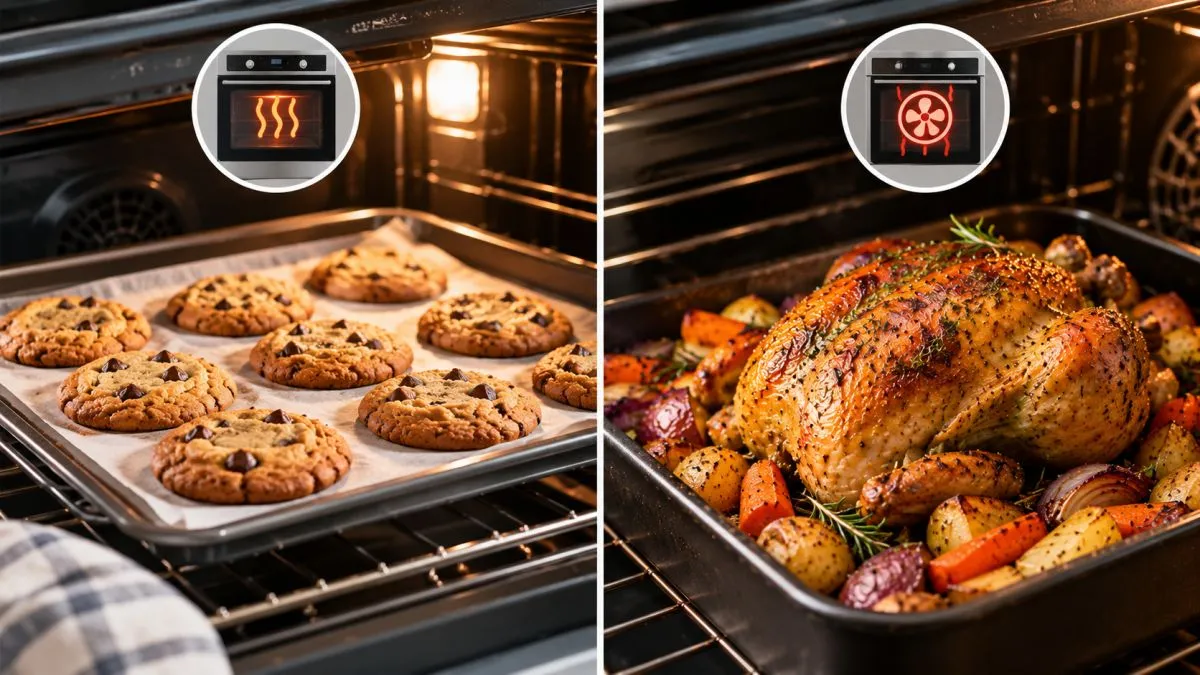
Baking and roasting are just two different words for the same thing: sticking something in a hot oven and waiting for it to cook. Both methods use dry heat and can involve similar temperatures. The real difference isn't the number on the oven dial but what is being cooked, the texture wanted and how the heat acts on it.
When most people think of baking, they think of foods that are made from mixtures, batters, or doughs. Think bread, cake, cookies, muffins, pies and pastries. Generally, these foods are something soft, loose or shapeless to begin and walk out of the oven with a totally different structure.
That transformation is the soul of baking.
A cake batter rises and sets. Bread dough has a soft interior and a stiff crust. Cookies spread, dry out and become crisp or chewy. A pie crust turns from raw dough into a flaky shell. When you bake things, all the different ingredients (flour, eggs, butter, sugar, leavening agents) react differently to heat, which changes the texture of the final product.
As a rule, baking is a bit more exact because small changes can affect the final outcome. The amount of flour, the ratios of ingredients, the oven temperature, and even the amount of time the mixture spends in the oven can all matter a great deal. You can’t just peek at a cake in the middle of the baking process and say, “Well, it needs a little more of this or that.”
Baking is, very simply put, taking a prepared mixture and turning it into a structured food.
Roasting is usually associated with foods that already have their basic form before they enter the oven. Vegetables, potatoes, nuts, and many types of meat are common examples.
Instead of creating a structure from a batter or dough, roasting is largely about changing the food that is already there. The outside loses moisture, develops deeper color, and can become crisp or browned. At the same time, the inside cooks and may become tender.
Consider a potato. A raw potato already exists as a potato; the oven does not need to build it into a new structure. Roasting simply transforms it. The edges can become browned and crisp while the center turns soft.
This is why roasting often feels more forgiving than baking. You might toss vegetables with oil, salt, and spices, spread them across a tray, and roast them until they have the color and tenderness you want. Exact measurements are usually less critical.
So, broadly speaking, roasting is about developing flavor, color, and texture in an ingredient that already has its form.
A common misconception is that baking happens at a lower temperature while roasting always requires very high heat. That isn't a reliable rule.
There is plenty of overlap between the temperatures used for baking and roasting. The distinction comes more from culinary convention and the food being prepared than from a strict temperature boundary.
In fact, the same oven can bake a cake in the morning and roast vegetables later without changing its fundamental function. What changes is the food, the desired transformation, and the way the cook judges the result.
Imagine two starting points.
Baking: “I have a mixture, dough, or prepared composition that needs to become a finished food.”
Roasting: “I have an ingredient that I want heat to brown, tenderize, dry, caramelize, or intensify.”
There are exceptions, of course. Some foods blur the line, and culinary terminology varies depending on the recipe, region, and tradition. But this distinction is more useful than memorizing an arbitrary temperature cutoff.

Roasting and baking both are the major part of cooking. The major difference between roasting and baking is oven temperature. When the temperature is above 400°F, then roasting happens. Meanwhile for baking the temperature should be 375°F and below. Roasting involves foods like meat, potatoes chicken, etc means solid like structure whereas baking needs foods like cupcakes and cookies. At the same time, it is important to consider that roasting occurs in uncovered roasting pan while it is not necessary in baking.