
The first full-length Indian feature film was Raja Harishchandra, released in 1913. It was written, directed, produced, and financed by Dadasaheb Phalke, who is widely regarded as the Father of Indian Cinema. The film was a silent black-and-white movie based on the legendary story of King Harishchandra from Indian mythology.
Whenever I think about Raja Harishchandra, it honestly feels surreal. Today, we live in an era of OTT platforms, web series, AI-generated videos, short-form content, and even one-minute micro dramas. Yet, every time Indian cinema celebrates another milestone, it all traces back to one film released more than a century ago. There's something special about being the first, you don't just create history, you create an entire industry.
The Background: How Indian Cinema Began
Before 1913, India had already witnessed short documentary-style films and recordings of public events, but there wasn't a full-length fictional feature film made entirely in India.
The turning point came when Dadasaheb Phalke watched the silent film The Life of Christ. Instead of simply admiring it, he imagined something different.
His thought was remarkably simple yet revolutionary:
"If Western audiences can watch stories from their culture on screen, why shouldn't India tell its own stories?"
That idea eventually led to the creation of Raja Harishchandra, laying the foundation for one of the world's largest film industries.
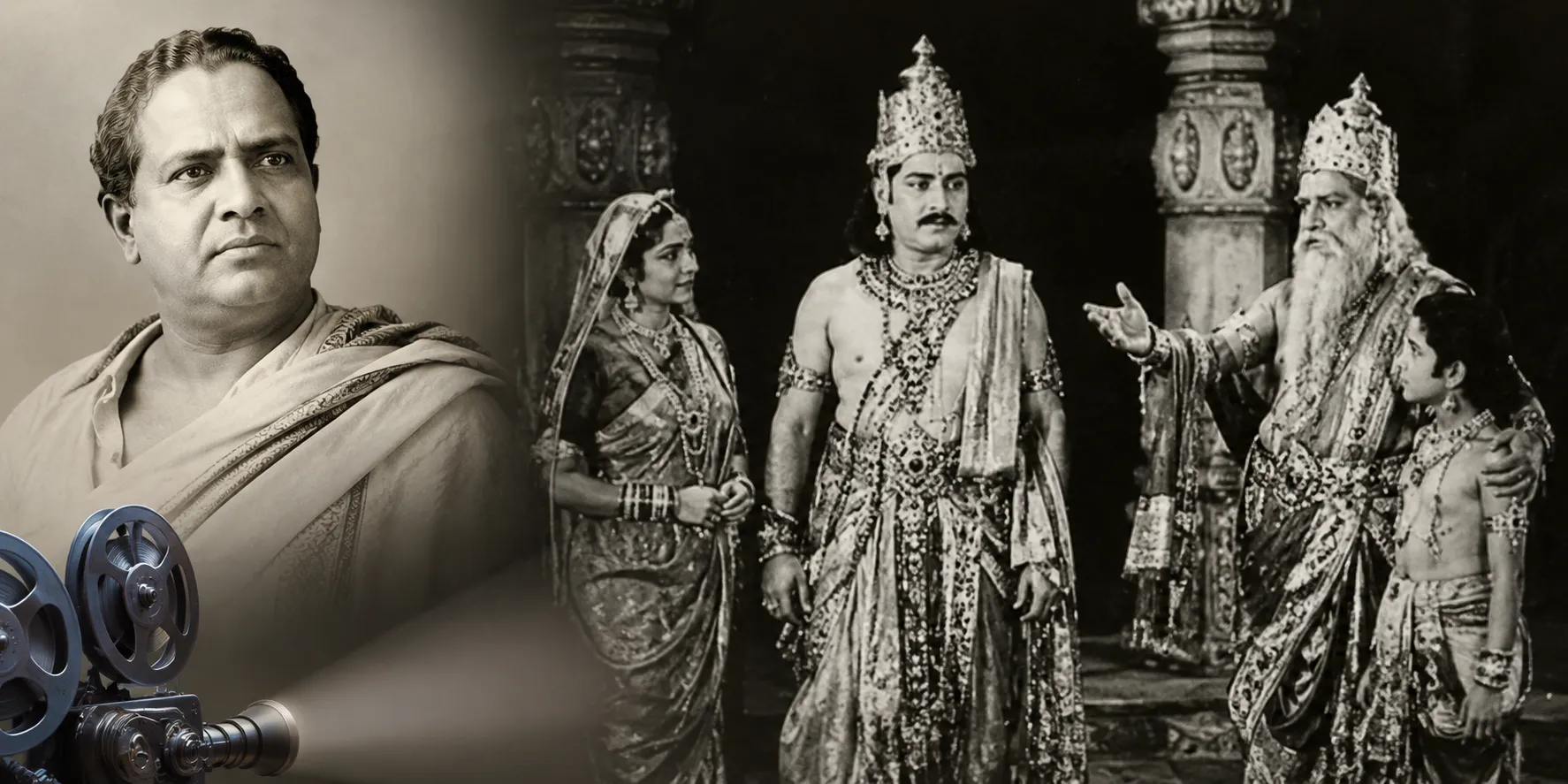
Who Created the First Indian Movie?
The man behind India's first feature film was Dadasaheb Phalke.
What's fascinating is that he wasn't just the director.
He was involved in almost every aspect of filmmaking, including:
-
Writing.
-
Directing.
-
Producing.
-
Editing.
-
Set design.
-
Visual effects (for that era).
-
Distribution.
In many ways, he worked like an entire production studio before studios even existed in India.
One detail that often gets overlooked is that filmmaking in 1913 didn't come with film schools, YouTube tutorials, or digital cameras. Much of what Phalke achieved came through experimentation, self-learning, and extraordinary determination.
Why Was Raja Harishchandra So Important?
Calling it "the first movie" doesn't fully capture its significance.
It proved that:
-
India could produce its own feature films.
-
Indian mythology could successfully attract audiences.
-
Local filmmaking could become a sustainable industry.
-
Cinema could become a new form of storytelling beyond theatre.
From an entertainment writer's perspective, this is perhaps the film's greatest achievement—it transformed cinema from an experiment into an industry.
Without Raja Harishchandra, Bollywood as we know it today might have evolved very differently.
Timeline of Early Indian Cinema
Here's a quick look at how Indian cinema evolved.
| Year | Milestone |
|---|---|
| 1896 | Lumière Brothers' films screened in Bombay |
| 1913 | Raja Harishchandra released |
| 1917–1920s | Silent films became increasingly popular |
| 1931 | Alam Ara became India's first talkie (sound film) |
| 1950s–1970s | Golden era of Indian cinema |
| 2000s–Present | Rise of multiplexes, digital filmmaking, OTT platforms, and global audiences |
Looking at this timeline makes one thing very clear: every technological leap in Indian cinema can be traced back to the courage of its earliest pioneers.
Interesting Facts About Raja Harishchandra
Here are some fascinating facts that many movie lovers don't know:
-
It was a silent film, so there were no recorded dialogues.
-
The movie was released on 3 May 1913.
-
Women did not act in the film because acting was socially discouraged at the time, so female characters were played by men.
-
The film was inspired by the story of King Harishchandra, known for his honesty and integrity.
-
The prestigious Dadasaheb Phalke Award, India's highest honor in cinema, is named after its creator.
One of my favorite things about revisiting early cinema history is realizing how far filmmaking has come. From hand-cranked cameras and silent storytelling to IMAX screens, virtual production, and AI-assisted filmmaking, the evolution has been extraordinary. Yet the emotional purpose of cinema, telling stories that connect with people, has remained exactly the same.
The Legacy of India's First Film
The influence of Raja Harishchandra extends far beyond its runtime.
It inspired generations of filmmakers and helped establish an industry that now produces films in dozens of languages every year.
Today, India is among the world's largest film-producing nations, creating content for audiences across the globe through:
-
Feature films.
-
Regional cinema.
-
Documentaries.
-
Web series.
-
Animation.
-
Short films.
-
OTT originals.
That's why Raja Harishchandra isn't remembered only as India's first movie—it's remembered as the beginning of Indian cinematic storytelling itself.
Indian Cinema at a Glance
| Feature | Details |
|---|---|
| First Indian Feature Film | Raja Harishchandra |
| Release Year | 1913 |
| Creator | Dadasaheb Phalke |
| Film Type | Silent, black-and-white feature film |
| Historical Importance | Laid the foundation of Indian cinema |
More than a century has passed since Raja Harishchandra introduced India to feature filmmaking, yet its importance hasn't diminished. Every blockbuster, independent film, web series, and digital production that audiences enjoy today owes something to that pioneering effort in 1913. The technology has changed dramatically, but the spirit of storytelling that Dadasaheb Phalke envisioned continues to define Indian cinema even today.
Frequently Asked Questions (FAQs)
1. Which was the first movie made in India?
The first full-length Indian feature film was Raja Harishchandra, released in 1913.
2. Who is known as the Father of Indian Cinema?
Dadasaheb Phalke is known as the Father of Indian Cinema because he created India's first feature film and pioneered filmmaking in the country.
3. Was Raja Harishchandra a silent film?
Yes. It was a silent black-and-white film, released before synchronized sound became part of Indian cinema.
4. Which was India's first talking movie?
Alam Ara, released in 1931, was India's first feature film with synchronized sound.
5. Why is Raja Harishchandra historically important?
It established the foundation of the Indian film industry and demonstrated that Indian stories could successfully be told through cinema, inspiring generations of filmmakers.
Must Read: What are the top 5 inspirational movies of Bollywood?



.jpg&w=640&q=75)