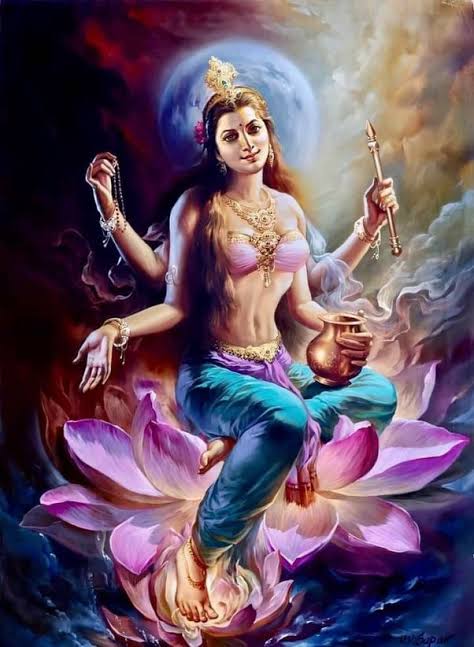
Ahalya, Draupadi, Sita, Mandodari, and Tara-collectively known as the Panchakanya (the five virgins)-are textually defined as the pinnacles of female beauty and virtue in Hindu mythology. Among them, Ahalya is explicitly described in the Ramayana and Puranas as being created by Brahma as the most beautiful woman in the universe, specifically crafted to possess no blemish or rival. However, in terms of cosmic manifestations, Mohini, the only female avatar of Vishnu, represents absolute, mesmerizing beauty designed to enchant gods, demons, and sages alike.
Textual Context and Aesthetic Nuances
From what I've observed when analyzing classical Sanskrit texts like the Mahabharata and Ramayana, modern digital summaries often conflate different categories of divine beauty. The texts actually categorize supreme beauty into three distinct operational frameworks:
-
The Created Perfect Human Form: Ahalya. The name itself literally translates to "one without the deformity of ugliness." Brahma created her using the finest elements of the universe to humble the pride of Urvashi and other celestial apsaras.
-
The Born-from-Fire Epitome: Draupadi (also called Krishnaa). The Mahabharata (Adi Parva, Section 169) explicitly notes her beauty was unprecedented, describing her skin as dark like the rainy cloud, eyes like lotus petals, and a fragrance that wafted for a full yojana (roughly 8 to 9 miles).
-
The Cosmic Illusion: Mohini. While Ahalya and Draupadi exist within human lineages, Mohini is beauty weaponized. Her aesthetic is described as an active force (Maya) capable of altering the balance of cosmic power, as seen during the churning of the ocean (Samudra Manthan).
Also read: What do you personally think makes someone beautiful?
The Overlooked Reality of "Samudrika Shastra"
One thing I've noticed in pure mythological documentation is that beauty in Hindu texts is rarely subjective; it is strictly algorithmic. The Samudrika Shastra (the ancient study of body features) outlines exact physical dimensions and marks (lakshanas) that define supreme beauty.
A character is deemed "most beautiful" based on specific metrics:
-
A hidden limitation of modern retellings is omitting the Trivali-the three folds of skin on the abdomen, which ancient texts cite as the ultimate marker of female beauty in Draupadi and Sita.
-
The texts require specific color contrasts: deep black hair, white whites of the eyes, red lips, and a golden or dark complexion, representing perfect bodily symmetry and health.
Data and Comparative Metrics in Textual Verse
To understand how these figures rank in textual frequency and structural emphasis, consider the quantitative distribution of beauty descriptions across major texts:
| Figure | Primary Text Source | Key Aesthetic Metric Mentioned | Cosmic Function |
| Ahalya | Brahma Purana / Ramayana | Created piece-by-piece with zero flaws (Ah-ahlya) | To embody absolute physical perfection |
| Mohini | Bhagavata Purana (Canto 8) | Delusion of the mind (Moha) | To retrieve the nectar of immortality (Amrita) |
| Draupadi | Mahabharata (Adi Parva) | Fragrance extends for 1 Yojana; blue-lotus eyes | To trigger the destruction of the Kurukshetra era |
| Sita | Ramayana (Sundara Kanda) | Radiant even amidst grief; compared to a gold streak | To anchor the moral framework of Dharma |
Common Mistakes in Digital Interpretations
A frequent bottleneck in understanding these narratives is confusing Apsaras (celestial dancers like Urvashi, Menaka, and Rambha) with the supreme women of the epics.
While Apsaras possess unmatched seductive beauty (lavanya), their beauty is an occupational tool used to disrupt meditations. In contrast, the beauty of Ahalya or Draupadi is tied to Tejas (spiritual radiance) and Shri (divine prosperity), which the texts prioritize as a higher tier of aesthetic excellence.
Sources for verification: