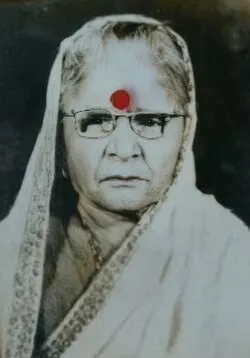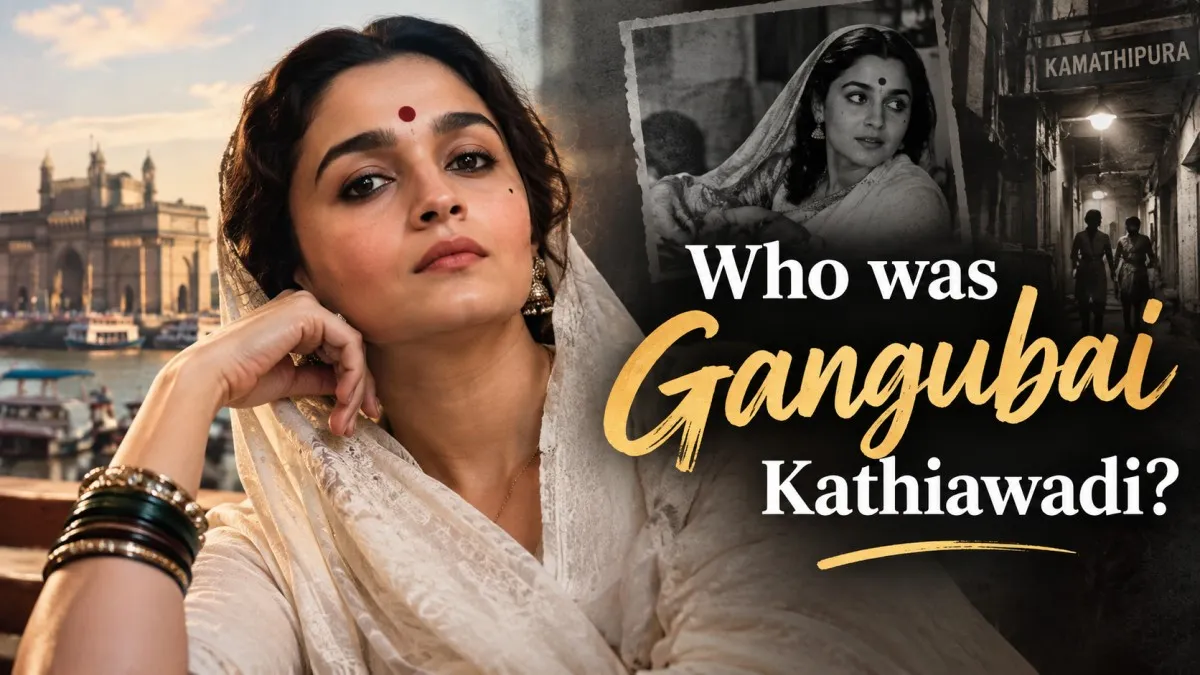
Gangubai Kathiawadi was a woman associated with Kamathipura in Mumbai. Her life became widely known after journalist S. Hussain Zaidi wrote about her in his book Mafia Queens of Mumbai, published in 2011. The story later became the inspiration for Sanjay Leela Bhansali’s 2022 film Gangubai Kathiawadi, in which Alia Bhatt played the lead role.
The woman behind the famous name was born Ganga Harjeevandas in Kathiawad, Gujarat. She came from a financially comfortable family and, while she was still young, left home with Ramnik Lal, an accountant who worked for her father. Zaidi's account says that the relationship did not turn out as she had expected. She was eventually left in Kamathipura, where she spent the rest of her life building a place for herself.
With time, Gangubai became a familiar and influential figure in the neighbourhood. People in Kamathipura came to know her as Gangubai Kothewali, while the name “Kathiawadi” was linked to her Gujarati background. Her story is unusual because she was connected to an area associated with prostitution but was also remembered for speaking about the problems faced by the women living there.
She is described in Zaidi's book as someone who wanted women in the area to have more control over their lives. There are accounts of her helping women who wanted to leave prostitution and supporting education for children from the neighbourhood. These stories are an important part of the image of Gangubai that became popular later, although not every detail can be checked against independent historical records.
Another well-known part of her story involves Karim Lala. Zaidi's book describes a connection between the two, including the story that Gangubai tied a rakhi to him. The account suggests that this relationship gave her a degree of protection and influence. Since much of the information comes from the same source, however, the details should be treated with some caution.
The film also shows Gangubai meeting Jawaharlal Nehru. That scene is one of the memorable moments in the movie, but there is no strong independent evidence confirming that such a meeting actually happened. This is one example of why the film should not be treated as a complete record of her life.
Before the film came out, Gangubai's family raised objections to both the book and the movie. Her adopted son, Babuji Shah, was among those who challenged the portrayal. The family said that the woman they knew was a social worker and that the story shown in the book and on screen did not represent her fairly. The matter eventually went through the courts, but the release of the film was not stopped. Gangubai Kathiawadi finally reached cinemas in February 2022.
The movie changed the way many people came to know her name. For viewers who only know Gangubai through Alia Bhatt's performance, it is worth remembering that the film is based largely on one published account of her life. Some events may have happened as described, while others are difficult to establish today.
That does not make Gangubai's story uninteresting. If anything, it shows how complicated the line can be between a real person's life and the version of that life that survives through books, interviews and cinema. The film tells Bhansali's interpretation of Gangubai; the historical record is much less complete.