
Quick Answer
Have you ever found yourself lying awake at night, endlessly replaying a slightly awkward conversation? Or perhaps you changed your outfit three times, not because of the weather, but because you were terrified of what your coworkers might say. If you have ever felt completely exhausted by this endless cycle of seeking external validation, you have likely paused and asked yourself, "Why do I care so much about what others think of me?"
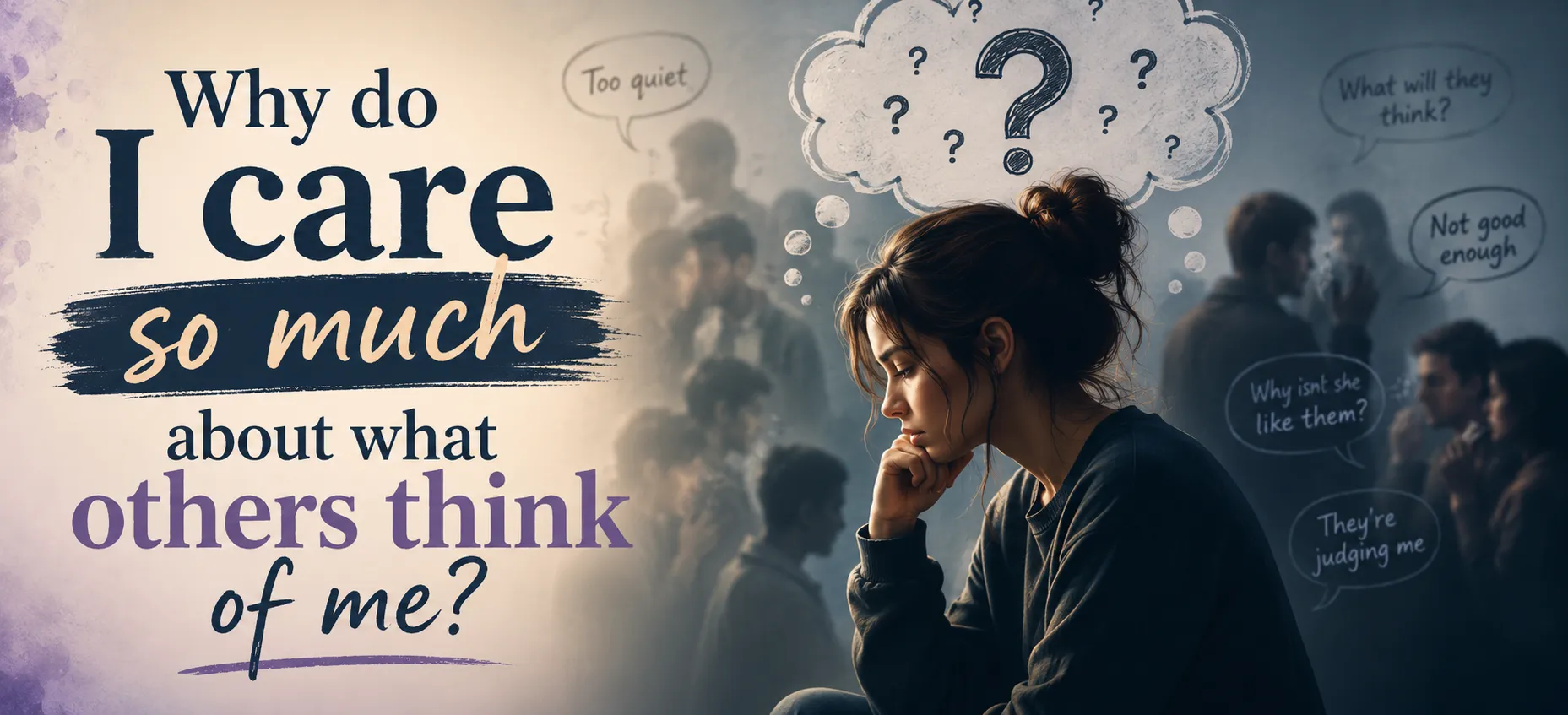
You are not alone, and there is nothing fundamentally wrong with you. The desire for social approval is deeply woven into our human DNA. However, when this natural instinct spirals into chronic people-pleasing, perfectionism, and severe anxiety, it limits your potential. By understanding the evolutionary and psychological reasons behind this behavior, you can begin to break the cycle and start living life on your own terms.
The Evolutionary Roots of Social Approval
To truly understand why the opinions of others carry such immense weight, we must look backward into human history. Early humans lived in tight-knit, nomadic tribes where daily survival depended entirely on group cooperation. If you were rejected, ostracized, or cast out by your tribe, you lost access to shared food, warm shelter, and physical protection from predators. In that harsh environment, social rejection was quite literally a death sentence.
Our modern brains still carry this ancient wiring. When you worry about a manager's opinion or fear being judged at a casual social gathering, your brain's amygdala is essentially trying to protect you from being "cast out" of your modern tribe. The anxiety you feel is a biological survival mechanism acting up in an environment where physical survival is no longer actually on the line.
The Spotlight Effect and Modern Society
While our ancestors only had to worry about the opinions of a small, local village, modern society has amplified this fear exponentially. Social media platforms expose us to the judgments, likes, and comments of thousands of strangers on a daily basis, keeping our evolutionary threat-detectors constantly activated and overwhelmed.
Furthermore, psychologists frequently point to a powerful cognitive bias known as the "Spotlight Effect." This is the psychological phenomenon where we falsely believe that everyone around us is paying close attention to our appearance, our behavior, and our missteps. In reality, human beings are incredibly egocentric. Most people are entirely consumed by their own lives, their own problems, and their own insecurities. Recognizing that you are not constantly under a microscope is the first major step toward mental freedom.
Drivers of External Validation at a Glance
To better understand the complex web of reasons behind this behavior, here is a breakdown of the primary psychological drivers:
Psychological Driver | What It Means | How It Impacts Your Daily Life |
|---|---|---|
Evolutionary Biology | A hardwired need to belong to a tribe for physical survival. | Triggers a deep, subconscious fear of rejection and isolation. |
The Spotlight Effect | The false belief that others are constantly observing you. | Causes unnecessary anxiety over minor, unnoticed mistakes or flaws. |
Social Conditioning | Cultural pressure to conform to specific standards of success. | Leads to people-pleasing and suppressing your true personality. |
Low Self-Esteem | Relying on external validation to feel a baseline sense of worth. | Creates an emotional rollercoaster dependent entirely on outside praise. |
Actionable Steps to Break Free
Now that you understand the root causes, how do you actively rewire your brain? Overcoming the need for universal approval takes practice and patience. Here are proven steps to help you detach from the opinions of others and build internal confidence:
Define Your Core Values: When you know exactly what you stand for—whether that is integrity, creativity, family, or freedom—the opinions of people who do not share your values immediately stop mattering.
Challenge the Spotlight Effect: The next time you feel embarrassed, pause and remind yourself that everyone else is too busy worrying about their own lives to obsess over yours.
Practice Vulnerability in Small Steps: Start making small daily decisions based solely on your own preferences. Wear an outfit you love or speak up in a casual meeting, regardless of the perceived judgment.
Curate Your Inner Circle: Surround yourself with supportive, emotionally mature people who celebrate your authentic self rather than demanding conformity and compliance.
Develop Self-Compassion: Treat yourself with the exact same kindness you would offer a best friend. When you make a mistake, forgive yourself quickly rather than assuming everyone else is judging you harshly.
Frequently Asked Questions (FAQs)
Is it normal to care about what others think?
Yes, it is completely normal and healthy to care to a certain extent. Empathy, social awareness, and a desire for group harmony help us build meaningful relationships and function in a civilized society. It only becomes a psychological problem when it dictates your major life choices and causes severe daily anxiety.
Why do I seek validation from people I do not even like?
This often stems from a subconscious need to prove your own self-worth. If you struggle with low self-esteem, you might view winning over a highly critical, difficult, or dismissive person as the ultimate proof that you are "good enough." Recognizing this toxic pattern is key to breaking it.
How do I stop overthinking social interactions?
Practice mindfulness and grounding techniques. When you catch yourself replaying a conversation for the tenth time, actively redirect your focus to your immediate physical surroundings. Remind yourself that you cannot control other people's perceptions, take a deep breath, and let it go.
Conclusion
Whenever you catch yourself freezing up and wondering, "Why do I care so much about what others think of me?", remember that your brain is simply executing outdated survival code. By acknowledging this evolutionary instinct, challenging your cognitive biases, and actively prioritizing your own personal values, you can begin to quiet the external noise. Reclaiming your mental energy from the opinions of others is a lifelong journey, but it is the most liberating step you can take toward living an authentic, joyful, and deeply fulfilling life.
Sources & References: American Psychological Association (APA)
Also Read: How can I make myself refresh