

Quick Answer
In an increasingly modernized and individualistic world, many sociologists and global observers often ask: "Why Indians continue to live in joint families ?" The answer goes far beyond simple tradition. While Western societies heavily favor the nuclear family model, the Indian joint family structure endures because it offers a highly practical support system. By pooling financial resources, sharing domestic responsibilities, providing built-in childcare, and ensuring that the elderly are respected and cared for at home, the joint family acts as a vital economic and emotional safety net that modern infrastructure has yet to replace.
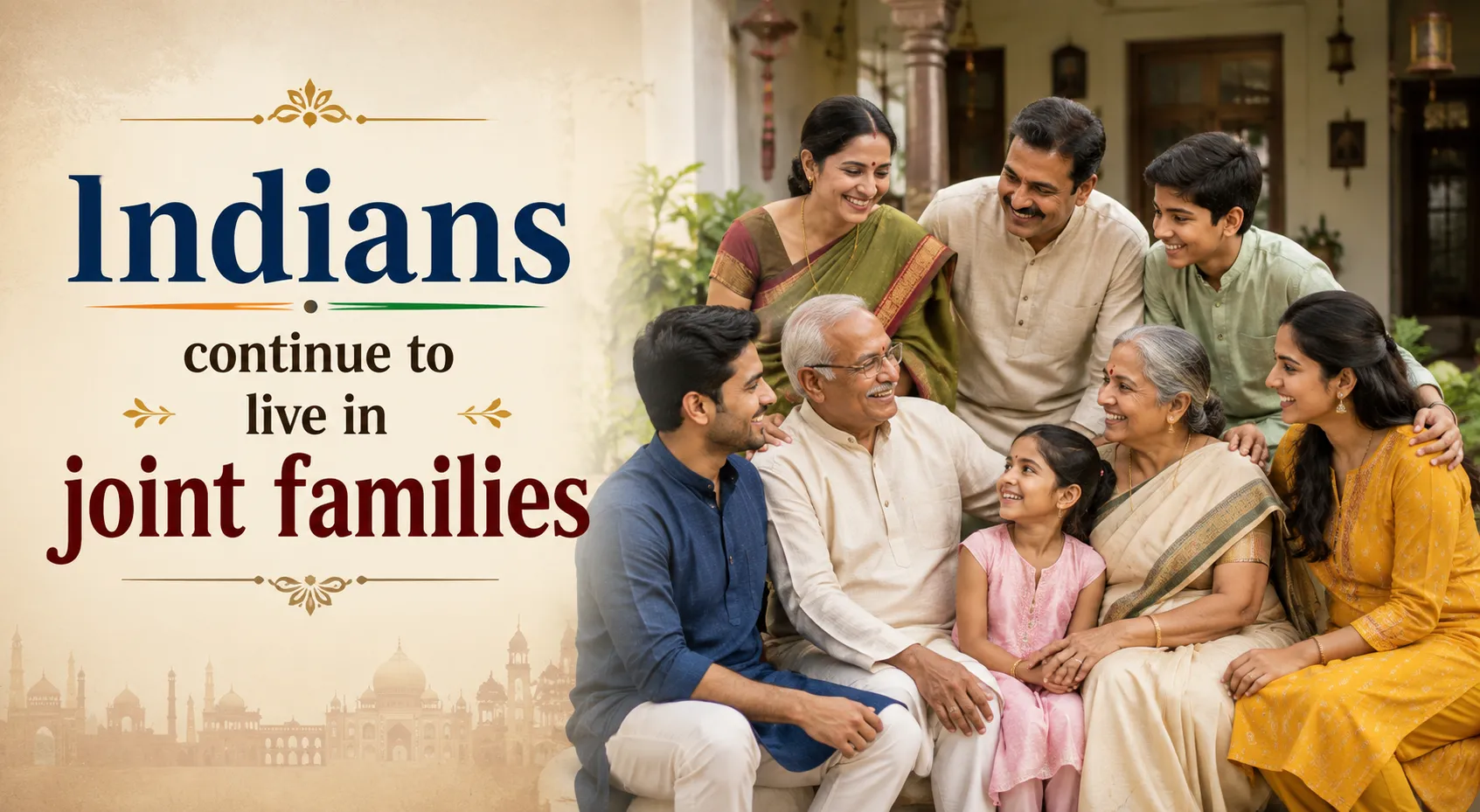
The Cultural Backbone of India
To truly understand the longevity of this living arrangement, one must look at the foundational values of Indian society. Indian culture places an immense emphasis on collective identity rather than individual autonomy. The prevailing philosophy is often "one for all, and all for one."
In a traditional joint family—where multiple generations, including grandparents, parents, uncles, aunts, and cousins, live under one roof—there is a deep-seated respect for hierarchy and the wisdom of the elderly. Grandparents are not seen as a burden; instead, they are revered as the cultural anchor of the household. They play an indispensable role in passing down religious traditions, languages, and moral values to the youngest generation, ensuring that the family's heritage is preserved.
Core Benefits of the Joint Family System
The romanticized view of a large, happy household is only part of the story. The joint family survives because it offers tangible, everyday advantages that make life significantly easier for its members. Here are the most prominent benefits:
Built-in Childcare: For modern working couples, leaving children at daycares can be expensive and anxiety-inducing. In a joint family, children are raised in a safe environment by their grandparents or extended relatives, receiving constant attention and affection.
Financial Synergy: Running a single, large household is far more cost-effective than running multiple smaller ones. By pooling incomes, families can afford better housing, higher-quality food, and stronger financial security against sudden job losses or medical emergencies.
Elderly Care: The concept of retirement homes is still heavily stigmatized in India. The joint family ensures that aging parents are cared for by their children, receiving medical attention, emotional warmth, and companionship in their final years.
Emotional Resilience: Life is full of stresses, heartbreaks, and career challenges. Living in a joint family means you are never truly alone. There is always a sibling, aunt, or parent available to offer advice, a listening ear, or a comforting meal.
Joint vs. Nuclear Families at a Glance
To understand why many young Indians still opt into this traditional system even when they have the financial means to move out, it helps to compare the two dominant household structures:
Aspect of Daily Life | The Joint Family | The Nuclear Family |
|---|---|---|
Financial Burden | Shared across multiple earning members. | Entirely on the shoulders of one or two adults. |
Child Rearing | Shared responsibility; children learn to adapt to various personalities. | Parents must rely on paid help, daycares, or sacrifice their careers. |
Decision Making | Consultative and guided by the experience of elders. | Independent and fast, but lacks a safety net of experienced advice. |
Social Support | High; constant companionship prevents loneliness. | Lower; requires active effort to build a community outside the home. |
The Modern Evolution of the Joint Family
It is a misconception that the Indian joint family is frozen in time. As the country rapidly urbanizes and more women enter the corporate workforce, the structure is actively evolving.
Today, you will often find "neo-joint families." While siblings or parents might not share the exact same kitchen to avoid domestic conflicts and preserve privacy, they frequently buy apartments in the exact same building or residential complex. This allows them to maintain the benefits of shared childcare, joint festival celebrations, and immediate crisis support, while still enjoying the independence and personal space demanded by the modern lifestyle.
Frequently Asked Questions (FAQs)
What exactly qualifies as a joint family in India?
A traditional joint family consists of three or more generations living under a single roof. This usually includes aging parents, their sons, their sons' wives, and their grandchildren. They typically share a single kitchen, a common financial pool, and common property.
Are joint families declining in modern India?
Yes, statistically, the strict traditional joint family is declining as youth migrate to different cities or countries for better educational and corporate opportunities. However, the spirit of the joint family remains intact through strong financial and emotional ties, and families often reconvene for long periods during holidays, pregnancies, or times of illness.
Does living in a joint family restrict personal freedom?
It certainly can. The biggest criticism of the joint family is the lack of privacy and the pressure to conform to the rules set by the elders. This is why the modern evolution—living in separate but adjacent homes—is becoming increasingly popular among the new generation.
Conclusion
Whenever sociologists or curious observers ask, "Why Indians continue to live in joint families ?", they are looking at a system that perfectly marries cultural reverence with absolute practicality. While the modern era has introduced the desire for more privacy and independence, the foundational benefits of the joint family—shared financial burdens, unparalleled childcare, and a lifelong emotional safety net—are incredibly difficult to abandon. Rather than disappearing, the Indian joint family is simply adapting, proving that the desire for deep, intergenerational connection remains a vital part of the human experience.
Sources & References: BBC News Asia
Also Read: What is the best show to watch with family?