
Quick Answer
If you have recently used your smartphone to see how a new sofa would look in your living room or caught digital monsters in your local park, you have experienced Augmented Reality. But why is AR technology so prominent today? The surge in its popularity is driven by extreme hardware accessibility—nearly everyone carries an AR-capable smartphone—combined with its immense practical value across diverse industries. By seamlessly overlaying digital information onto our physical environment, AR has evolved from a niche gaming gimmick into an essential tool for e-commerce, healthcare, education, and modern navigation.
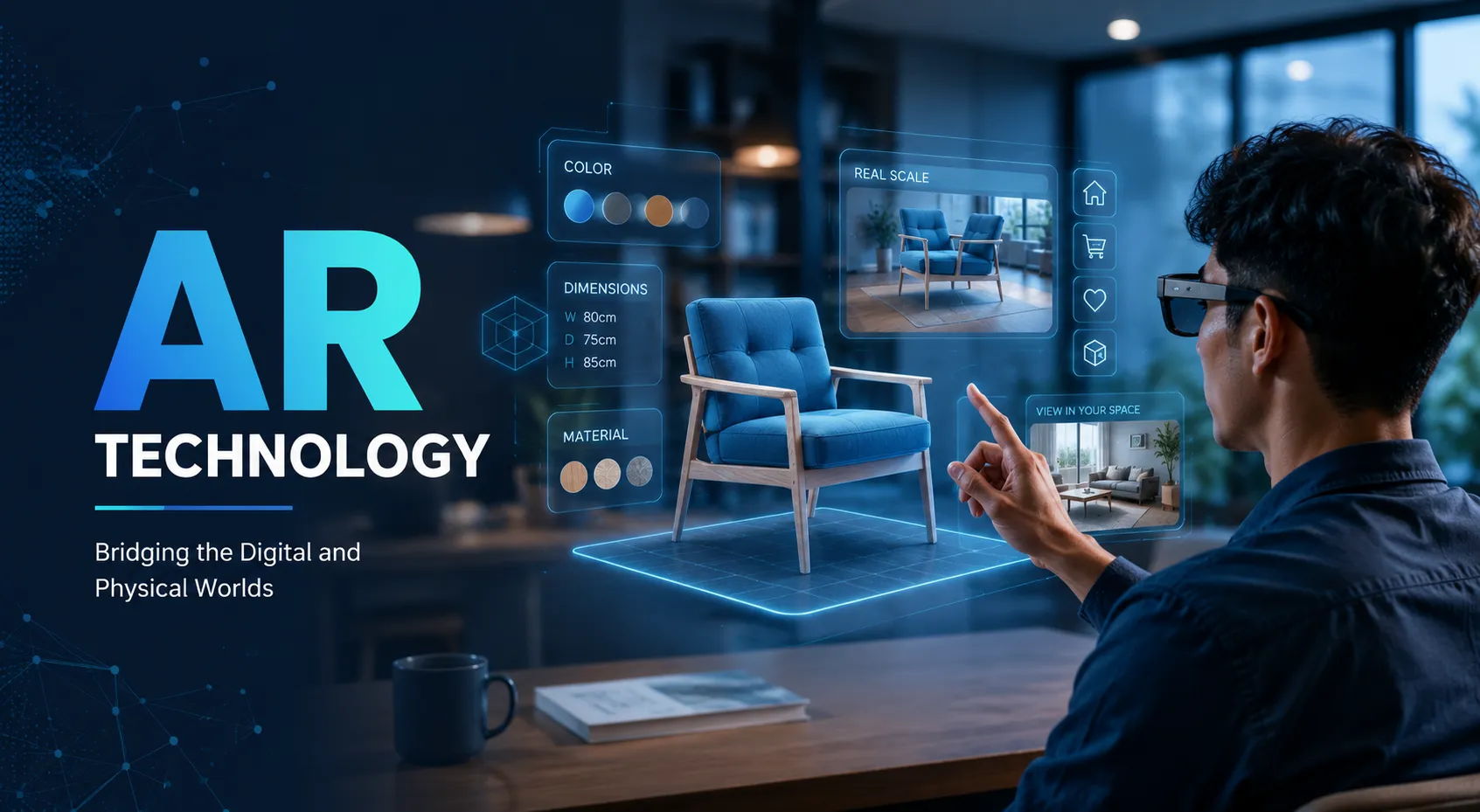
The Shift from Novelty to Necessity
For years, digital reality technologies felt like science fiction, requiring clunky headsets and expensive processing computers. However, Augmented Reality bypassed this hardware barrier by integrating directly into the devices we already own. Unlike Virtual Reality (VR), which isolates the user in a completely fabricated digital world, AR enhances the real world by layering useful digital data, graphics, and interactive elements over our immediate surroundings.
The true turning point occurred when tech giants integrated AR frameworks (like Apple's ARKit and Google's ARCore) directly into smartphone operating systems. Suddenly, developers had the tools to build millions of practical applications, answering the question of why is AR technology so prominent with a simple fact: it became universally accessible overnight.
How AR is Transforming Key Industries
The prominence of AR extends far beyond social media face filters. It is actively revolutionizing how major industries operate on a daily basis. Here is a quick breakdown of how AR is being utilized across various sectors:
Industry | Real-World AR Application | Impact on the Consumer / Business |
|---|---|---|
Retail & E-commerce | "Try-before-you-buy" virtual fitting rooms and furniture placement apps. | Drastically reduces return rates and increases buyer confidence. |
Healthcare | Overlays for vein visualization and 3D organ mapping during surgery. | Improves surgical precision and reduces invasive exploratory procedures. |
Education | Interactive 3D models of molecules, historical artifacts, or solar systems. | Transforms passive reading into highly engaging, visual learning experiences. |
Manufacturing | Smart glasses displaying real-time assembly instructions to factory workers. | Reduces human error, speeds up production, and improves workplace safety. |
Navigation | Smartphone maps that project digital arrows onto physical streets. | Eliminates the confusion of 2D maps, making walking directions foolproof. |
The Core Benefits of Augmented Reality
Whether you are a business owner looking to innovate or a consumer enjoying a smoother shopping experience, the benefits of this technology are undeniable. Here are the primary reasons driving its widespread adoption:
Frictionless Adoption: Because it utilizes existing smartphone cameras and screens, consumers do not need to purchase expensive, specialized hardware to experience AR.
Enhanced Decision Making: In e-commerce, allowing a customer to visualize a product in their own space (like an appliance in their kitchen) removes the guesswork, directly leading to higher sales conversions.
Safe Training Environments: AR allows medical students, pilots, and engineers to practice complex, high-stakes procedures in a perfectly safe, simulated overlay without risking physical harm.
Interactive Engagement: Brands utilizing AR advertising see significantly higher engagement and retention rates because the user is actively participating in the experience rather than passively watching a video.
Frequently Asked Questions (FAQs)
What is the difference between AR and VR?
Virtual Reality (VR) replaces your entire field of vision with a simulated, digital environment, requiring a headset that blocks out the real world. Augmented Reality (AR) keeps you grounded in the real world but overlays digital elements (like text, images, or 3D models) onto your physical surroundings, usually viewed through a smartphone screen or smart glasses.
Do I need a special headset to use AR?
No. While specialized AR headsets (like the Microsoft HoloLens) exist for enterprise use, the vast majority of consumer AR applications run perfectly on standard iOS and Android smartphones using the device's built-in camera and sensors.
Is AR only used for gaming?
While gaming popularized AR (most notably with Pokémon GO), the technology is now heavily utilized in practical applications such as interior design, medical training, logistics, automotive heads-up displays (HUDs), and interactive marketing.
Conclusion
When examining the modern digital landscape, the answer to "why is AR technology so prominent?" becomes incredibly clear. It is a technology that does not ask us to leave our reality behind, but rather enriches the world we already inhabit. By removing the friction of expensive hardware and providing genuine, problem-solving utility across retail, medicine, and education, Augmented Reality has firmly established itself not as a passing trend, but as the foundational interface of the future.
Sources & References: Harvard Business Review
Also Read: What Is VR Technology and How Does It Work in Real Life?
