
What is Vitamin B-12?
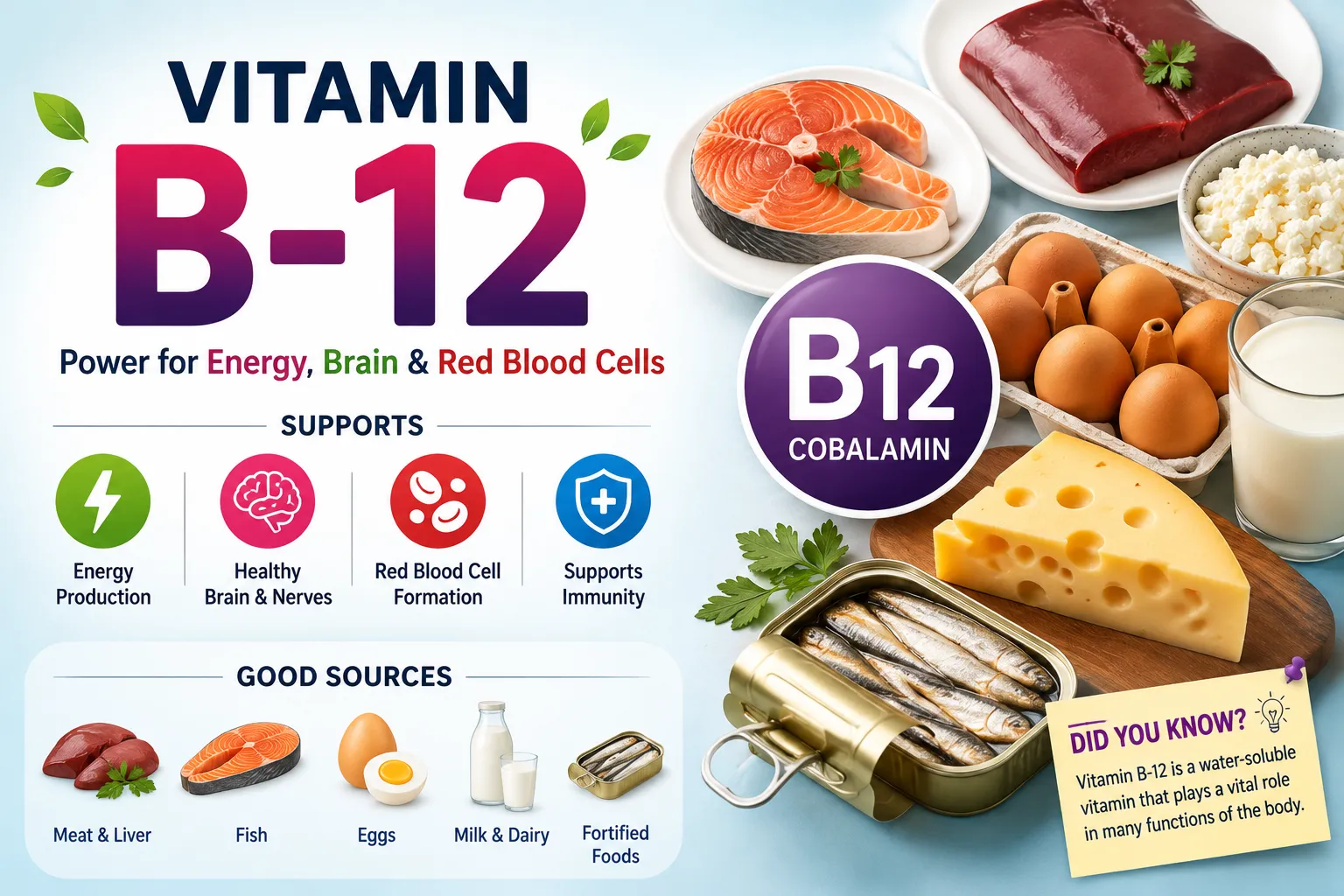
Vitamin B-12 (Cobalamin): An essential water-soluble vitamin that your body needs but cannot produce on its own. It is naturally found in animal products and is crucial for nerve tissue health, brain function, and the production of red blood cells and DNA.
Quick Answer
Why should we take vitamin B-12? You must take Vitamin B-12 because it is the biological fuel that keeps your body's nerves and blood cells healthy. Without it, your body cannot produce DNA or generate enough healthy red blood cells, leading to a specific type of anemia that makes you feel tired, weak, and neurologically impaired. Because the human body cannot synthesize B-12, it must be absorbed entirely through your daily diet or via supplements.
In this guide you will learn:
The exact biological benefits of vitamin B-12.
The top dietary sources for maintaining healthy levels.
The hidden signs of a B-12 deficiency.
Who is most at risk and needs to supplement.
Vitamin B-12 at a Glance
Feature | Details |
Primary Function | Red blood cell formation, DNA synthesis, nerve function |
Daily Recommended Amount (Adults) | 2.4 micrograms (mcg) |
Best Natural Sources | Beef liver, clams, salmon, eggs, dairy |
Deficiency Symptoms | Fatigue, memory loss, numbness in hands/feet, pale skin |
Risk Groups | Vegans/vegetarians, adults over 50, people with GI disorders |
4 Reasons Why We Should Take Vitamin B-12
To understand why this nutrient is non-negotiable for human health, we have to look at what it does at a cellular level. Here are the four primary benefits of maintaining adequate levels:
Prevents Megaloblastic Anemia: B-12 helps your body produce red blood cells. A deficiency causes these cells to become too large and irregular to move from the bone marrow into the bloodstream at a normal rate, resulting in severe fatigue and weakness.
Supports Healthy Brain Function: Studies show that a lack of B-12 is linked to memory loss and cognitive decline, especially in older adults. The vitamin plays a vital role in synthesizing myelin, the protective sheath that wraps around your nerve fibers.
Boosts Energy Levels: While B-12 does not directly provide energy, it is required for your body to convert the food you eat into usable cellular energy (glucose).
Supports Bone Health: Low levels of B-12 have been associated with decreased bone mineral density, which can increase the risk of osteoporosis over time.
Who Actually Needs a B-12 Supplement?
If you eat a balanced diet featuring meat, fish, and dairy, you likely get enough B-12 naturally. However, certain populations have a high risk of deficiency and require supplements or fortified foods.
1.Vegans and Strict Vegetarians:Plant-based diets lack natural B-12.
Because B-12 is only found naturally in animal products, those on strict plant-based diets must take a daily supplement or consume heavily fortified foods (like nutritional yeast or fortified plant milks) to avoid neurological decline.
2.Adults Over the Age of 50:Stomach acid decreases with age.
As we age, our stomachs produce less of the acid required to separate B-12 from the protein in our food. Older adults often need supplements because synthetic B-12 is already in a free form that does not require stomach acid for absorption.
3.People with Gastrointestinal Issues:Celiac and Crohn's disease.
Conditions that affect the small intestine can severely limit the body's ability to absorb nutrients. If you have Crohn's disease or celiac disease, you may need B-12 injections rather than oral supplements.
Frequently Asked Questions (FAQ)
Can you take too much Vitamin B-12?
Because vitamin B-12 is water-soluble, your body naturally flushes out any excess through your urine. There is no established upper tolerable limit, making B-12 supplements remarkably safe, though extremely high doses may cause minor outbreaks of acne in some individuals.
What is the best form of B-12 supplement to take?
Cyanocobalamin is the most common and cost-effective synthetic form. However, methylcobalamin is the naturally occurring form and is often recommended by doctors because it may be retained in the body slightly better.
How quickly will I feel better after taking a B-12 supplement?
If you have a genuine deficiency, you may notice improvements in energy and mental clarity within a few days to a week. However, repairing severe nerve damage from prolonged deficiency can take months.
Conclusion
The answer to why should we take vitamin B-12 is clear: it is a non-negotiable building block for human life. From protecting your brain cells to giving you the energy needed to tackle the day, this vital nutrient keeps your nervous system firing on all cylinders. Whether you get it from a perfectly seared piece of salmon or a daily supplement, ensuring your B-12 levels stay optimal is one of the easiest and most important steps you can take for your long-term health.
Also Read:
Sources & References