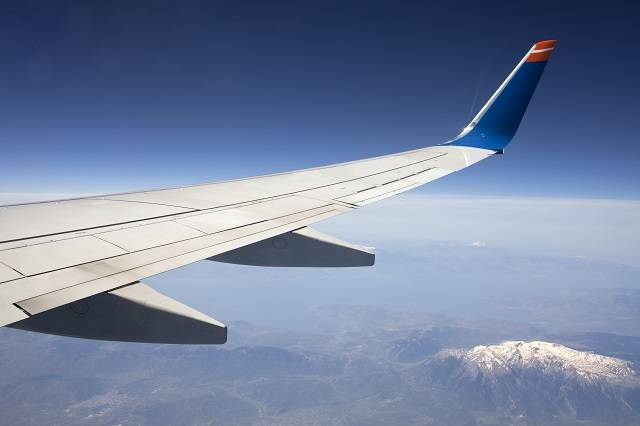
Aircraft wings are not straight primarily because swept wings reduce drag, delay shockwaves, and improve stability when flying at high speeds. While straight wings are excellent for slow-moving planes because they generate maximum lift, they create massive air resistance as an aircraft approaches the speed of sound.
The main reasons commercial jets and military aircraft use swept (angled) wings include:
-
Delaying the severe drag caused by approaching the speed of sound
-
Allowing commercial airliners to cruise faster while burning less fuel
-
Improving natural directional stability during flight
-
Providing a much smoother passenger ride during turbulence
Here is a practical breakdown of how wing shape dictates an aircraft's performance:
1. Delaying High-Speed Drag (Wave Drag) As an airplane flies closer to the speed of sound, the air flowing over the curved top of a straight wing speeds up. This air can actually break the sound barrier before the plane itself does, creating a severe shockwave and a massive wall of air resistance known as "wave drag." Sweeping the wings backward effectively tricks the airflow. It makes the air travel across the wing at an angle, making the wing behave as if it is flying much slower than the aircraft's actual speed. This delays the shockwave and allows jets to fly efficiently at high speeds.
2. Straight Wings vs. Swept Wings Straight wings are not inherently bad; they are just engineered for a completely different purpose. Small, single-engine propeller planes use straight wings because they generate a tremendous amount of lift at low speeds, which is ideal for taking off on short runways. However, for a commercial airliner cruising at over 500 miles per hour, a straight wing would require far too much engine thrust to push through the air, completely ruining the aircraft's fuel efficiency.
3. Improving Stability and Comfort Angled wings naturally improve an aircraft's aerodynamic balance. If a sudden crosswind pushes the plane sideways, the swept design helps the aircraft naturally correct its path and straighten itself out. Furthermore, because swept wings do not react as aggressively to updrafts as straight wings do, they slice through rough air much more easily, resulting in a noticeably smoother ride for passengers.
Ultimately, while straight wings are perfect for taking off quickly at low speeds, swept wings are an engineering necessity for modern, high-speed jet travel.