
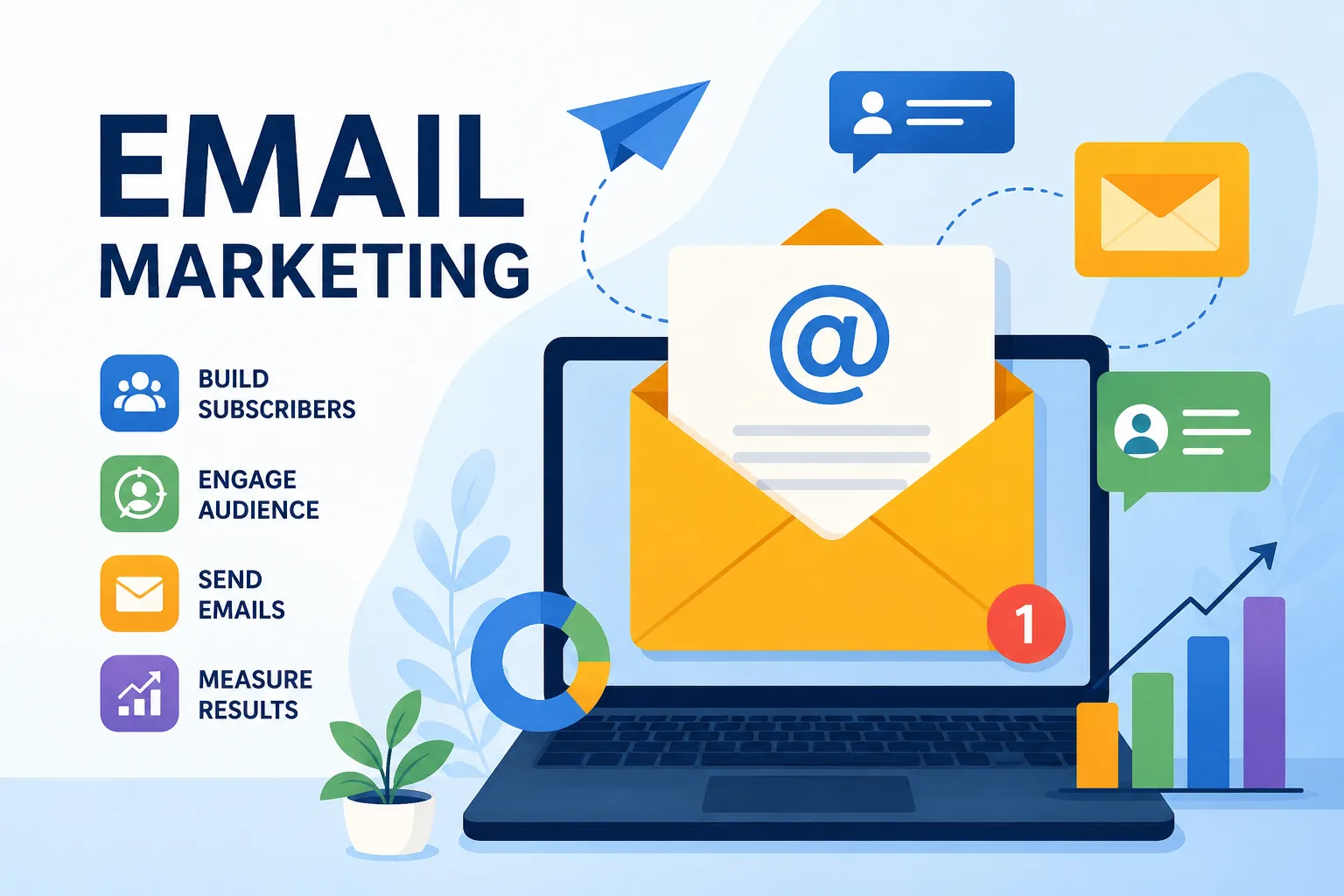
The best way to use email marketing is to send relevant, personalized, and valuable emails to the right audience at the right time. Instead of sending the same message to everyone, segment your email list based on customer interests, behavior, or purchase history. Create engaging subject lines, provide useful content, include a clear call-to-action (CTA), and maintain a consistent sending schedule. Email marketing works best when it builds trust, nurtures relationships, and encourages subscribers to take meaningful actions such as making a purchase, reading a blog, or signing up for a service. Regularly tracking metrics like open rates, click-through rates, and conversions helps improve future campaigns.
Email Marketing Best Practices
Best Practice | Why It Matters |
|---|---|
Build a Permission-Based Email List | Ensures higher engagement and compliance with privacy laws. |
Segment Your Audience | Delivers more relevant content to different subscriber groups. |
Personalize Emails | Increases open rates and customer engagement. |
Write Strong Subject Lines | Encourages recipients to open your emails. |
Provide Valuable Content | Builds trust and keeps subscribers interested. |
Use a Clear CTA | Guides readers toward the next action. |
Optimize for Mobile | Most users read emails on smartphones. |
Test and Analyze Campaigns | Improves performance through data-driven decisions. |
How to Get Better Results with Email Marketing
Start by growing an organic email list through website forms, newsletters, or lead magnets instead of buying email lists. Segment subscribers into groups such as new customers, loyal buyers, or inactive users so they receive relevant messages.
Keep emails short, informative, and visually clean. Every email should have one primary goal, whether it is promoting a product, sharing educational content, or announcing an offer. Personalizing the recipient's name and recommending content based on previous interactions can significantly improve engagement.
Automation is another key strategy. Welcome emails, abandoned cart reminders, follow-up sequences, birthday emails, and re-engagement campaigns help maintain customer relationships without requiring manual effort.
Finally, monitor important email marketing metrics such as:
Open Rate
Click-Through Rate (CTR)
Conversion Rate
Bounce Rate
Unsubscribe Rate
These insights help you understand what works and optimize future campaigns for better performance.
Conclusion
The best way to use email marketing is to focus on relevance, personalization, and consistency rather than sending frequent promotional emails. By segmenting your audience, creating valuable content, automating campaigns, and tracking performance, you can build stronger customer relationships and achieve higher engagement, conversions, and long-term business growth.
FAQs
1. What is the most effective email marketing strategy?
The most effective strategy is to send personalized, targeted emails based on subscriber interests and behavior while providing valuable content and clear calls to action.
2. How often should I send marketing emails?
Most businesses achieve good results by sending emails once a week or two to four times per month, depending on audience preferences and content quality.
3. Why is audience segmentation important in email marketing?
Segmentation improves relevance by sending tailored messages to specific subscriber groups, leading to higher open rates, clicks, and conversions.
4. What metrics should I track in email marketing?
Focus on open rate, click-through rate, conversion rate, unsubscribe rate, bounce rate, and overall return on investment (ROI) to measure campaign success.
Also read : What is the Process of Using Email Marketing Services?