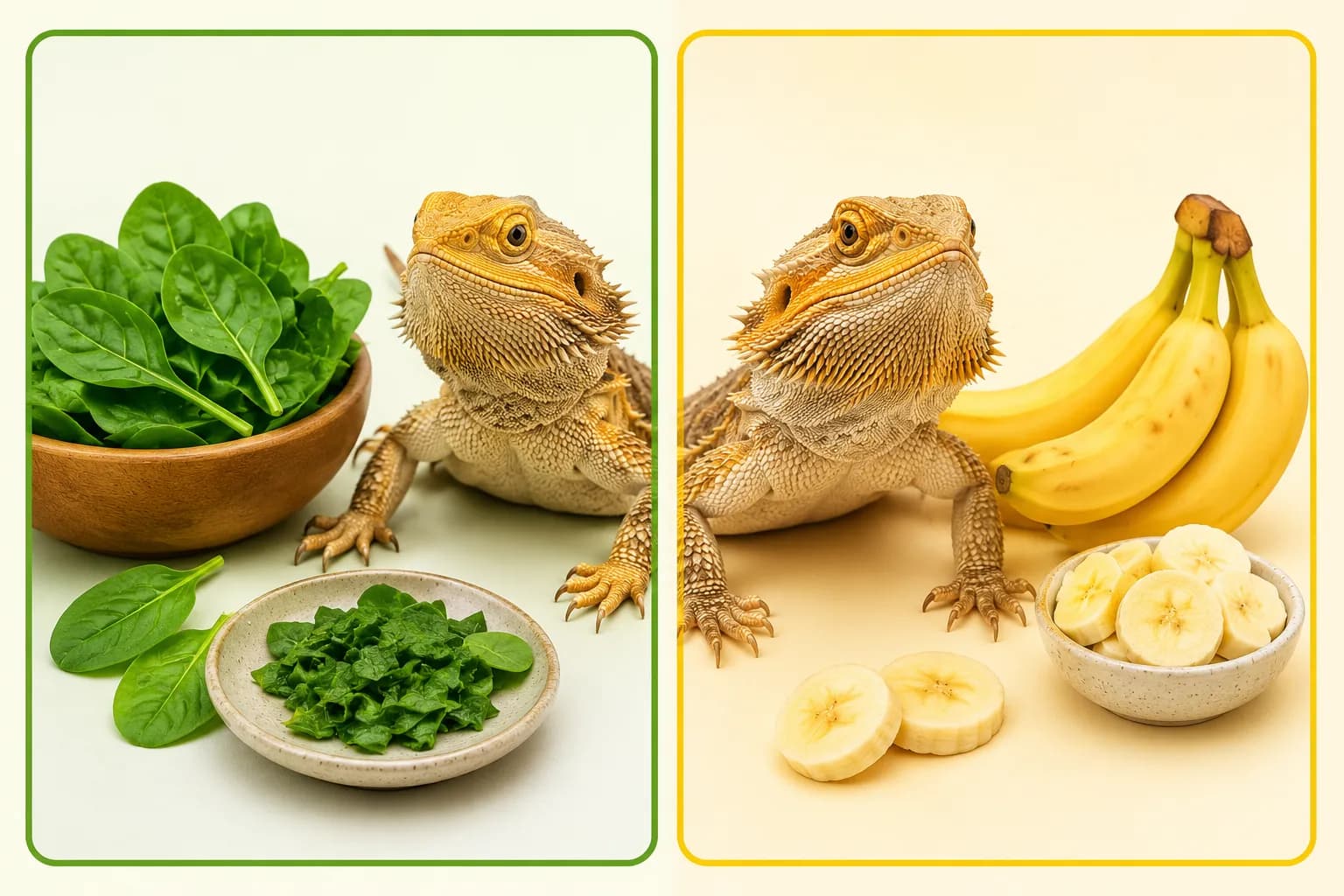
Yes, bearded dragons can eat spinach, but only occasionally. While spinach is rich in vitamins, minerals, and antioxidants, it is also high in oxalates, which can reduce calcium absorption. Because calcium is essential for healthy bones, muscle function, and overall well-being, spinach should be offered as an occasional treat rather than a regular part of a balanced bearded dragon diet.
Key Takeaways
-
Bearded dragons can safely eat spinach in moderation.
-
Spinach contains oxalates that may reduce calcium absorption.
-
Healthy adult bearded dragons can eat spinach once every 2–4 weeks.
-
Baby and juvenile bearded dragons should avoid spinach because they require more calcium for healthy growth.
-
Calcium-rich greens such as collard greens, mustard greens, dandelion greens, and turnip greens are better choices for daily feeding.
Can Bearded Dragons Safely Eat Spinach?
The Central Bearded Dragon (Pogona vitticeps) is one of the world's most popular pet reptiles, and providing a balanced diet is essential for its long-term health.
The answer is yes—but only in moderation.
Spinach is not toxic to bearded dragons and can safely be included in a varied diet. However, because it contains oxalates that bind to calcium, feeding spinach too often may reduce the amount of calcium your bearded dragon absorbs. Instead of making spinach a staple food, offer it as an occasional treat alongside healthier leafy greens.
Providing a variety of vegetables is one of the best ways to ensure your bearded dragon receives balanced nutrition.
Nutritional Benefits of Spinach
Spinach contains several nutrients that support overall health when fed occasionally.
It is a good source of:
-
Vitamin A – Supports healthy vision and immune function
-
Vitamin C – Helps maintain overall health
-
Vitamin K – Supports normal blood clotting
-
Iron – Helps produce healthy blood cells
-
Magnesium – Supports muscle and nerve function
-
Antioxidants – Help protect cells from oxidative damage
Although spinach offers these nutrients, its high oxalate content means it should not become a regular part of your bearded dragon's diet.
Spinach Nutrition at a Glance
| Nutrient | Benefit |
|---|---|
| Vitamin A | Supports vision and immune health |
| Vitamin C | Supports overall health |
| Vitamin K | Helps with normal blood clotting |
| Iron | Supports healthy blood cells |
| Magnesium | Supports muscle and nerve function |
| Oxalates | May reduce calcium absorption if fed frequently |
Why Should Spinach Be Fed Only Occasionally?
The main reason spinach should be limited is its high oxalate content.
Oxalates naturally bind to calcium inside the digestive system, making it more difficult for your bearded dragon to absorb this essential mineral. Calcium is vital for strong bones, healthy muscles, proper nerve function, and normal growth.
Over time, inadequate calcium intake combined with poor UVB lighting may increase the risk of Metabolic Bone Disease (MBD).
It's important to note that spinach itself does not cause metabolic bone disease. The problem arises only when spinach is fed too frequently as part of an unbalanced diet.
How Often Can Bearded Dragons Eat Spinach?
Healthy adult bearded dragons can safely eat a few fresh spinach leaves once every 2–4 weeks.
Feeding Tips
-
Offer only a small amount.
-
Wash spinach thoroughly before feeding.
-
Serve it raw.
-
Mix spinach with calcium-rich leafy greens.
-
Never add butter, salt, oil, or seasonings.
Baby and juvenile bearded dragons should avoid spinach because they require higher calcium intake during their rapid growth stage.
Better Leafy Greens Than Spinach
Although spinach is safe occasionally, these leafy greens are better everyday choices.
| Leafy Green | Recommended Frequency | Calcium Level |
|---|---|---|
| Collard Greens | Daily | High |
| Mustard Greens | Daily | High |
| Dandelion Greens | Daily | High |
| Turnip Greens | Daily | High |
| Endive | Several times a week | Moderate |
| Escarole | Several times a week | Moderate |
| Spinach | Once every 2–4 weeks | Lower (High Oxalates) |
Rotating leafy greens throughout the week provides a wider variety of nutrients while helping prevent dietary imbalances.
What Should a Healthy Bearded Dragon Diet Include?
A healthy adult bearded dragon thrives on a varied diet.
A balanced diet should include:
-
Fresh leafy greens every day
-
Vegetables such as squash, bell peppers, green beans, and carrots in moderation
-
Live insects such as crickets, Dubia roaches, and black soldier fly larvae several times each week
-
Small amounts of fruit as an occasional treat
-
Calcium and vitamin supplements when recommended
-
Proper UVB lighting to support calcium metabolism
Young bearded dragons require a higher proportion of insects because they need additional protein for healthy growth.
Foods to Avoid
Never feed your bearded dragon:
-
Avocado
-
Rhubarb
-
Fireflies
-
Onion
-
Garlic
-
Chocolate
-
Dairy products
-
Processed human foods
-
Sugary snacks
Providing safe foods is just as important as avoiding harmful ones.
Common Feeding Mistakes
Avoid these common mistakes:
-
Feeding spinach too frequently
-
Offering excessive fruit
-
Skipping calcium supplements
-
Not providing adequate UVB lighting
-
Feeding insects that are too large
-
Offering seasoned or processed foods
Small improvements in feeding habits can make a significant difference to your bearded dragon's long-term health.
Frequently Asked Questions
Can baby bearded dragons eat spinach?
No. Baby and juvenile bearded dragons should avoid spinach because they require higher calcium intake during their rapid growth stage.
Can bearded dragons eat spinach every day?
No. Spinach should not be fed daily because its high oxalate content can reduce calcium absorption. Healthy adult bearded dragons should only eat spinach once every 2–4 weeks.
Is spinach poisonous to bearded dragons?
No. Spinach is not poisonous and can be safely offered in small amounts as an occasional treat.
Can bearded dragons eat cooked spinach?
Raw spinach is the better choice. Cooking provides no significant nutritional advantage for bearded dragons.
What are the healthiest leafy greens for bearded dragons?
Collard greens, mustard greens, dandelion greens, and turnip greens are among the healthiest choices because they are rich in calcium and lower in oxalates.
Can spinach cause metabolic bone disease?
No. Spinach alone does not cause metabolic bone disease. However, feeding it too frequently without adequate calcium supplementation and proper UVB lighting may contribute to reduced calcium absorption over time.
Final Verdict
Yes, bearded dragons can eat spinach, but only in moderation. Because spinach contains high levels of oxalates, it should be offered as an occasional treat rather than a staple food. For daily feeding, calcium-rich leafy greens such as collard greens, mustard greens, dandelion greens, and turnip greens are healthier choices.
Combined with a varied diet, appropriate calcium supplementation, and proper UVB lighting, these foods help support strong bones, healthy growth, and overall well-being.
Every bearded dragon has unique dietary needs based on its age, health, and environment. If you notice changes in appetite, weight, or behavior, consult a qualified reptile veterinarian for personalized advice.
References
-
Association of Reptile and Amphibian Veterinarians (ARAV)
-
Merck Veterinary Manual
-
VCA Animal Hospitals
-
Peer-reviewed reptile nutrition resources
Must Read : Can bearded dragons eat bananas?
 Answered by