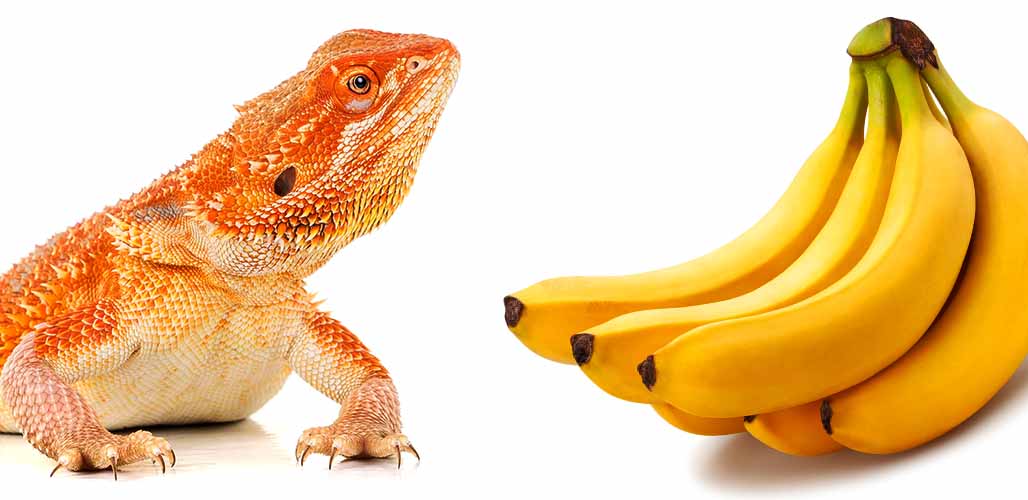
Yes, bearded dragons can eat bananas, but only as an occasional treat — not a regular food. Bananas contain more phosphorus than calcium, and too much phosphorus blocks calcium absorption, which over time can lead to a serious bone condition called Metabolic Bone Disease (MBD). Most adult bearded dragons can safely have a small piece of banana roughly once every 2 to 4 weeks. Baby and juvenile dragons should rarely, if ever, get banana, since their growing bodies need calcium and protein far more than sugar.

Introduction
If your bearded dragon has ever lunged at a piece of banana like it's the best thing that's ever happened to them, you're not imagining it — bananas are sweet, soft, and genuinely appealing to most dragons. That doesn't mean they belong in the regular rotation.
Can bearded dragons eat bananas safely? The honest answer is yes, but with real limits. This guide breaks down exactly how much, how often, and why bananas need to stay an occasional treat rather than a diet staple — including the calcium-phosphorus issue that most s mention but rarely explain clearly.
Key Takeaways
- Bananas are not toxic to bearded dragons, but they're nutritionally unbalanced for regular feeding.
- Bananas contain more phosphorus than calcium — this imbalance can interfere with calcium absorption if fed too often.
- A safe general rule: one small piece, roughly every 2–4 weeks, for healthy adult dragons only.
- Baby and juvenile bearded dragons should rarely be given banana — their diet needs to prioritize protein and calcium for growth.
- Fruit overall (bananas included) should make up less than 5% of an adult bearded dragon's diet, according to veterinary guidance.
- Watch for lethargy, appetite loss, or abnormal stool after any new food — these are signs to contact an exotic vet.
What's the Actual Concern With Feeding Bananas?
Bananas aren't dangerous in the way that toxic foods (like avocado) are. The concern is different — it's about nutritional balance, not poisoning.
Two things make bananas a food to limit rather than avoid:
- High sugar content. Bananas are one of the sweeter fruits commonly fed to bearded dragons, and too much sugar can contribute to weight gain, digestive upset, and, over time, dental problems.
- A phosphorus-heavy mineral profile. Bearded dragons need significantly more calcium than phosphorus in their overall diet. Bananas skew the opposite way.
Neither issue is a problem in small, infrequent amounts. Both become real problems if bananas are fed often or in place of proper staple foods.
Definition — Metabolic Bone Disease (MBD): A condition caused by chronic calcium deficiency or an imbalanced calcium-to-phosphorus ratio in the diet. It weakens bones and can cause fractures, tremors, and jaw deformities if left unmanaged. MBD is one of the most common — and most preventable — health problems in pet bearded dragons.
The Calcium-to-Phosphorus Problem, Explained
This is the part most answers gloss over, so let's actually walk through it.
What Bearded Dragons Need
Veterinary guidance from Washington State University's veterinary teaching hospital recommends a dietary calcium-to-phosphorus (Ca:P) ratio of at least 2:1 — meaning at least twice as much calcium as phosphorus in the overall diet.
What Bananas Actually Provide
Bananas run in the opposite direction. Reptile nutrition resources report banana's phosphorus-to-calcium ratio at roughly 3:1 to 5:1 — meaning bananas contain three to five times more phosphorus than calcium. The exact figure varies slightly depending on the source and banana ripeness, but every source agrees on the same basic point: bananas are phosphorus-heavy relative to calcium.
Why This Matters
Phosphorus binds to calcium in the digestive tract and can block it from being absorbed. Feed too many phosphorus-heavy foods too often, and your dragon can end up functionally calcium-deficient — even if their overall diet looks calcium-rich on paper — because the excess phosphorus is canceling out the calcium's availability.
This is exactly why occasional banana is fine, but frequent banana isn't: it's a cumulative effect, not a single-meal risk.
Nutritional Profile of Bananas (Per Typical Serving)
| Nutrient | Effect on Bearded Dragons |
|---|---|
| Potassium | Supports muscle and nerve function |
| Vitamin B6 | Supports normal metabolism |
| Vitamin C | Supports general immune health |
| Fiber | Aids digestion |
| Natural sugar (~12–16g per 100g) | Can contribute to obesity and dental issues if overfed |
| Phosphorus (relative to calcium) | Can interfere with calcium absorption if fed too often |
Bananas aren't nutritionally empty — they genuinely offer useful vitamins and minerals. The issue isn't what bananas lack; it's what they're disproportionately high in relative to a bearded dragon's specific needs.
How Much Banana Can a Bearded Dragon Eat?
For a healthy adult bearded dragon:
- One or two small pieces per feeding — roughly the size of your dragon's toe or a thumbnail-sized slice is a widely used practical guideline.
- Always peeled, fresh, and cut small enough to prevent choking.
- No seasoning, sugar, or honey added — ever.
For juveniles, banana isn't recommended as a regular treat at all. Growing dragons need their food intake focused on protein and calcium, not sugar. If offered, it should be a very small, rare piece — not a routine treat.
For babies, skip banana entirely. Their nutritional needs during rapid growth leave essentially no room for low-value, high-sugar foods.
Portion Guidance by Life Stage
| Life Stage | Banana Recommended? | Typical Portion |
|---|---|---|
| Adult (healthy) | Yes, occasionally | 1–2 small pieces |
| Juvenile | Rarely | Very small piece, infrequent |
| Baby | Not recommended | Avoid |
| Sick or recovering dragon | Not recommended | Avoid — consult a vet first |
How Often Can Bearded Dragons Eat Bananas?
For healthy adult dragons, once every 2 to 4 weeks is a reasonable, commonly recommended frequency. This keeps banana firmly in "treat" territory rather than becoming a regular part of the diet.
A useful way to think about it: veterinary guidance suggests fruit overall (not just banana) should make up less than 5% of an adult bearded dragon's total diet. If you're feeding other fruits too, banana should be an occasional rotation item, not an addition on top of an already fruit-heavy diet.
How to Prepare and Serve Bananas Safely
- Choose a ripe, fresh banana. Avoid overripe or fermenting fruit.
- Peel it completely. Banana peels are difficult to digest and may carry pesticide residue.
- Cut into small, bite-sized pieces. Prevents choking and makes portion control easier.
- Serve plain. No sugar, salt, seasoning, or dips.
- Offer alongside — not instead of — the regular meal of leafy greens and appropriately sized feeder insects.
- Remove any uneaten banana within a few hours to prevent it from attracting pests or spoiling in the enclosure.
Signs of Overfeeding — and What to Do
Occasional banana within the guidelines above is very unlikely to cause problems. But if banana (or any treat) has been overfed, here's what to watch for.
| Symptom | What It May Indicate | Action |
|---|---|---|
| Mild softer stool, one time | Normal reaction to a sugary treat | Monitor, no action usually needed |
| Repeated loose or watery stool | Digestive upset from sugar/fiber overload | Reduce treats, monitor closely |
| Lethargy or low activity | Possible digestive or metabolic stress | Contact an exotic vet |
| Not eating for more than 1–2 days (adults) | Could indicate illness unrelated or related to diet | Contact an exotic vet |
| Stopped defecating | Potential impaction or blockage | Contact an exotic vet promptly |
| Visible weakness in limbs, tremors | Possible sign of calcium deficiency (MBD) | Contact an exotic vet promptly |
Important: These guidelines are general information, not a substitute for veterinary care. If your bearded dragon shows any of the concerning signs above, contact a qualified exotic/reptile veterinarian rather than waiting to see if it resolves on its own.
Bananas vs. Other Fruits: How Do They Compare?
| Fruit | Safe? | Feeding Frequency | Notes |
|---|---|---|---|
| Banana | ✅ Yes | Every 2–4 weeks | High sugar, phosphorus-heavy |
| Papaya | ✅ Yes | Occasionally | Generally well-tolerated |
| Melon | ✅ Yes | Occasionally | High water content |
| Apple (seedless) | ✅ Yes | Occasionally | Remove seeds first |
| Mango | ✅ Yes | Occasionally | High in sugar too — treat sparingly |
| Figs | ✅ Yes | Occasionally | Better calcium content than most fruit |
| Strawberries | ✅ Yes | Occasionally | Moderate sugar |
| Avocado | ❌ No | Never | Contains persin, toxic to bearded dragons |
| Citrus fruits | ❌ Avoid | Avoid | Too acidic, can upset digestion |
Banana isn't uniquely dangerous compared to other fruits — most fruit shares the same "occasional treat only" status. It's simply one of the fruits where the calcium-phosphorus imbalance is more pronounced.
What a Balanced Bearded Dragon Diet Actually Looks Like
Fruit — banana included — is a small slice of a much bigger picture. According to veterinary guidance from Washington State University, a healthy adult bearded dragon's diet should look roughly like this:
| Food Group | Approximate Share of Diet |
|---|---|
| Feeder insects (crickets, mealworms, waxworms) | ~25% |
| Dark leafy greens (kale, romaine, mustard greens) | ~50–55% |
| Chopped vegetables (squash, zucchini, sweet potato) | ~20% |
| Fruit (papaya, melon, banana, etc.) | Less than 5% |
Juvenile dragons need a different balance — primarily insects to fuel rapid growth, with calcium powder dusted onto food 4–5 times per week (compared to 1–2 times weekly for adults).
Proper UVB lighting is just as important as diet here — without it, dragons can't metabolize the vitamin D3 needed to actually absorb dietary calcium, regardless of how well-balanced the food itself is.
Common Feeding Mistakes to Avoid
- Feeding banana (or any fruit) daily or weekly instead of occasionally.
- Offering large portions instead of small, controlled pieces.
- Feeding banana peels.
- Giving dried banana chips or banana-flavored snacks — these concentrate sugar further.
- Letting fruit replace leafy greens rather than supplement them.
- Skipping calcium supplementation on days when phosphorus-heavy treats are fed.
- Feeding fruit to babies or juveniles as a regular treat.
- Ignoring UVB lighting needs while focusing only on diet.
Expert Tips
- Pair treats with calcium awareness. If you feed a phosphorus-heavy treat like banana, make sure your dragon's calcium dusting schedule stays consistent that week — don't skip it because "they just had a treat."
- Use banana as a training or bonding tool sparingly, not a daily reward — its appeal works better precisely because it's rare.
- Rotate fruit types rather than defaulting to banana every time you offer a treat, to avoid building any single nutritional imbalance.
- When in doubt about portion size, go smaller. It's easier to offer more next time than to walk back overfeeding.
Conclusion
So, can bearded dragons eat bananas? Yes — as an occasional treat, not a dietary staple. A small piece every 2 to 4 weeks is a safe guideline for healthy adult dragons, while babies and juveniles are better off skipping it in favor of protein- and calcium-focused foods.
The real takeaway isn't about banana specifically — it's about the bigger picture. Leafy greens, appropriately sized feeder insects, proper UVB lighting, and consistent calcium supplementation should make up the foundation of your bearded dragon's diet. Bananas, like most fruit, are a nice-to-have on top of that foundation, not a substitute for it.
If you're ever unsure about a feeding decision — especially for a sick, very young, or underweight dragon — a quick check with an exotic-animal veterinarian is always the safer call than guessing.
Frequently Asked Questions
Can bearded dragons have bananas every day?
No. Daily feeding is too frequent given bananas' sugar and phosphorus content. Stick to roughly once every 2–4 weeks for healthy adults.
Do bearded dragons eat bananas in the wild?
Wild bearded dragons eat a varied diet of insects, plants, and occasionally fruit native to their environment, but bananas specifically aren't a natural part of their native Australian habitat. Captive feeding guidelines are based on nutritional balance, not wild diet replication.
Can beardies eat bananas if they're babies?
It's not recommended. Baby and juvenile bearded dragons need a diet focused on protein and calcium to support rapid growth, and low-value, high-sugar treats like banana don't support that.
Can bearded dragons eat banana peels?
No. Peels are difficult to digest and may carry pesticide residue. Always remove the peel and offer only the fruit.
What is a bearded dragon banana portion, exactly?
For a healthy adult, one to two small, bite-sized pieces per feeding is a reasonable portion — roughly a thumbnail-sized slice.
Are bananas toxic to bearded dragons?
No, bananas are not toxic. The concern is nutritional imbalance from overfeeding, not poisoning.
What should I do if my bearded dragon ate too much banana?
Monitor for loose stool, lethargy, or appetite changes over the next day or two. Mild digestive upset usually resolves on its own; if your dragon seems lethargic, stops eating, or shows abnormal stool for more than a day, contact an exotic veterinarian.
Also Read: Can bearded dragons eat grapes?
References
- Washington State University Veterinary Teaching Hospital — Bearded Dragon Husbandry
- NC State Veterinary Hospital — How To Feed Your Bearded Dragon
- Chewy — Can Bearded Dragons Eat Bananas?
- Hepper — Can Bearded Dragons Eat Bananas? Vet-Reviewed Benefits & Drawbacks
- The Bearded Dragon.org — Bananas (Diet)
- The Bearded Dragon.org — Phosphorus & Bearded Dragons
- Zen Habitats — What Fruits Can Bearded Dragons Eat?
This answer is for general informational purposes and does not replace individualized veterinary advice. Always consult a qualified exotic-animal veterinarian for concerns about your bearded dragon's health or diet.