Scientists normally can’t tell for sure when a volcano will erupt or give an exact date and time very long in advance. Instead, they constantly monitor shifts in earthquakes, ground deformation, volcanic gases, temperature, and other signs of unrest and compare those signals to the volcano's historical activity to determine the likelihood of an eruption.
What counts is that scientists don’t look at just one warning sign. Scientists can predict eruptions and deliver early warnings when a volcano starts exhibiting unusual activity using monitoring data, as well as the history of the volcano, the U.S. Geological Survey (USGS) says.
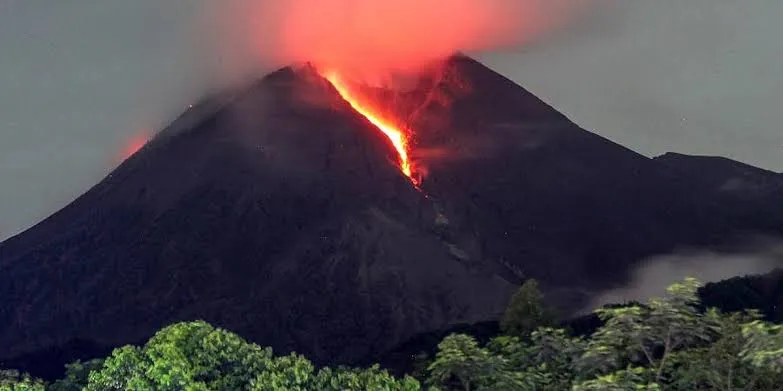
Warning Signs
Some eruptions are preceded by measurable changes caused by the movement of magma beneath the surface.
Warning indicators may include:
More frequent or shifting patterns of earthquakes
Sustained volcanic tremor
Swelling or distortion of the earth
Variations of volcanic gas emissions
Surface temperature increases or thermal anomalies
Steam or gas plume variations
Changes in hydrothermal systems or crater lakes
But these signals don't necessarily guarantee an eruption will follow. One reason that forecasting is difficult is that a volcano might show signs of disturbance without an eruption ultimately happening.
Monitoring Techniques
Scientists use a variety of instruments and technologies that work together to learn what is happening inside and around a volcano.
Seismometers also record earthquakes and vibrations that might signal movement of magma and gases underneath. USGS volcanologists examine numerous kinds of seismic occurrences to understand these processes better.
GPS sensors and satellite radar can detect small changes in the volcano’s form. Magma that builds up beneath the surface can cause parts of the volcano to swell or deform.
They also detect gases like sulfur dioxide and carbon dioxide. Changes in the composition or emission rates of gases might tell scientists about magma movement.
Satellites offer an important layer of monitoring as well, particularly in remote places, with the ability to see ground deformation, gas emissions, thermal anomalies, and ash plumes.
Forecasting Process
Predicting volcanic eruptions is a bit like putting a puzzle together.
Scientists first determine what is considered “normal” activity for a specific volcano. They then look for changes over time.
If earthquakes suddenly increase, the ground starts to swell, gas emissions alter, and temperatures rise at the same time, experts would interpret the combined pattern as signs of rising volcanic instability.
Historical accounts of eruptions are equally relevant. The Smithsonian Institution’s Global Volcanism Program has a vast database of volcanoes and their eruption history to assist scientists in putting present activity into a larger historical context.
All current information indicates that volcano observatories can produce forecasts, alert levels, and public warnings.
Prediction Problems
The main issue is that no two volcanoes are the same.
Some volcanoes give clear warning signs before they erupt; others may have relatively subtle changes. The same warning sign may indicate different things at different volcanoes.
For instance, an earthquake swarm may mean magma is moving, but earthquakes do not ensure an eruption.
That is why scientists most often talk of “forecasting” eruptions rather than precise prediction. The Smithsonian Global Volcanism Program says that experienced observer teams can make reliable projections based on monitoring data and eruption precursors, but there remains uncertainty.
Early Warning & Risk Reduction
Early-warning systems can save lives even when scientists cannot predict exactly when an eruption will happen.
Monitoring data is regularly reviewed by volcano observatories, and updates are issued if there is a change in activity. Such alerts can help authorities set up exclusion zones, prepare for evacuations, reroute aircraft, and alert local communities.
Hazard maps are just as important. USGS long-term volcanic hazard evaluations delineate areas of possible hazard impact and inform preparedness strategy.
To me, that’s the real value of volcano forecasting. Success doesn't always imply forecasting an explosion to the minute. There is already an incredibly vital purpose fulfilled by monitoring if scientists can detect increasing risk in time for people to get away from dangerous regions.
Frequently Asked Questions (FAQs)
1. Are scientists able to accurately predict when a volcano will erupt?
Usually not. Scientists can estimate the chances of an eruption and when it might happen from monitoring data, but not always exactly when it will happen.
2. Is a volcano going to blow because an earthquake happened?
Not necessarily so. A big warning indicator is if there is a lot of seismic activity or if it changes. But earthquakes by themselves do not prove that an eruption will occur.
3. How do satellites help to forecast volcanic eruptions?
Satellites can detect ground deformation, thermal changes, volcanic gases, and ash plumes, making them particularly valuable for monitoring remote volcanoes.
4. What is the best way to predict an eruption?
There is no one best indicator. The best forecasts are usually those based on a combination of seismic, deformation, gas, thermal, satellite, and historical data.
Must Read: When do volcanoes become dangerous?