The Kushana rulers asserted their high status through the use of grand royal titles, impressive gold coinage, support of multiple religions, patronage of art and architecture, and control of important trade routes such as the Silk Road. They did not rely solely on military might but also on political symbolism, religion, culture and economic prosperity to increase their power and to show themselves as universal rulers.
To me, one of the most amazing things about Kushana's rule is that they knew the value of perception. Their inscriptions, coins, monuments, and patronage were meticulously crafted to convey power, legitimacy and imperial grandeur across a culturally diverse empire.
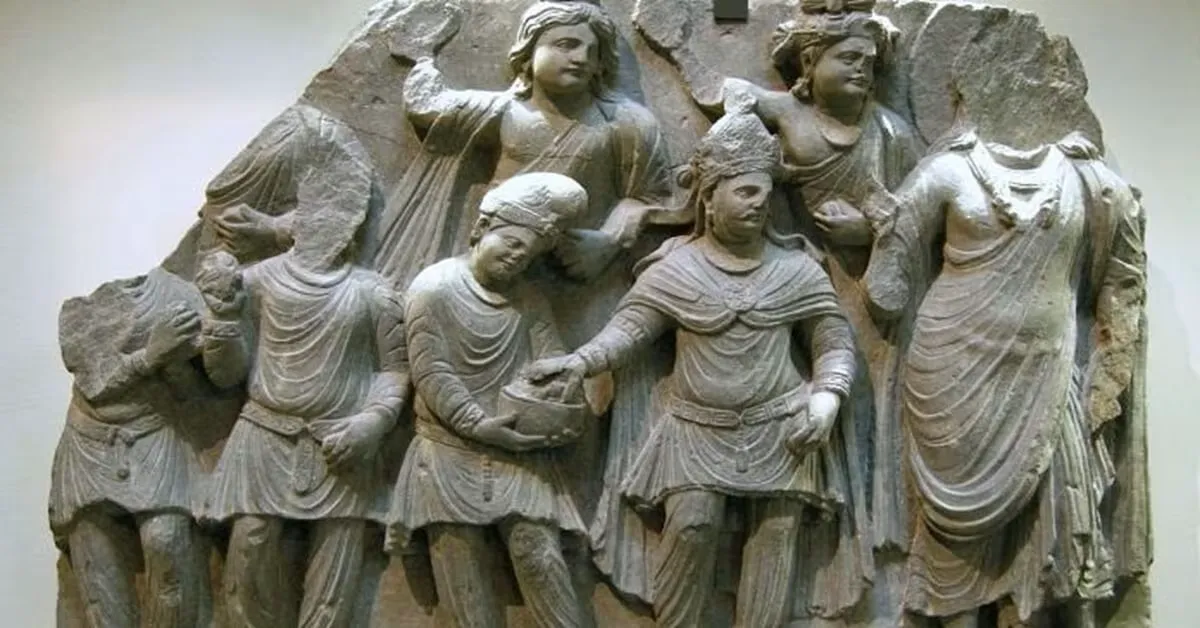
Royal Family Titles
The Kushana monarchs used ornate titles to highlight their superior authority.
Some of the traditional titles were:
-
Maharaja (King of Kings)
-
Rājātirāja (King of Kings)
-
Devaputra (Son of God, or Son of Heaven)
They gave the monarch titles other than that of a regional king. They conferred heavenly legitimacy and imperial rank and reinforced political authority in many locations. The royal titulature became more sophisticated under monarchs like Vima Kadphises and Kanishka and was a key feature of the Kushana imperial ideology.
Money
One of the most obvious markers of the Kushanas' authority was their money.
The Kushanas minted beautiful gold and copper coins with portraits of the king and different gods of the Greek, Iranian, Hindu and Buddhist pantheons.
The coins had many different uses. They promoted trade, projected royal authority, and the idea of a prosperous and powerful empire. The empire’s economic power is further evidenced by the broad circulation of its coins throughout Central Asia and northern India.
Patronage of Religion
In the Kushana period, the rulers patronized not a single religious tradition but many.
Kushana coins and inscriptions also include Hindu, Iranian, and Greek deities, while Emperor Kanishka is especially known for Buddhism and the growth of Mahayana Buddhism.
I believe this religious inclusion was not just culturally important but also politically sensible. The Kushanas also encouraged loyalty among the many communities that lived in their empire by respecting the various religions. One of the hallmark characteristics of the Kushana Empire is widely acknowledged to be its religious tolerance.
Art & Architecture
Artistic and architectural progress was extensively supported by the Kushanas.
Under their control, the Gandhara and Mathura schools of art flourished. Gandhara art mixed Indian subjects with Greco-Roman influences. Mathura created an Indian style of art.
They also helped in making northern India a great center of culture by supporting the construction of monasteries, stupas, sculptures, and religious structures. Their sponsorship was essential in the dissemination of Buddhist art across Central and East Asia.
Military & Commercial
During the Kushana period, there was a close relationship between military prowess and trade.
The empire was strategically located on the Silk Road connecting India, Central Asia, Persia, and the Roman world. The Kushanas could profit from long-distance trade in silk, spices, precious stones, textiles and luxury products.
Trade brought prosperity, which paid for stable government, beautiful coinage, patronage of the arts, and great building projects. Historians also point out that the governmental stability provided by the Kushanas made possible cultural and commercial exchanges across Eurasia.
FAQs
1. Who is the most famous Kushana ruler?
Kanishka is recognized as the most famous of the Kushana rulers due to his military successes and his encouragement of Buddhism and support of art and culture.
2. What was the significance of Kushana coins?
Their coins celebrated economic success, aided commerce, and depicted imperial authority through images of kings and religious symbols.
3. What was the Kushana ruler's title?
They used titles like Maharaja, Rajatiraja, and Devaputra on a regular basis to stress their imperial and divine position.
4. How did commerce promote Kushan power?
Control of the main trade routes produced wealth, stimulated cultural interaction, and increased the political influence of the empire across Asia.
Must Read: Which one of the Mughal rulers do you find most interesting? Why?