
Once the hair shaft has physically split, you can not permanently mend a split end. The only way to get rid of split ends is to cut them off. Home hair care, however, can tame split ends, reduce breakage and prevent new splits from forming.
In my view, don't go for a product that says it can "fix" split ends forever, but instead focus on cutting off the existing damage and protecting the healthy hair above it.
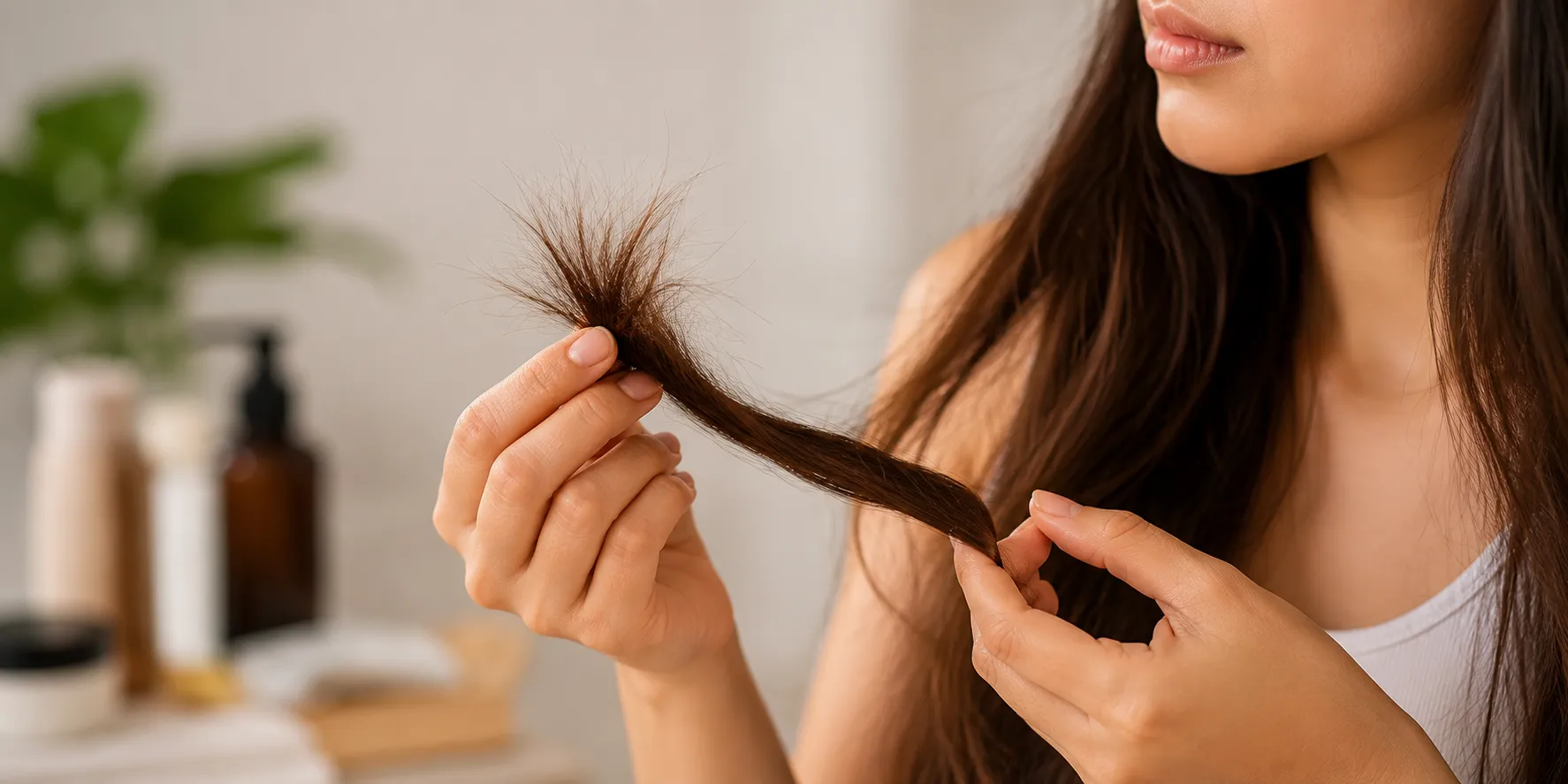
Causes for Split Ends
Split ends are caused by damage to the cuticles, or outside layer of hair, and the fraying or breaking off of the ends.
Typical causes are:
-
Always straightening, curling or blow-drying.
-
Hair coloring, bleaching, perming or chemical straightening.
-
Brushing or detangling coarse hair
-
Aggressively rubbing wet hair with a towel
-
Over-exposure to the sun
-
Dry or damaged hair
-
Repetitive mechanical stress and tight hairstyles
The American Academy of Dermatology (AAD) states that too much heat and harsh styling can make hair brittle and lead to breakage and split ends.
Natures Cures
Get a little cut to get rid of any split ends showing. Then, work on protecting the rest of your hair.
Use a gentle shampoo, concentrating mostly on your scalp rather than rubbing the full hair length.
Always use a conditioner after shampooing. Conditioner covers the hair strands and helps to decrease breakage and split ends.
If your hair is dry, frizzy or damaged, use a leave-in conditioner from mid-lengths to tips.
A little argan oil on the dry ends might also aid with improving smoothness and manageability.
One thing I've discovered is that oils and conditioners can make damaged ends look healthier, but they should not be confused with truly reversing a split hair shaft.
Prevention Routine
The problem does not have to get worse if you follow a simple routine:
-
Shampoo according to your hair type and requirements.
-
Wash state.
-
Gently detangle with a wide-tooth comb.
-
Start detangling at the ends and work up.
-
Whenever you can, let your hair air-dry.
-
If utilizing heat, use it on a low-medium setting and use a product that protects from heat.
-
If necessary, trim off damaged ends.
AAD explicitly advocates gentle detangling and reducing heat to minimize hair damage.
What Not to Do
Refrain:
-
Picking or pulling split ends apart
-
Too much flat-ironing or curling
-
Very hot blow-drying
-
Rough towel drying
-
Brushing your hair too much
-
Often bleaching or chemical treatments are used
-
Tight buns, ponytails or hairstyles that constantly strain on the hair
And don’t count too much on viral DIY cures that promise to “seal” split ends for good.
Professional assistance
If your hair is badly damaged and you’re not sure how much needs to be trimmed, consider seeing a professional hairstylist.
If you’re suffering a lot of breakage, visible thinning, scalp concerns or unexpected hair loss, along with split ends, see a dermatologist. If your hair care changes don’t enhance the health of your hair, the AAD recommends seeing a specialist.
FAQ (Frequently Asked Questions)
1. Are split ends really repairable?
Sometimes, no. Products can temporarily smooth and protect damaged hair, but cutting is the only way to get rid of a current split end.
2. Is coconut oil good for split ends?
Coconut oil may help to condition hair and reduce damage, but it cannot permanently fuse an already split hair shaft back together.
3. Is conditioner good for preventing split ends?
The conditioner can help prevent split ends from getting worse with less friction, dryness, tangling and breakage.
4. Is it OK to trim my split ends at home?
If very little is damaged, you can gently trim using the right kind of hair-cutting scissors, but if there is considerable damage, it is best to get a professional hairstylist to do the job.
Must Read: How to deal with frizzy hair in winter?
 Answered by