
India has made significant strides in formally protecting gig and platform workers, but relative to jurisdictions such as the European Union and Australia, its framework remains more oriented towards social security than employment status, minimum working conditions, algorithmic management, and protection from unfair platform decisions.
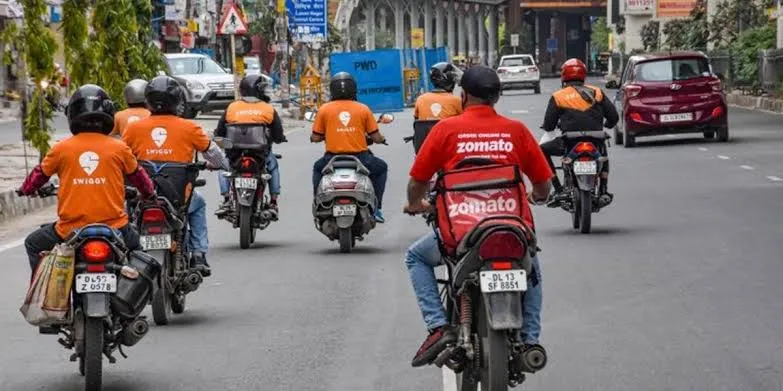
One big development is the formal recognition of gig workers and platform workers in the social-security framework under India’s Code on Social Security, 2020.
“I think the biggest achievement for India is that it’s realized that gig workers need a separate protection framework. The next challenge is ensuring that those protections are comprehensive and easily accessible in practice.”
What’s already in place in India?
The Code on Social Security offers the legislative framework for the creation of schemes for gig and platform workers encompassing life and disability cover, accident insurance, health and maternity benefits, and old-age protection.
India has also been creating a worker registration through the e-Shram ecosystem.
Rajasthan has been the first state in the country to bring in specific legislation for platform-based gig workers, while other states are also working on their own regulatory approaches.
India vs. Other Countries
The European Union's Platform Work Directive goes farther on employment rights and digital management. It specifies tools for determining correct work status and creates a rebuttable legal presumption of employment when facts showing platform direction and control are present. It also offers protections around algorithmic management and personal data.
Australia created the concept of “employee-like workers.” Its Fair Work Commission can establish legally binding minimum standards encompassing topics such as payment conditions, deductions and insurance. Eligible workers also have protection from unfair deactivation.
This makes countries such as Australia more advanced in regulating the real platform-worker interaction, rather than concentrating exclusively on social benefits.
Strength Areas of India
India’s strategy has many key strengths:
-
There is explicit legal recognition of gig and platform labor.
-
The framework acknowledges the need for social security protection for them.
-
India’s strategy has the ability to reach a very broad and diversified workforce.
-
At the state level, experimentation can develop more worker protections.
Another plus is India has not tried to put every gig worker into the typical employee box. That gives you flexibility, and lots of workers like that.
Coverage Gaps
Compared with stronger international models, there are still substantial gaps.
India still needs more clarity and consistent enforcement around rights for:
-
Wage and salary fairness
-
Unjust suspension or deactivation of account
-
Algorithmic transparency
-
Automated ratings and distribution of work
-
Grievance redressal
-
Collective representation
-
Insurance and occupational hazards
-
Effective delivery of social-security benefits
The EU’s focus on human control and transparency in algorithmic management is especially pertinent as applications increasingly determine who gets work, how performance is assessed, and possibly how workers are paid.
Future Directions
India’s next step should be to go from identifying gig workers to ensuring genuine, enforceable rights.
Personally, I would prioritize portable social security benefits, transparent algorithms, fair deactivation procedures, accessible grievance systems and minimum earning precautions without taking away the freedom that drives individuals to gig employment excessively.
Australia provides an interesting third ground since its structure provides certain contractors with greater protections without automatically turning them all into employees.
FAQs (Frequently Asked Questions)
1. Are gig workers covered in India?
Yes. The Code on Social Security, 2020, of India clearly recognizes gig workers and platform workers.
2. Are gig workers in India entitled to the same perks as regular employees?
No, by default not. They are not recognized as traditional employees and are not afforded the same legal protections.
3. In which region are platform workers protected strongly?
The EU has adopted particularly important rules on employment-status determination, algorithmic management, transparency and personal-data protection.
4. What are the lessons for India from other countries?
India can do better on minimum standards, deactivation safeguards, algorithmic transparency, grievance systems and collective worker representation.
Must Read: How are gig workers defined under the new labour codes?
 Answered by