

Jony Backer
Jony Backer· 1 month ago
Professional content writter since 2010

How do you write a professional staff reference letter for an employee leaving a company?

0
1.4K

Join this conversation

Sort By

How do you write a professional staff reference letter for an employee leaving a company

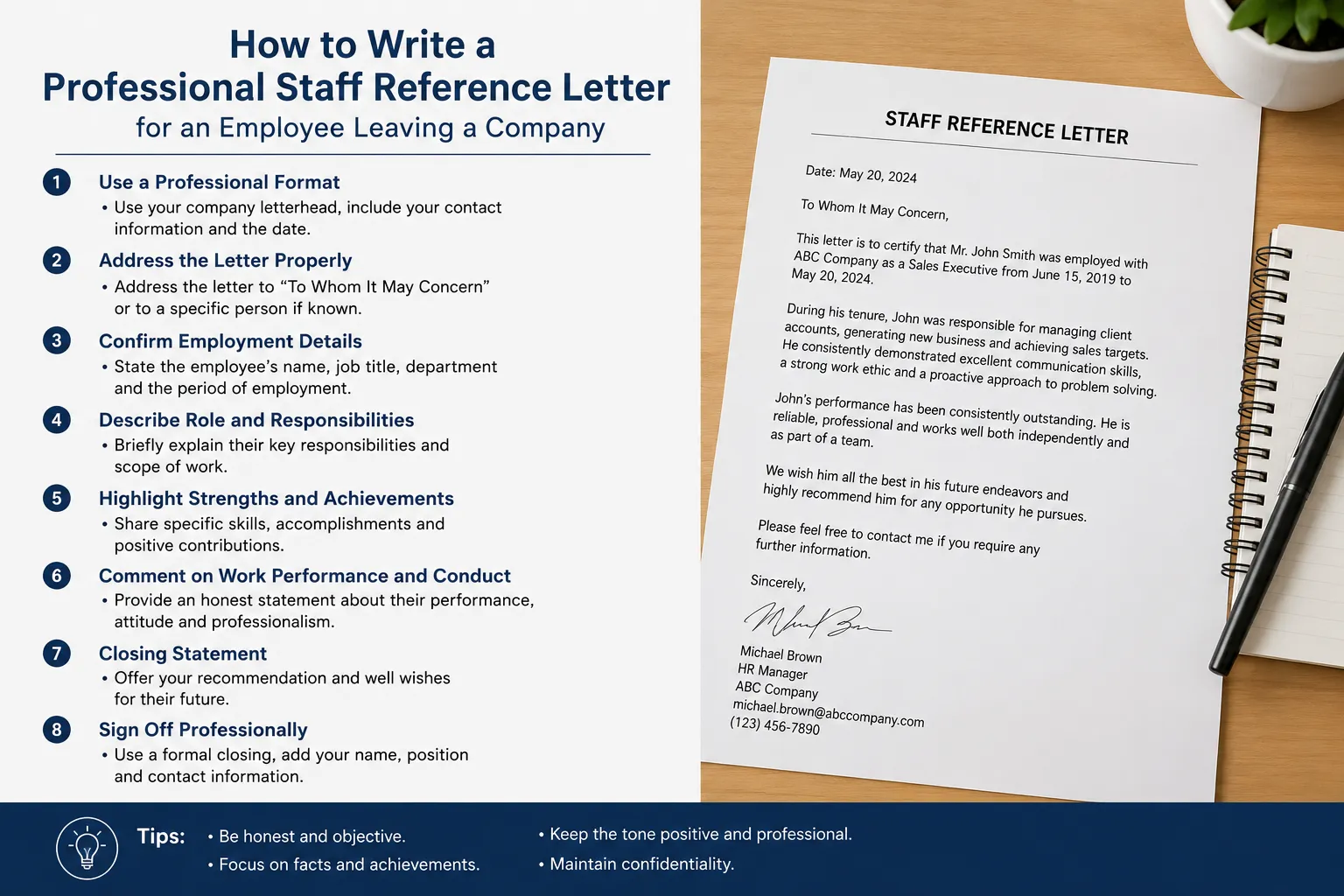
A professional staff reference letter should clearly mention the employee’s job role, work duration, key skills, achievements, and overall behavior in the workplace. Employers usually write this letter to support an employee applying for a new job. The best reference letters are honest, concise, and focused on real work performance. Including specific examples of responsibility, teamwork, and professionalism makes the recommendation more trustworthy and useful for recruiters.

When writing a staff reference letter, start with basic employee details such as name, designation, and employment period. After that, explain your professional relationship with the employee and describe their main responsibilities. Mention strengths like communication skills, leadership, punctuality, or technical expertise depending on the employee’s role.

For example, if the employee worked in customer service, you can mention how they handled clients professionally and improved customer satisfaction. Real examples help make the letter more credible because they show genuine experience and expertise instead of generic statements.

The tone of the letter should remain positive and professional. Avoid overly emotional language or exaggerated praise. Recruiters usually prefer short and direct reference letters that provide clear information about work ethics and performance.

A good staff reference letter should also end with a recommendation statement and contact details for verification. This increases trustworthiness and gives hiring managers confidence in the authenticity of the recommendation.

Using a proper employee reference sample or reference template for employee leaving can also help managers save time while maintaining a professional structure.

Answered by
Tara Verma
Tara VermaTen years in the classroom, shaping minds — bringing the same clarity and purpose to every piece she writes about education.
View Profile

Tara Verma is a practising teacher and education content writer with over 10 years of classroom experience across primary and secondary levels. She holds a Master's degree in Education (M.Ed.) from Delhi University and a Bachelor of Education (B.Ed.) from Jamia Millia Islamia — qualifications that ground her writing in both pedagogical theory and the day-to-day realities of teaching in India. Her content covers exam preparation strategies, learning methodologies, curriculum guidance, student mental health, career counselling for students, and the evolving state of school and higher education in India. Her work has appeared on platforms including TeacherVision India, Jagran Josh, and Careers360, where she writes for students, parents, and fellow educators who need content built on actual teaching experience — not theory alone. Over a decade of working directly with students across age groups and learning levels has given Tara a practical understanding of how education content should be written — clearly, accessibly, and with genuine awareness of the challenges students and teachers face on the ground. She has taught 1,000+ students, contributed to school curriculum development initiatives, and published 250+ articles on education across digital platforms. She is an active member of the National Council of Teachers of English (NCTE) India. Across all her writing, every recommendation is classroom-tested, every insight comes from direct teaching experience, and every article is held to the same standard she applies in her own classroom — accuracy, clarity, and genuine usefulness for the reader.

Updated on05/27/26
0