

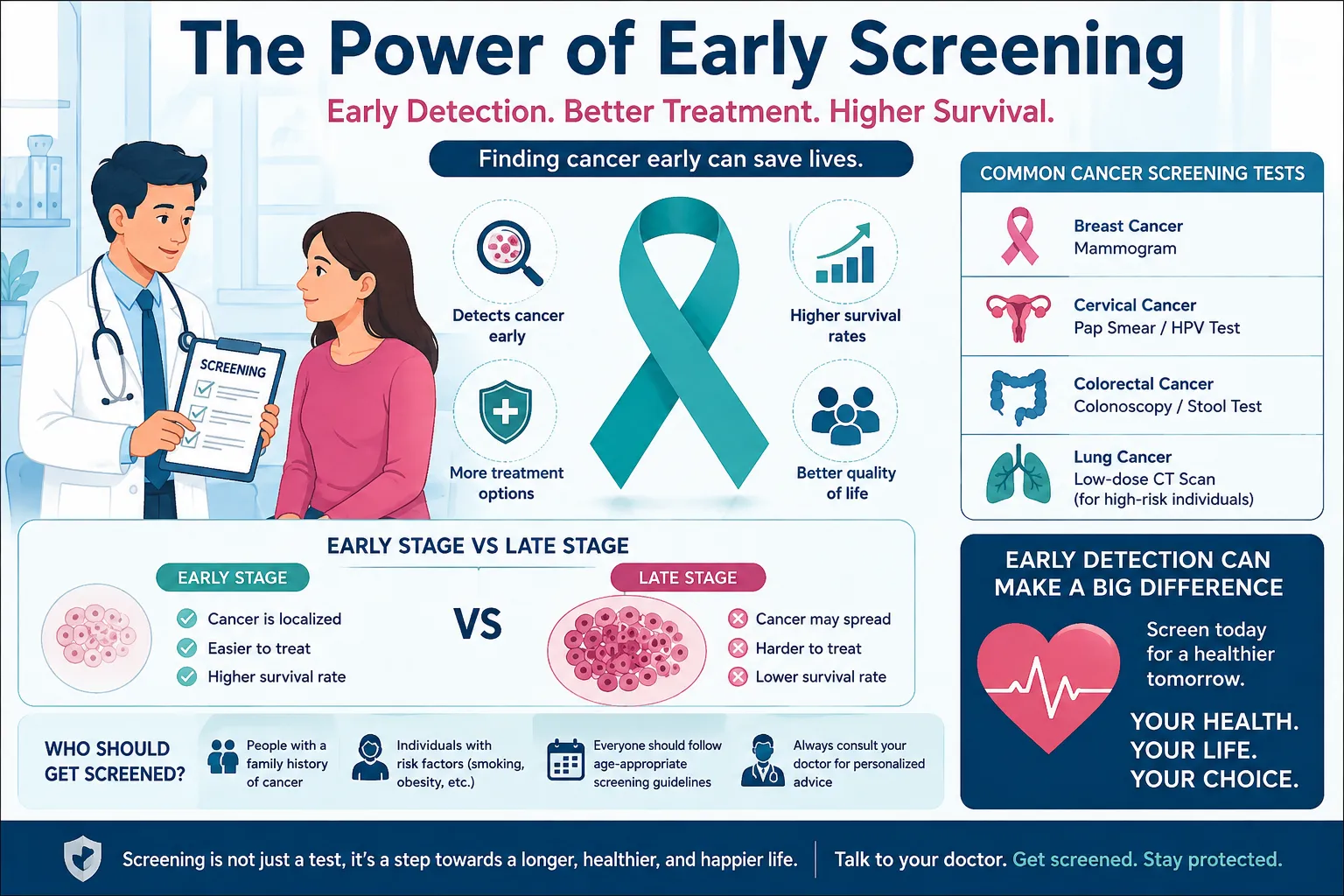
Early cancer screening can be extremely important for improving cancer survival rates because it may detect cancer before symptoms appear, when treatment is often more effective. Screening can identify certain cancers at an earlier stage, potentially allowing doctors to treat the disease before it spreads to nearby tissues or distant organs. The benefit varies by cancer type, screening method, age, personal risk factors, and overall health. Common screening programs include tests for breast, cervical, colorectal, and lung cancer in people who meet specific eligibility criteria. Screening does not prevent every cancer or guarantee survival, but timely detection can significantly improve treatment options and outcomes.
Why Is Early Cancer Screening Important?
Cancer survival is strongly influenced by the stage at which cancer is diagnosed. Cancer found at an early stage is generally more localized, while advanced cancer may have already spread through the body and can be more difficult to treat.
Early screening can help identify abnormal changes or cancers before noticeable symptoms develop. This gives healthcare professionals an opportunity to investigate the finding, confirm whether cancer is present, and begin appropriate treatment when necessary.
For example, screening may detect certain cancers while they are still small and localized. Depending on the cancer type, treatment may include surgery, radiation therapy, chemotherapy, targeted therapy, immunotherapy, or a combination of treatments.
How Screening Can Improve Cancer Outcomes
Benefit | How It Can Help |
|---|---|
Earlier detection | Finds some cancers before symptoms become noticeable |
More treatment options | Early-stage disease may provide more possible treatment approaches |
Reduced risk of spread | Detecting cancer earlier may help treatment begin before extensive metastasis |
Better survival prospects | Some cancers have substantially better outcomes when diagnosed at an earlier stage |
Potentially less intensive treatment | Certain early cancers may be treated with less extensive therapy |
Early Screening vs. Waiting for Symptoms
One of the major advantages of screening is that it can identify disease before symptoms appear. Waiting for symptoms may mean that a cancer has had additional time to grow or spread, although this depends greatly on the cancer type.
It is also important to understand that screening and diagnostic testing are different. Screening is generally performed in people who do not have symptoms, while diagnostic tests are used to investigate symptoms or abnormal screening results.
A positive screening result does not automatically mean a person has cancer. Additional examinations or diagnostic tests are often needed to determine the cause of an abnormal result.
Which Cancers Can Be Screened For?
Evidence-based screening recommendations exist for several cancers. Depending on individual circumstances, healthcare professionals may recommend screening for breast cancer, cervical cancer, colorectal cancer, and lung cancer.
The appropriate test and screening schedule can differ according to age, sex, family history, genetic risk, smoking history, previous medical history, and other factors. Therefore, screening should be based on established medical guidelines and an individual's risk profile rather than using every available cancer test.
Does Early Screening Guarantee Better Survival?
No. Early screening can improve outcomes for some cancers, but it does not guarantee that cancer will be prevented or successfully treated.
Some cancers are aggressive and may progress quickly even when detected relatively early. Screening can also produce false-positive results, leading to additional testing, anxiety, or unnecessary procedures. Conversely, some cancers may not be detected by a particular screening test.
For this reason, the goal of screening is to provide a scientifically supported balance between potential benefits and possible harms.
Who Should Consider Cancer Screening?
People should discuss appropriate screening with a qualified healthcare professional, particularly if they have risk factors such as a strong family history of cancer, certain inherited genetic changes, previous cancer, or significant exposure to known cancer risks.
Following recommended screening intervals is important. A person should also seek medical advice if they develop concerning symptoms rather than waiting for their next routine screening appointment.
Conclusion
Early cancer screening plays an important role in cancer detection and survival, particularly for cancers where effective screening methods have been shown to reduce mortality. Detecting cancer before it spreads can provide more treatment opportunities and may improve the chances of successful treatment. However, screening recommendations should be individualized because the benefits and risks differ among cancer types and patients. Staying informed about evidence-based screening guidelines and discussing personal risk factors with a healthcare professional can help people make appropriate screening decisions.
FAQs
1. Does early cancer detection increase survival rates?
Yes, for several cancers, detecting the disease at an earlier stage is associated with better survival outcomes. However, the effect varies depending on the cancer type and other individual factors.
2. Is cancer screening necessary if I have no symptoms?
For certain cancers, yes. Screening is specifically designed to detect disease or precancerous changes in people who may not have symptoms. Eligibility depends on factors such as age and individual risk.
3. Can cancer screening prevent cancer?
Some screening programs can help prevent certain cancers by detecting precancerous changes that can be treated before they develop into cancer. However, most screening tests primarily aim to detect cancer early rather than prevent every cancer.
4. When should someone start cancer screening?
There is no single starting age for all cancers. Recommended screening depends on the type of cancer, age, personal and family history, and other risk factors. A healthcare professional can help determine the appropriate screening schedule.
Also read : What are the carcinogenic (which causes cancer) food?