
The first Prime Minister of Pakistan was Liaquat Ali Khan. He became Prime Minister in August 1947, when Pakistan was created after the partition of British India, and remained in office until his assassination on 16 October 1951. Pakistan's National Assembly officially identifies him as the country's first Prime Minister.
If Muhammad Ali Jinnah was the central figure in creating Pakistan, Liaquat Ali Khan was one of the key people responsible for figuring out how the newly created country would actually function.
From my perspective, that's what makes his role particularly interesting. He wasn't taking charge of an established government. Pakistan was starting almost from scratch, with refugee movements, administrative shortages, economic pressures, constitutional questions, and tensions with India all happening together.
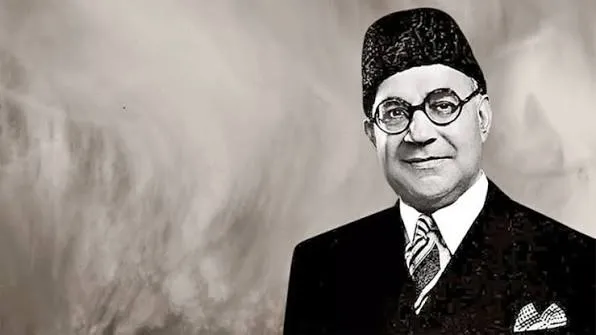
Who Was Liaquat Ali Khan?
Liaquat Ali Khan was born in 1896 in Karnal, then part of British India. He studied at Aligarh and Oxford and trained as a barrister in London before becoming deeply involved in politics.
He joined the All-India Muslim League in 1924 and later served as its general secretary from 1936 to 1947.
Fact | Detail |
|---|---|
Name | Liaquat Ali Khan |
Born | 1896 |
Political party | Muslim League |
Position | First Prime Minister of Pakistan |
Term | 1947 to 1951 |
Major constitutional contribution | Objectives Resolution |
Died | 16 October 1951 |
How He Became First PM
Liaquat Ali Khan had already become one of Muhammad Ali Jinnah's closest political associates during the movement for Pakistan.
After partition was decided, he was involved in developing the administrative structure of the new country. In August 1947, he became Pakistan's first Prime Minister and also served as Defence Minister.
Meanwhile, Jinnah became Pakistan's first Governor-General.
That's an easy distinction to miss. Jinnah was the founding Governor-General, while Liaquat Ali Khan headed the government as Prime Minister.
Major Contributions
One of Liaquat Ali Khan's biggest contributions was the Objectives Resolution.
He introduced it in Pakistan's Constituent Assembly on 7 March 1949, and it was adopted on 12 March. It laid down principles intended to guide Pakistan's future constitution, including representative government, democracy, freedom, equality, social justice, and provisions concerning Islam and minority rights.
Another major development was the Liaquat-Nehru Pact of April 1950 between India and Pakistan, which addressed the protection of minorities amid serious communal tensions.
Personally, I'd consider these constitutional and India-Pakistan relations aspects more historically meaningful than simply memorising that he was "PM number one."
Challenges
Liaquat Ali Khan inherited a country facing problems almost everywhere.
Pakistan had to establish government institutions, accommodate huge numbers of refugees, manage limited administrative and financial resources, deal with the Kashmir conflict, build relations with other countries, and begin developing a constitution.
There were also major internal political questions, including how power should be distributed between Pakistan's different regions.
So when evaluating his government, context matters. This wasn't normal peacetime administration in a settled state. It was state-building while crises were already happening.
Assassination & Legacy
On 16 October 1951, Liaquat Ali Khan was assassinated while addressing a public gathering in Rawalpindi. Khawaja Nazimuddin became Prime Minister the following day.
His death cut short the leadership of Pakistan's first Prime Minister only four years after independence.
His legacy remains closely connected with Pakistan's early institution-building, constitutional development, foreign relations, and the Objectives Resolution.
Frequently Asked Questions (FAQs)
1. Who was Pakistan's first Prime Minister?
Liaquat Ali Khan was the first Prime Minister of Pakistan.
2. Was Muhammad Ali Jinnah Pakistan's first Prime Minister?
No. Jinnah was Pakistan's first Governor-General. Liaquat Ali Khan was the first Prime Minister.
Must Read: Who is the best Prime Minister in Indian History and why?
 Answered by