S
Sidhanth Bhatt· 2 years ago
Discovering recipes, cooking techniques, and food ideas that make every meal enjoyable and approachable.

How Many Calories in One Chapati?

0
3.3K

Join this conversation

Sort By

medium-sized plain chapati (roti) made from whole wheat flour contains approximately 100–120 calories. The exact number of calories depends on the size of the chapati, the type of flour used, and whether oil or ghee is added during cooking.

A plain chapati is a healthy source of complex carbohydrates, dietary fiber, and plant-based protein, making it a good choice for a balanced diet.

Key Takeaways

One medium chapati contains around 100–120 calories.

A small chapati contains approximately 70–90 calories.

A large chapati contains approximately 130–150 calories.

Adding ghee or butter increases the calorie count by around 40–45 calories per teaspoon.

Whole wheat chapati is rich in carbohydrates, fiber, and essential nutrients.

Chapati can be part of a healthy weight-loss diet when eaten in the right portions.

Chapati Calories at a Glance

ItemDetails
FoodPlain Chapati (Roti)
Average Calories100–120 kcal
Serving Size1 Medium Chapati (40–45 g)
Main IngredientWhole Wheat Flour (Atta)
Cooking MethodDry Roasted on Tawa
Best ForHealthy Diet & Weight Management

How Many Calories Are in One Chapati?

If you're trying to lose weight, build muscle, or simply eat healthier, knowing the calorie content of everyday foods can help you make better choices.

A medium-sized plain chapati usually contains 100–120 calories. Since it is made from whole wheat flour and cooked without deep frying, it is considered one of the healthier staple foods in many Indian households.

However, the calorie count is not always the same. It can change depending on:

  •  Size of the chapati

  •  Type of flour used

  •  Thickness of the dough

  •  Whether ghee, butter, or oil is added

These small differences can slightly increase or decrease the total calories.
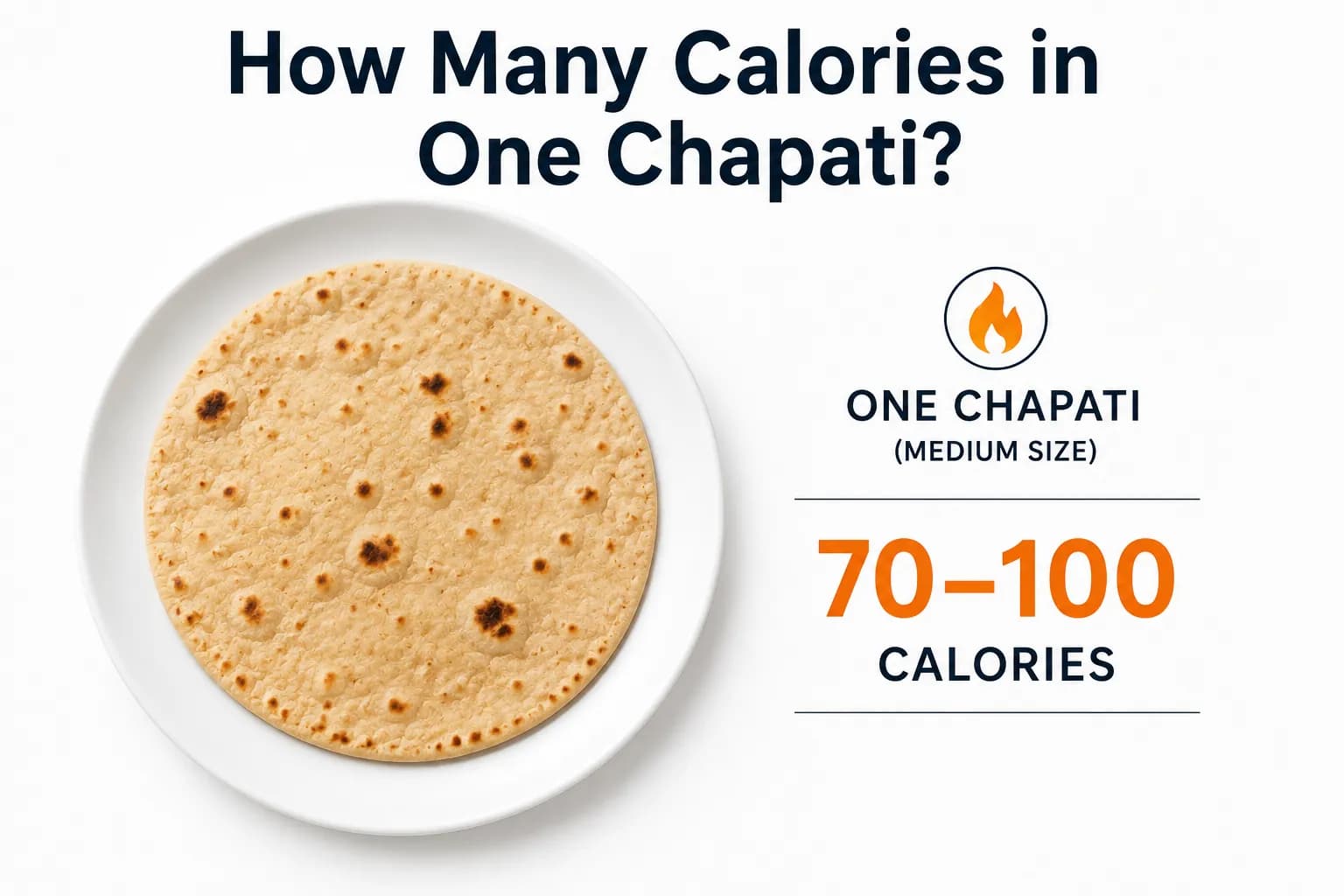
Minimal infographic showing how many calories are in one medium chapati with an estimated 70–100 calories.

Calories in Different Sizes of Chapati

The more flour used, the more calories the chapati contains.

Chapati SizeApproximate Calories
Small Chapati70–90 kcal
Medium Chapati100–120 kcal
Large Chapati130–150 kcal
Chapati with Ghee140–170 kcal

If you are counting calories, choosing a plain chapati instead of one with ghee can help reduce your daily calorie intake.

Nutritional Value of One Medium Chapati

Calories are only one part of the picture. A whole wheat chapati also provides several important nutrients that your body needs.

NutrientApproximate Amount
Calories100–120 kcal
Carbohydrates18–22 g
Protein3–4 g
Fat1–2 g
Dietary Fiber2–3 g

Whole wheat chapati also contains small amounts of:

  •  Iron

  •  Magnesium

  •  Phosphorus

  •  Potassium

  •  Zinc

  •  B Vitamins

These nutrients support energy production, digestion, muscle function, and overall health.

What Affects the Calories in a Chapati?

Several factors determine how many calories your chapati contains.

1. Size

A larger chapati requires more flour, which naturally increases the calorie count.

2. Type of Flour

Different flours have slightly different nutritional values.

For example:

  • Whole Wheat Flour

  • Multigrain Flour

  • Jowar Flour

  • Bajra Flour

  • Ragi Flour

Whole wheat flour remains the most common and balanced choice.

3. Ghee, Butter, or Oil

Adding fat after cooking increases calories.

For example:

  • Plain Chapati → 100–120 calories

  • Chapati with 1 teaspoon Ghee → 140–170 calories

If you're trying to reduce calories, eat chapati without added ghee or use only a small amount.

4. Thickness

A thicker chapati uses more dough and therefore contains more calories than a thin chapati.

Is Chapati Healthy?

Yes. Whole wheat chapati is generally considered a healthy food when eaten as part of a balanced diet.

Some of its health benefits include:

  •  Provides steady energy through complex carbohydrates.

  •  Rich in dietary fiber, which supports digestion.

  •  Helps keep you full for longer.

  •  Contains plant-based protein.

  •  Naturally low in fat when cooked without oil or ghee.

  •  Made from whole grains, which contain more nutrients than refined flour.

Rather than focusing only on calories, it's important to look at the overall nutritional value of your meals.

Is Chapati Good for Weight Loss?

Yes, chapati can be part of a healthy weight-loss diet.

The key is portion control and eating a balanced meal.

Whole wheat chapati contains fiber and complex carbohydrates that help you stay full for longer, which may reduce unnecessary snacking between meals.

For a healthier meal, pair chapati with:

  •  Green vegetables

  •  Dal (lentils)

  •  Beans

  •  Lean chicken

  •  Fish

  •  Paneer

  •  Plain yogurt

Combining carbohydrates with protein and vegetables creates a more balanced and satisfying meal.

Important: No single food causes weight loss or weight gain. Your overall calorie intake, food choices, and physical activity are what matter most.

Chapati vs Rice: Which Has More Calories?

Many people compare chapati with rice when planning healthy meals.

FoodApproximate Calories
1 Medium Chapati100–120 kcal
1 Cup Cooked White RiceAround 200 kcal
1 Slice Whole Wheat Bread70–80 kcal
1 Plain Paratha180–250 kcal

Both chapati and rice can be part of a healthy diet. The better choice depends on your portion size, nutritional needs, and overall eating habits—not on one food alone.

Did You Know?

A plain chapati cooked without oil or ghee usually contains significantly fewer calories than a traditional paratha because parathas are prepared with added fat during cooking.

This is one reason why plain chapati is often recommended for people trying to manage their calorie intake.

Read More : What are Best Detox Drinks?

Answered by
I
I believe healthy eating starts with understanding the food we enjoy every day.
View Profile

Ishaanvi Reddy is a trained chef and food writer with over 4 years of professional experience in culinary arts and food content. She holds a Diploma in Culinary Arts from the Institute of Hotel Management (IHM), Hyderabad — a qualification that gives her food writing a level of technical accuracy that distinguishes it from content written without kitchen experience. Her content covers recipes, cooking techniques, ingredient guides, food culture, nutrition basics, and restaurant trends across India. Her work has appeared on platforms including Slurrp, Herzindagi Food, and Eat This Not That India, where she writes for home cooks and food enthusiasts who want content that is tested, practical, and rooted in real culinary knowledge — not just adapted from other sources. With hands-on kitchen experience spanning South Indian, North Indian, and Continental cuisines, Ishaanvi brings a cross-regional perspective to her food writing. She has published 150+ food articles and recipes, covering everything from everyday meal planning to deep dives into the science of cooking and the cultural history of Indian food. Across all her work, every recipe is kitchen-tested, every technique is chef-verified, and every recommendation comes from direct culinary experience — not guesswork.

Updated on06/27/26
0

One chapati typically contains 70–120 calories, depending on size and ingredients. It’s a light, healthy, and wholesome choice that supports digestion, energy, and balanced nutrition, making it ideal for everyday meals.

Answered by
Sgr catering
Internet Culture Observer
View Profile
Answered on12/03/25
0

Chapatis are also known to increase energy levels, improve blood pressure, and improve skin and hair quality. They contain complex carbohydrates that boost energy levels and keep you full and satiated for a longer duration. This reduces unhealthy snacking between meals and helps in weight loss. Chapatis are also recommended for patients with high blood pressure and cholesterol due to the presence of minerals and vitamins that boost blood circulation and help remove plaque deposited in arteries.


Answered by
Fitness  Freak
View Profile

Learn how to balance your macros to fuel your body efficiently, whether your goal is weight loss, muscle gain, or simply maintaining good health.

Answered on01/14/25
0

The average calorie content of a plain chapati varies from 70 to 100 depending on the size and the ingredients used. The calorie count can vary based on whether it's made with whole wheat flour or refined flour and the amount of oil or ghee used. Chapatis are a healthy, low-calorie option when consumed in moderation and as part of a balanced meal. It’s great for pairing with vegetables and protein-rich foods.


Answered by
thebangalore dhaba
Answered on11/26/24
0

Chapatis, also known as rotis, are a staple in Indian meals and are consumed daily in most Indian households. They are a type of flatbread made from whole wheat flour and are often served with a variety of dishes like dal, sabzi, or achar. But how many calories are in one chapati, and is it healthy? Let's take a closer look at the nutritional facts of chapatis.


According to Tarladalal.com, one chapati made from 100% whole wheat flour contains 104 calories. These calories are distributed as 63 calories from carbohydrates, 10 calories from proteins, and 33 calories from fat. The chapati also contains 15.7 grams of carbohydrates, 2.6 grams of protein, and 3.7 grams of fat. This means that one chapati provides about 5% of the total daily calorie requirement of a standard adult diet of 2,000 calories.


Chapatis are low in calories and are therefore recommended for people on low-calorie diets or weight loss. They are also an excellent food option for diabetics as they are a low GI food, meaning they do not cause a rapid spike in blood sugar levels. Additionally, chapatis are rich in antioxidants like Vitamin B1, which fight against free radicals that damage the body.


If you apply ghee over a chapati, the calorie content increases. On average, a chapati with half a tablespoon of ghee contains around 170 calories[2]. However, ghee is rich in dietary fibers and aids in better digestion, which can help in reducing weight.


Letsdiskuss

Chapatis are also rich in protein, iron, and phosphorus. They are a rich source of iron and can help in the treatment and prevention of anemia. Phosphorus, which is present in chapatis, improves the absorption of calcium in bones and keeps them healthy. The zinc present in chapatis further facilitates the absorption of minerals in the body.


Chapatis are also known to increase energy levels, improve blood pressure, and improve skin and hair quality. They contain complex carbohydrates that boost energy levels and keep you full and satiated for a longer duration. This reduces unhealthy snacking between meals and helps in weight loss. Chapatis are also recommended for patients with high blood pressure and cholesterol due to the presence of minerals and vitamins that boost blood circulation and help remove plaque deposited in arteries.


In conclusion, chapatis are a healthy and nutritious food option that can be included in your daily meal at least once throughout the day. They are low in calories, rich in protein, iron, and phosphorus, and have several health benefits. So, go ahead and enjoy your chapatis without any guilt!


Answered by
S
Five years running professional kitchens — writing about food the way it is actually cooked, not the way it looks on a feed.
View Profile

Scarlett Jackson is an Executive Chef and food writer with over 5 years of professional kitchen experience across fine dining, contemporary bistro, and large-scale catering environments. She holds a Grand Diplôme from Le Cordon Bleu, London and a Bachelor of Science in Culinary Nutrition from Johnson and Wales University, Providence — credentials that combine classical French technique with a working knowledge of the nutritional science behind food, giving her writing a precision most food content lacks. Her content covers professional cooking techniques, recipe development, kitchen equipment, ingredient sourcing, menu planning, food science, and the culinary trends shaping how restaurants and home cooks approach food today. Her work has appeared on platforms including Serious Eats, Food & Wine, and Epicurious, where she writes for readers who want food content built on real kitchen experience — tested recipes, technically accurate methods, and honest assessments of what actually works under heat and pressure. As an Executive Chef, Scarlett has managed kitchen brigades, developed seasonal menus, and overseen food operations serving hundreds of covers per service. She has published 180+ kitchen-tested recipes and food articles, competed at the American Culinary Federation (ACF) National Competition, and is a certified member of the ACF and the James Beard Foundation community of culinary professionals. Across all her writing, every recipe is tested to professional standards, every technique is verified in an actual kitchen, and no cooking trend is covered without assessing whether it holds up beyond the photograph — because food writing that cannot survive contact with a real stove is not worth the screen it is read on.

Answered on04/05/24
0