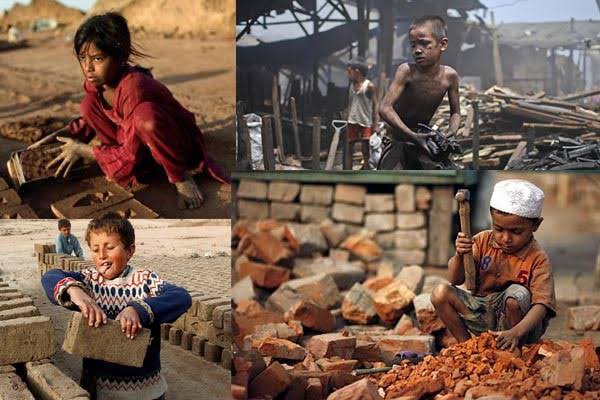
According to the latest global estimates from the International Labour Organization (ILO) and UNICEF, nearly 138 million children aged 5–17 were involved in child labour in 2024. That is about 7.8% of children worldwide. Even more concerning, around 54 million children were doing hazardous work that could harm their health, safety, or development.
The number is difficult to process. For me, 138 million shouldn't be viewed as just another global statistic. These are children who should ideally have space for education, play and development, but many are working because their circumstances leave families with very few choices.

Not every task performed by a child counts as child labor.
Helping parents occasionally, doing age-appropriate household tasks, or earning pocket money through safe work isn't automatically child labor.
ILO defines child labor around factors such as a child being too young to work or doing work that can harm their health, safety, morals or development.
That distinction matters because simply asking, "Does this child work?" doesn't tell the whole story.
Latest Statistics
The 2024 ILO-UNICEF estimates give us a clearer picture:
Child labor statistics | Latest estimate |
|---|---|
Children in child labour | 138 million |
Share of children aged 5–17 | 7.8% |
Children in hazardous work | 54 million |
Boys in child labour | 78 million |
Girls in child labour | 59 million |
The numbers don't total perfectly because the headline figures are rounded.
Regional & Sector Breakdown
Child labor isn't distributed equally across the world.
Sub-Saharan Africa carries the largest burden, and despite an improvement in prevalence since 2020, population growth meant the absolute number of children in child labor there remained broadly unchanged.
The type of work is also revealing:
Agriculture – 61%
Services – 27%
Industry – 13%
Agriculture includes activities such as farming, livestock and fishing, while industry can include mining and manufacturing.
Personally, I think agriculture gets overlooked because child labor is often imagined as children working inside factories. In reality, much of it happens in rural areas and family-based economic activity where it may be less visible.
Progress Over Time
There is some genuinely positive news.
Between 2020 and 2024, the number of children in child labor fell by 22.4 million, while hazardous child labor decreased by about 25 million.
Looking further back, there are now over 100 million fewer children in child labor than in 2000, despite growth in the global child population.
But the world still missed the Sustainable Development Goal target of eliminating child labor by 2025.
So yes, progress is real. It just isn't fast enough.
Causes
Child labor rarely comes down to one cause.
Poverty is a major driver, but lack of accessible education, conflict, displacement, weak social protection, economic instability, inadequate enforcement and limited decent employment for adults can all contribute.
This is why simply banning child labor isn't enough.
If a family depends on a child's earnings to eat, removing the job without addressing the family's poverty can create another crisis. Solutions need to combine education + social protection + decent adult employment + enforcement.
Frequently Asked Questions (FAQs)
1. How many children are currently in child labor?
The latest estimate is approximately 138 million children worldwide.
2. How many are doing dangerous work?
Around 54 million are engaged in hazardous work.
3. Which sector has the most child labor?
Agriculture accounts for approximately 61% of child labor globally.