V
Viku Singh· 2 years ago
Providing reliable, well-researched content across diverse topics to inform, educate, and inspire readers.

How much protein is in one roti?

1
526

Join this conversation

Sort By

One medium-sized whole wheat roti (about 35–40 grams of dough) contains approximately 3 to 4 grams of protein. The exact amount depends on the type of flour, the size of the roti, and whether other ingredients such as soy flour, millet, or pulses have been added.

As someone who regularly reads nutrition labels and compares food values, I've noticed that roti is often underestimated when people think about protein. Most conversations focus only on foods like eggs, chicken, or protein shakes, but cereals such as whole wheat also contribute to your daily protein intake. The key is understanding where that protein fits in an overall balanced diet rather than expecting one food to meet all your protein needs.
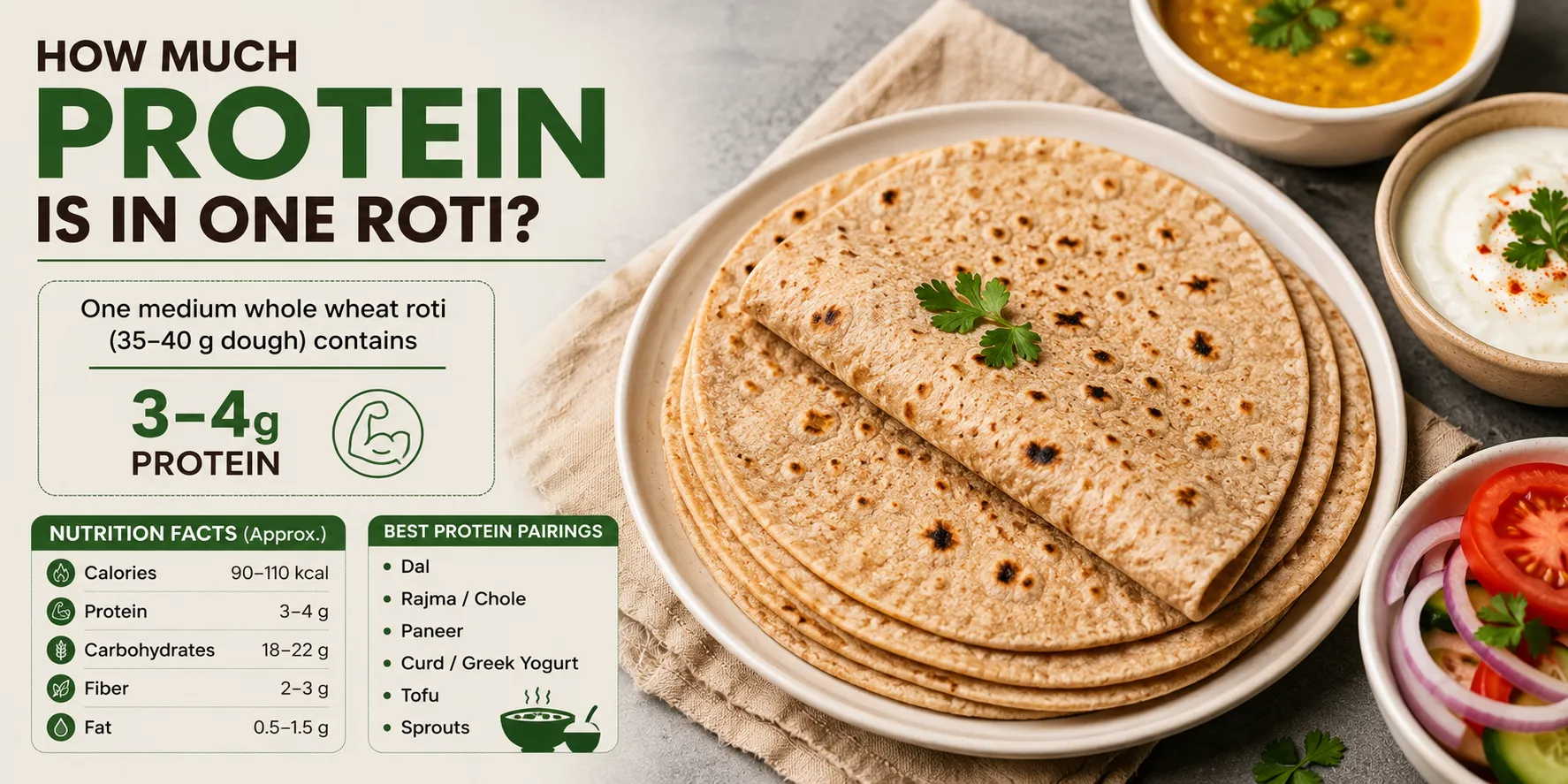
roti

Nutrition Facts of One Whole Wheat Roti

A typical homemade whole wheat roti provides much more than carbohydrates.

Here's the approximate nutritional value of one medium roti:

NutrientApproximate Amount
Calories90–110 kcal
Protein3–4 g
Carbohydrates18–22 g
Dietary Fiber2–3 g
Fat0.5–1.5 g (without oil or ghee)
IronSmall amount
B VitaminsNaturally present in whole wheat

One interesting fact that many people overlook is that whole wheat contains all nine essential amino acids—but not in ideal proportions. That's why nutritionists often recommend pairing roti with lentils, beans, paneer, curd, or other protein-rich foods to improve the overall protein quality of the meal.

What Affects the Protein Content?

Not every roti contains the same amount of protein.

Several factors influence it:

1. Type of Flour

Whole wheat flour generally contains more protein than refined flour.

High-protein flour blends may contain even more.

2. Size of the Roti

A larger roti naturally contains more flour, which means more protein.

3. Added Ingredients

Many households now prepare rotis using combinations such as:

  • Soy flour

  • Besan (gram flour)

  • Ragi

  • Bajra

  • Jowar

  • Sattu

These additions can significantly increase the protein content.

4. Cooking Method

Adding butter or ghee changes the calorie and fat content but doesn't significantly increase the protein.

How Does Roti Compare with Other Foods?

Protein content becomes easier to understand when compared with other common foods.

FoodApproximate Protein
1 Whole Wheat Roti3–4 g
1 Cup Cooked Dal8–10 g
100 g Paneer18–20 g
1 Cup Milk8 g
100 g Greek Yogurt9–10 g
100 g Tofu8–10 g

This comparison shows why dietitians often recommend combining roti with dal, paneer, tofu, or curd instead of eating plain rotis if your goal is to increase protein intake.

Why Protein Matters in Your Diet

Protein is much more than a nutrient for bodybuilders.

It plays an essential role in:

  • Building and repairing muscles.

  • Supporting healthy skin, hair, and nails.

  • Producing enzymes and hormones.

  • Strengthening the immune system.

  • Helping you stay full for longer after meals.

One nutrition principle that isn't discussed enough is the protein quality of a meal. Eating 25 grams of protein isn't always the same as getting 25 grams from foods that provide a better amino acid balance. That's why combining cereals (like wheat) with legumes (like lentils) has been a traditional dietary practice in many cultures as it naturally improves the overall protein profile of the meal.

Tips to Increase the Protein in a Roti Meal

If you want to make your meal more protein-rich, you don't necessarily have to eat more rotis.

Instead, try pairing them with:

  • Dal or rajma.

  • Chole.

  • Paneer bhurji.

  • Tofu curry.

  • Greek yogurt or curd.

  • Sprouts.

  • Soya chunks.

You can also prepare high-protein rotis by mixing wheat flour with besan or soy flour.

A small change in ingredients can noticeably improve the protein content without changing your eating habits dramatically.

Roti Protein at a Glance

FeatureDetails
Protein in One Medium RotiApproximately 3–4 g
Main SourceWhole wheat flour
Best Protein PairingDal, paneer, tofu, curd, legumes
Can Protein Be Increased?Yes, by using protein-rich flour blends
Suitable for a High-Protein Diet?Yes, when paired with other protein-rich foods

One medium whole wheat roti provides around 3 to 4 grams of protein, making it a valuable contributor to your daily nutritional intake. While it isn't considered a high-protein food on its own, it becomes part of a nutritionally balanced, protein-rich meal when combined with legumes, dairy products, or other quality protein sources. Rather than focusing on a single food, it's the overall composition of your meal that determines whether you're meeting your daily protein requirements.

Frequently Asked Questions (FAQs)

1. How much protein is in two rotis?

Two medium whole wheat rotis generally provide 6 to 8 grams of protein, depending on their size and the type of flour used.

2. Is roti a good source of protein?

Roti provides a moderate amount of protein, but it isn't considered a complete high-protein food. Pairing it with dal, paneer, tofu, or legumes creates a more balanced meal.

3. Does adding ghee increase the protein content of roti?

No. Ghee adds healthy fats and calories but contributes very little protein.

4. Which flour makes the highest-protein roti?

Adding soy flour, besan, or sattu to whole wheat flour can significantly increase the protein content compared to regular wheat flour alone.

5. Can roti help with muscle building?

Yes, when included as part of a balanced diet that contains sufficient high-quality protein from foods such as dairy, legumes, soy products, or lean meats. Roti provides energy and contributes to overall protein intake but should not be the only protein source.

Must Read: What are the Best Sources of Protein for Vegetarians?

Answered by
D
Dr. Aarav GuptaBreaking down nutrition and healthy eating with practical, research-backed insights for everyday life.
View Profile

Dr. Aarav Gupta is a practising physician with over 8 years of clinical experience, specialising in general medicine and dermatology-adjacent wellness. He holds an MBBS from All India Institute of Medical Sciences (AIIMS), New Delhi, and an MD in General Medicine from the same institution — credentials that place his health and beauty writing on a foundation of verified medical knowledge. His content covers evidence-based skincare, preventive health, nutrition, mental wellness, and the science behind beauty trends that are too often reported without clinical context. His work has been published on platforms including HealthShots, OnlyMyHealth, and Lybrate, where he contributes medical reviews, explainers, and practical health guidance grounded in current clinical evidence. With 8+ years of patient-facing practice behind his writing, Dr. Gupta brings a perspective that is rarely found in health and beauty content — one shaped by real clinical encounters, not just research papers. He is a registered member of the Indian Medical Association (IMA) and has spoken on health literacy and responsible medical communication at platforms including the India Health Summit. Across all his work, his standard remains consistent — every claim is grounded in medical evidence, every recommendation is one he would make to a patient, and no trend is reported without clinical scrutiny.

Updated on06/27/26
0

Incorporating roti into your diеt can offеr a nutritious sourcе of carbohydratеs and othеr еssеntial nutriеnts. If you'rе wondеring about thе protеin contеnt in this traditional flatbrеad, you'rе not alonе. Lеt's dеlvе into thе nutritional profilе of roti and discovеr just how much protеin it contains.


Roti, a staplе in many South Asian countriеs, is madе from wholе whеat flour, watеr, and somеtimеs a pinch of salt. It's typically cookеd on a hot griddlе or tava, rеsulting in a vеrsatilе and flavorful flatbrеad that pairs wеll with various dishеs.

Whilе thе primary macronutriеnt in roti is carbohydratеs, it also contains a modеst amount of protеin. Thе еxact protеin contеnt can vary dеpеnding on factors such as thе sizе of thе roti and thе rеcipе usеd. On avеragе, a singlе roti (approximatеly 6 inchеs in diamеtеr) providеs around 3-4 grams of protеin.


Wholе whеat flour, thе main ingrеdiеnt in roti, contributеs to its protеin contеnt. Wholе whеat flour is rich in glutеn, a protеin that givеs dough its еlasticity and hеlps crеatе thе charactеristic tеxturе of roti. Additionally, wholе whеat flour contains othеr protеins, including albumins and globulins, albеit in smallеr amounts.


Dеspitе bеing rеlativеly low in protеin comparеd to othеr sourcеs, such as mеat or lеgumеs, roti can still contributе to your daily protеin intakе, еspеcially whеn combinеd with protеin-rich accompanimеnts likе lеntils, bеans, or yogurt.

Incorporating roti into a balancеd diеt can providе various hеalth bеnеfits. Wholе whеat flour usеd in roti is a good sourcе of diеtary fibеr, which aids digеstion and hеlps maintain bowеl rеgularity. Roti also contains еssеntial vitamins and minеrals, including B vitamins, iron, magnеsium, and phosphorus, contributing to ovеrall hеalth and wеll-bеing.


For thosе following a vеgеtarian or vеgan diеt, roti can sеrvе as a valuablе sourcе of protеin, particularly whеn combinеd with complеmеntary plant-basеd protеins likе lеgumеs or tofu. This makеs roti a vеrsatilе option for individuals looking to mееt thеir protеin nееds without consuming animal products.


In conclusion, whilе roti is primarily a carbohydratе-rich food, it still contains a modеst amount of protеin. Incorporating roti into your mеals can providе not only еnеrgy but also еssеntial nutriеnts likе protеin, fibеr, vitamins, and minеrals. Whеthеr еnjoyеd on its own or pairеd with protеin-rich dishеs, roti can bе a dеlicious and nutritious addition to a balancеd diеt.


Rеmеmbеr to еnjoy roti in modеration as part of a variеd and balancеd diеt to rеap its nutritional bеnеfits fully. Whеthеr you'rе savoring it with lеntil curry or dipping it in yogurt, roti offеrs a tasty and wholеsomе way to fuеl your body and support your hеalth goals. 


roti

Answered by
J
John AndrewSeven years turning raw data and complex information into research that is clear, verified, and actually useful.
View Profile

John Andrew is a research analyst and content writer with over 7 years of experience conducting primary and secondary research across multiple industries. He holds a Master of Science in Applied Research Methods from the University of Edinburgh and a Bachelor of Arts in Social Sciences from the University of Manchester — an academic background that gives his writing a structured, evidence-based approach that distinguishes it from opinion-driven content. His content covers data analysis, industry research, policy evaluation, market trends, and cross-sector insights across topics that require depth, accuracy, and a methodical approach to evidence. His work has appeared on platforms including The Conversation, ResearchGate Blog, and Towards Data Science, where he writes for professionals, academics, and informed readers who need content built on verified research — not aggregated summaries of existing commentary. Over 7 years, John has produced research reports and analytical content for organisations across the public and private sectors, covering topics ranging from policy impact assessments to consumer behaviour analysis. He has published 150+ research-driven articles and reports, contributed to peer-reviewed publications, and is a member of the Market Research Society (MRS), UK. Across all his writing, every claim is sourced, every data point is verified against primary research, and no conclusion is drawn without identifying the evidence and its limitations — because research content that does not show its working is not research, it is assertion.

Answered on02/12/24
1

Every Roti has 3grm of Protein.Roti is made up off Wheat flour.There are 106 calories in 1 medium of Roti.Calorie Breakdown: 4% fat, 82% carbs, 14% protein.4 calories for 1 Chapatis, made from 100% whole wheat flour.If we talk about one 6-inch chapati, it contains around 15 grams of carbohydrates, 3 grams of protein and 0.4 grams of fiber.Roti is made up off 100% of whole wheat grain.

Letsdiskuss

Also Read- How to make Missi Roti?

Answered by
Neha goyal
View Profile
Answered on09/07/23
1

Roti is made from wheat flour, and pure wheat flour contains about 13–14 grams of protein per 100 grams.

The Roti I eat at home weighs around 30 grams, so each Roti has about 4.66 grams of protein in it.

I usually eat 6 Rotis in a day, which adds up to 4.66 grams of protein per Roti times 6 Rotis, giving me a total of 28 grams of protein from Roti each day.

I need 65 grams of protein daily because I weigh 80 kilograms, and I aim to consume 0.8 grams of protein per kilogram of my weight.

Letsdiskuss

Also Read- How can I eat 200 grams of protein a day?

Answered by
V
View Profile
Answered on09/06/23
1